


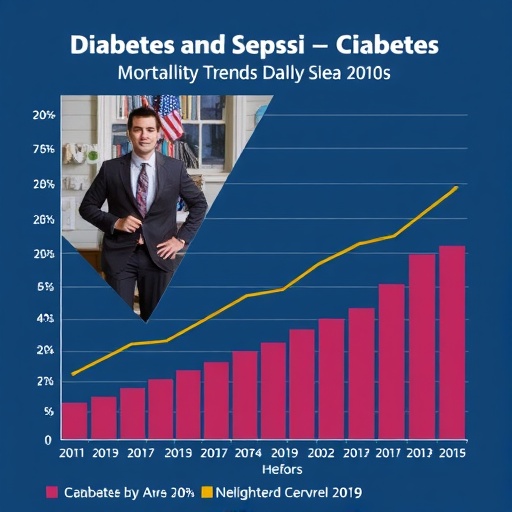
In a groundbreaking study, researchers have unveiled crucial findings regarding the temporal patterns in diabetes and sepsis mortality among older Americans, shedding light on an urgent public health concern. This research, conducted by a team led by experts in geriatrics and epidemiology, aimed to dissect the trends in mortality caused by these two prominent conditions that disproportionately affect the aging population. As the number of older adults continues to rise, understanding the intersection of diabetes and sepsis mortality becomes imperative in crafting effective health interventions.
The study draws on a comprehensive analysis of population-based data derived from national health records, providing a robust framework to investigate historical and contemporary trends. By focusing on older Americans, the research acknowledges the unique vulnerabilities this demographic faces when managing chronic illnesses and acute infections, such as sepsis. This dual threat is particularly prominent as diabetes can complicate the body’s response to infections, potentially increasing mortality rates associated with sepsis.
Initial findings of the study reveal a disturbing increase in sepsis-related deaths among older adults diagnosed with diabetes over the last two decades. This upward trend suggests that diabetes is not merely a chronic condition but a significant risk factor which exacerbates the severity and prevalence of sepsis. As such, the researchers emphasize the need for heightened awareness and proactive management strategies among healthcare providers who treat older patients with diabetes.
The implications of this research extend beyond mortality statistics; they call into question existing healthcare practices and infection management protocols. The current paradigm often fails to consider the interplay between diabetes and sepsis, which can lead to suboptimal treatment outcomes for older patients. By highlighting the temporal patterns in mortality, medical professionals are urged to adopt a more integrative approach to care, encompassing both chronic disease management and acute infection response.
Moreover, the study not only identifies trends but also seeks to establish the causal connections between diabetes and heightened vulnerability to sepsis. Through rigorous statistical analysis, the researchers present compelling evidence that older adults with poorly controlled diabetes are at an increased risk for developing sepsis, leading to higher mortality rates. This alarming association raises questions about the adequacy of current diabetes management practices in the geriatric population.
Another significant aspect of the research is the geographic variability in mortality rates related to diabetes and sepsis. By analyzing data across different states, the study underscores that certain regions experience disproportionately higher mortality rates. Such disparities may be influenced by a variety of factors, including disparities in healthcare access, socioeconomic status, and regional healthcare policies that fail to adequately address the needs of older adults with comorbid conditions.
Additionally, the findings suggest that the healthcare system must prioritize education and resources aimed at preventing sepsis in older patients managing diabetes. Prevention strategies might include vaccination against infections known to precipitate sepsis, as well as public health initiatives aimed at promoting better diabetes management. Educating both patients and healthcare providers regarding the risks associated with untreated diabetes and the importance of monitoring for signs of infection is paramount.
In conclusion, the research conducted by Ali and colleagues serves as an alarm bell within the medical community. The documentation of rising mortality rates due to the intersection of diabetes and sepsis offers a critical insight into the existing gaps in healthcare for older Americans. As longevity increases, it becomes more essential than ever to adapt healthcare strategies to meet the evolving needs of the aging population. Health systems must mobilize to combat this dual threat through targeted prevention, education, and integrated patient care approaches designed to minimize the risks associated with these interconnected conditions.
The study ultimately advocates for a paradigm shift in the treatment of older adults with diabetes, insisting that both healthcare professionals and policymakers recognize the urgency of addressing sepsis as a co-morbidity. To effect meaningful change, ongoing research and collaboration across various fields will be necessary. Only through a comprehensive understanding of these mortality trends can effective interventions be developed to protect some of the most vulnerable members of our society.
As this research continues to garner attention from the medical community, it also raises significant questions regarding funding and resources dedicated to geriatric health. The growing burden of diabetes and sepsis among older adults calls for renewed investment in public health initiatives and research programs aimed at understanding and combating these lethal conditions. Emphasizing prevention, timely diagnosis, and effective management will ultimately be fundamental to reducing mortality in this demographic.
In future investigations, researchers plan to explore the long-term outcomes of various intervention strategies aimed at reducing sepsis mortality rates among older adults with diabetes, thereby contributing to the growing body of evidence fostering better health outcomes. Moreover, understanding the biological mechanisms linking these two conditions could unveil new therapeutic targets and help formulate guidelines that effectively integrate care for older patients managing both diabetes and sepsis.
With this research, the call for action is clear: recognize the severe impact of diabetes on mortality associated with sepsis, particularly in older adults. Through collaborative efforts, innovative research, and robust public health campaigns, we can collectively make strides towards lessening the burden of these intertwined health issues.
Ali, T., Kumar, L., Iqbal, F. et al. Temporal patterns in diabetes and sepsis mortality in older Americans: a population-based analysis. BMC Geriatr (2026). https://doi.org/10.1186/s12877-026-06989-8
Cite Scienmag News
Phoebe Ingram. (January 27, 2026). Diabetes and Sepsis Mortality Trends in Older Americans. Scienmag. https://scienmag.com/diabetes-and-sepsis-mortality-trends-in-older-americans/
Phoebe Ingram. "Diabetes and Sepsis Mortality Trends in Older Americans." Scienmag, 27 January 2026, https://scienmag.com/diabetes-and-sepsis-mortality-trends-in-older-americans/. Accessed 4 September 2026.
Phoebe Ingram. "Diabetes and Sepsis Mortality Trends in Older Americans." Scienmag. January 27, 2026. https://scienmag.com/diabetes-and-sepsis-mortality-trends-in-older-americans/


