


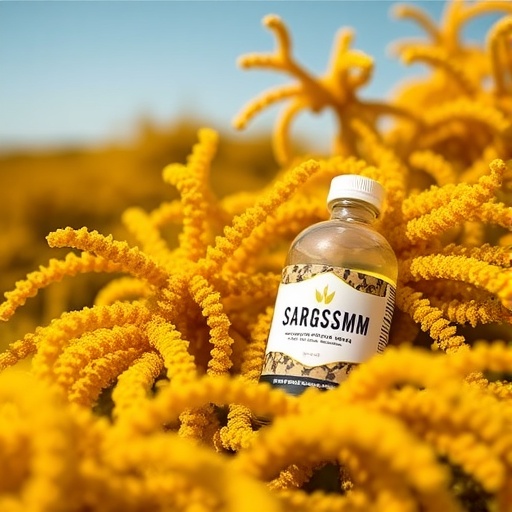
In a groundbreaking study, researchers have unveiled a transformative approach to valorize Sargassum thunbergii biomass, a type of brown algae often considered a nuisance along coastlines due to its excessive blooms. The study highlights the potential of this readily available marine resource as a source of bioactive compounds that can significantly benefit human health, particularly regarding gut health applications. This research not only addresses an environmental issue but also paves the way for sustainable bioresource utilization in the 21st century.
Sargassum thunbergii has garnered attention in recent years, as its blooms have increased dramatically in various parts of the world, driven by climate change and nutrient runoff. While much focus has been placed on the environmental challenges associated with its accumulation, this new research indicates that this biomass can be transformed into valuable compounds. The study’s authors, Dissanayake, Liyanage, and Kurera, assert that their findings could usher in a new era of bioactive compound production from what was once deemed waste.
The researchers employed a series of sophisticated extraction methods to isolate bioactive compounds from Sargassum thunbergii. These compounds exhibited notable immunomodulatory effects, suggesting that they have the potential to strengthen the immune response, thereby enhancing gut health. By developing scalable extraction techniques, the findings indicate that not only can Sargassum be processed efficiently, but it can also cater to a range of health-related applications.
One of the standout features of this research is its emphasis on sustainability. The authors advocate for the valorization of marine biomass not merely as a waste management strategy, but as a lens through which to view circular economy principles. By recognizing the value of Sargassum thunbergii beyond its immediate ecological impact, this research encourages industries and communities alike to explore marine macroalgae as a renewable resource and a foundation for innovative product development.
Immunomodulation represents a critical area of study in nutritional science and human health. The compounds derived from Sargassum thunbergii have been shown to influence immune system functions positively. This could open doors for new dietary supplements or functional foods designed to enhance gastrointestinal health. The gastrointestinal tract is home to a vast number of immune cells, and supporting gut health is relevant in the context of various diseases and overall well-being.
The researchers highlight the efficiency of their methods, which involve environmentally friendly solvents and minimal resource input. This approach not only underscores the potential for large-scale production but also enhances the economic viability of utilizing marine macroalgae. As the world searches for sustainable alternatives to traditional agricultural and pharmaceutical products, this research presents a compelling case for the marine biomass sector.
Furthermore, the versatility of the extracted bioactive compounds hints at their applicability across multiple industries, including food, pharmaceuticals, and cosmetics. As consumers become increasingly health-conscious and environmentally aware, the demand for natural and sustainable ingredients continues to rise. The findings from this study could position Sargassum thunbergii as a frontrunner in this emergent market, driving both economic gains and public health benefits.
The implications of these findings extend beyond scientific curiosity; they carry significant socio-economic weight. Regions that are adversely affected by Sargassum blooms can turn this challenge into an opportunity by creating jobs in harvesting, processing, and product development. This could contribute to local economies while promoting environmental stewardship and sustainability.
As marine biodiversity faces increasing threats from pollution, climate change, and unsustainable practices, the valorization of Sargassum thunbergii presents an optimistic narrative. It offers a solution that ties together ecological responsibility, economic innovation, and public health efforts. This research could inspire further studies into other seemingly problematic marine organisms that might similarly pack a nutritional punch.
Impacts on gut health are not merely beneficial for general wellness; they can also play a role in managing chronic diseases, including obesity and metabolic syndrome. Harnessing the immunomodulatory properties of Sargassum thunbergii may yield new intervention strategies for these conditions, enhancing quality of life and reducing health care costs in the long run.
The study’s authors are optimistic that their findings will lead to more extensive research collaborations and partnerships between academia and industry. By establishing a clear pathway for translating research findings into viable products, they hope to foster a more integrated approach to food and health innovation. Their work serves as a clarion call for researchers and industries alike to recognize the potential of marine resources.
In conclusion, Dissanayake, Liyanage, and Kurera’s work on the scalable valorization of Sargassum thunbergii marks a significant contribution to the ongoing dialogue about sustainable practices in both marine resource management and health sciences. As the study emphasizes, the future of our health may very well be tied to the health of our oceans. Harnessing the potential of this abundant marine biomass may lead the way toward a more sustainable and health-conscious world.
The implications of this research resonate across various sectors, and its findings provide a firm foundation for future innovations that can capitalize on the potential of marine biomass. As awareness grows regarding both health and environmental issues, researchers like Dissanayake and her colleagues are at the forefront, providing tangible solutions that can make a lasting impact.
Achieving viable commercialization of the bioactive compounds derived from Sargassum flaunts the promise of both environmental and economic benefits, demonstrating that innovation need not come at the cost of nature. As society seeks to balance progress and sustainability, studies like this one will be crucial in guiding future efforts.
Cite Scienmag News
Denise Maddox. (January 22, 2026). Innovative Sargassum Biomass Enhances Gut Health Compounds. Scienmag. https://scienmag.com/innovative-sargassum-biomass-enhances-gut-health-compounds/
Denise Maddox. "Innovative Sargassum Biomass Enhances Gut Health Compounds." Scienmag, 22 January 2026, https://scienmag.com/innovative-sargassum-biomass-enhances-gut-health-compounds/. Accessed 5 September 2026.
Denise Maddox. "Innovative Sargassum Biomass Enhances Gut Health Compounds." Scienmag. January 22, 2026. https://scienmag.com/innovative-sargassum-biomass-enhances-gut-health-compounds/


