


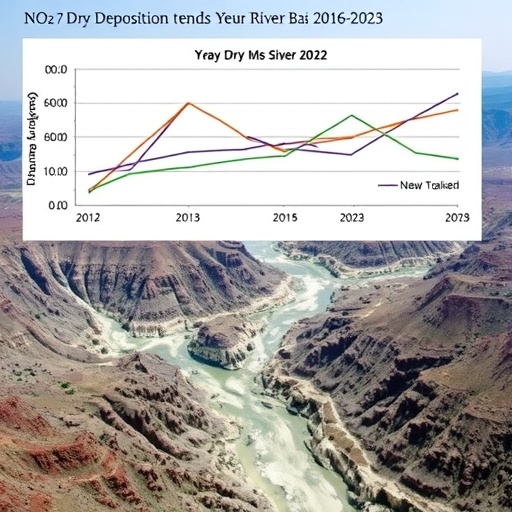
In the realm of environmental science, understanding the dynamics of atmospheric nitrogen dioxide (NO₂) is critical, especially in densely populated and industrial areas like the Yellow River Basin in China. Recent research spearheaded by a team of scientists, including Rao, Wang, and Liang, delves into the spatial and temporal variations of atmospheric NO₂ dry deposition across this crucial geographical zone from 2015 to 2023. Their meticulous examination provides a comprehensive overview of how NO₂ concentrations have fluctuated over time, effectively shedding light on the broader implications for air quality and public health.
Nitrogen dioxide, a significant air pollutant, is primarily produced from combustion processes, which include vehicular emissions and industrial activities. This compound poses substantial health risks, contributing to respiratory problems and various other health issues. Moreover, NO₂ can have profound effects on other environmental factors. Researchers have long sought to quantify its deposition in order to better understand its impact on ecosystems, particularly in regions like the Yellow River Basin, which is vital for agriculture and supports millions of residents.
The study employed sophisticated modeling techniques that examined data collected over eight years. By analyzing broad sets of meteorological and land use information, the researchers constructed a detailed picture of how NO₂ dry deposition patterns change spatially and temporally. Their findings reveal important trends, such as significant seasonal variations that correlate with agricultural cycles and urban activity, underscoring the necessity of continuous monitoring in such vital regions.
In a methodical approach, the team categorized their results into various regions within the Yellow River Basin, highlighting areas of particularly high NO₂ deposition. This regional analysis is pivotal as it not only aids in identifying pollution hotspots but also allows for targeted policy interventions. Policymakers can leverage this data to implement stricter emission standards and develop environmental regulations that specifically address the most affected areas.
The implications of this research extend beyond academic discourse. With urbanization and industrialization on the rise, cities located near the Yellow River are experiencing heightened levels of air pollution. The research underscores the urgent need for strategies to mitigate NO₂ emissions, such as adopting cleaner technologies, enhancing public transport systems, and promoting the use of renewable energy sources. These strategies could significantly improve air quality and, subsequently, public health.
Another critical aspect of this work involves the potential ecological consequences of elevated NO₂ levels. Nitrogen deposition can alter soil chemistry and negatively affect vegetation health, which may have cascading effects on food security in the region. The research findings indicate that careful management of nitrogen levels is essential to sustaining both natural and agricultural ecosystems.
Furthermore, as climate patterns shift, the research highlights the interplay between changing weather conditions and NO₂ levels. Meteorological factors such as wind direction, temperature, and precipitation play critical roles in transporting and depositing nitrogen dioxide. Understanding these relationships is vital for predicting future trends and for developing proactive measures to address potential increases in pollution.
This exploration of NO₂ dry deposition also feeds into broader global discourses on air quality, climate change, and public health. As countries aim to meet international emissions reduction targets, localized studies like this become increasingly valuable. The collaborative effort demonstrated in this study serves as a model for other regions grappling with similar pollution challenges.
The comprehensive nature of this research not only contributes to scholarly literature but also serves as a call to action for communities, governments, and environmental organizations. By establishing baseline data on NO₂ levels and their fluctuations, stakeholders can effectively assess the effectiveness of interventions over time.
In conclusion, the insights gathered from this analysis of NO₂ dry deposition in the Yellow River Basin from 2015 to 2023 present a compelling narrative about urban air quality and its implications. As environmental challenges continue to mount globally, studies like this reaffirm the importance of targeted research in guiding policy-making and fostering sustainable practices.
The authors, Rao, Wang, and Liang, along with their team, have made significant strides in this domain, shining a light on the crucial intersection of air quality, public health, and environmental sustainability. Their work provides not only a data-driven foundation for future studies but also actionable insights for mitigating one of the most pervasive challenges of our time—air pollution.
This research serves as an essential stepping stone towards a cleaner future for the Yellow River Basin and similar regions confronting the dire realities of atmospheric degradation due to human activity. As communities rally around the findings, the hope is that mitigation measures will lead to tangible improvements in both air quality and public health for generations to come.
Cite Scienmag News
Violet Maxwell. (January 10, 2026). NO2 Dry Deposition Trends in Yellow River Basin 2015-2023. Scienmag. https://scienmag.com/no2-dry-deposition-trends-in-yellow-river-basin-2015-2023/
Violet Maxwell. "NO2 Dry Deposition Trends in Yellow River Basin 2015-2023." Scienmag, 10 January 2026, https://scienmag.com/no2-dry-deposition-trends-in-yellow-river-basin-2015-2023/. Accessed 4 September 2026.
Violet Maxwell. "NO2 Dry Deposition Trends in Yellow River Basin 2015-2023." Scienmag. January 10, 2026. https://scienmag.com/no2-dry-deposition-trends-in-yellow-river-basin-2015-2023/


