


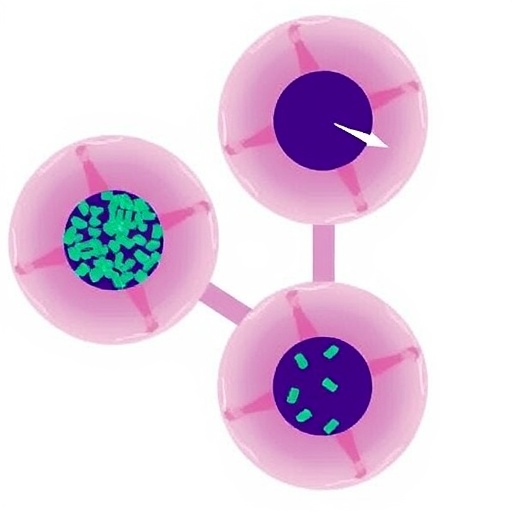
Emerging research has brought to light the pivotal role that specific immune cells play in the behavior of urothelial cancer, particularly in the context of radiation therapy. A novel study by Chiang et al. investigates how high-CD14-expressing urothelial cancer cells can significantly influence the tumor microenvironment, promoting a neutrophil-rich setting. This phenomenon is crucial, as it has been associated with an increased risk of metastasis induced by radiation therapy. The intricate interplay between cancer cells and the immune response could redefine our understanding of tumor biology and treatment strategies moving forward.
CD14 is a coreceptor for the detection of bacterial lipopolysaccharides, and its expression on immune and cancer cells provides insights into inflammatory processes. The study indicates that cancer cells expressing high levels of CD14 attract neutrophils, which are a type of white blood cell, to the tumor site. This influx of neutrophils can create a favorable environment for the cancer cells to thrive, thereby facilitating the spread of cancer to distant sites. The researchers suggest that this interaction between CD14-expressing cells and neutrophils could be a key factor in understanding radiation-induced metastasis.
Radiation therapy is a cornerstone in the treatment of many cancers, including urothelial carcinoma. However, the effectiveness of this treatment can sometimes be offset by the development of metastases—secondary tumors that arise from the primary site. The synergy between radiation treatment and the immune microenvironment offers a dual-edged sword in cancer management. While radiation aims to target and kill cancer cells, it simultaneously alters the surrounding environment, which could inadvertently support tumor progression.
Focusing on the findings from the study, the researchers deployed a series of in vitro and in vivo experiments to elucidate the behavior of high-CD14-expressing urothelial cancer cells. Their results indicate that the presence of these cells leads to a significant increase in neutrophil recruitment. The dynamics of this recruitment were shown to be mediated through various signaling pathways, among which the implications of cytokines and chemokines were particularly highlighted. This intricate signaling landscape underpins a more comprehensive understanding of how pleiotropic effects of radiation may lead to adverse outcomes in cancer treatment.
Importantly, the researchers also delved into the molecular mechanisms behind this phenomenon. They examined specific markers and pathways that are activated in the presence of high-CD14-expressing cancer cells. The activation of these pathways not only promotes the survival of neutrophils but may also enhance their pro-tumor activity, ultimately leading to worse prognosis for patients. Understanding these mechanisms opens the door for potential therapeutic interventions that target these pathways, thereby possibly improving the response to radiation therapy.
Parallel to these findings is the consideration of how traditional cancer therapies might be optimized based on the tumor microenvironment. The potential for repurposing existing drugs that modulate the immune response is an intriguing area for future research. Strategies that involve the blocking of neutrophil recruitment or altering their behavior could help mitigate the metastatic potential of tumors exhibiting high CD14 expression.
Furthermore, this research emphasizes the importance of the tumor microenvironment as a critical player in cancer progression. The interactions that occur within this niche have significant ramifications for therapeutic efficacy and patient outcomes. A more nuanced understanding of these interactions could lead to the development of combination therapies that address both the primary tumor and its surroundings.
As the research continues, scientists are encouraged to investigate how the modulation of immune cell populations within tumors can serve as a novel approach to cancer therapy. The data presented by Chiang and colleagues pushes the boundaries of current cancer treatment paradigms, advocating for a more integrated view that encompasses both cancer cell behavior and immune system dynamics.
In light of these findings, we also see a shift in how oncologists might approach treatment plans. Rather than solely focusing on diminishing tumor burden, there is growing recognition of the need to manage the immune landscape effectively. This perspective widens the scope of oncological practices and highlights the relevance of immuno-oncology in contemporary cancer treatment regimes.
As awareness grows around the complexities of tumor-immune interactions, there is a pressing need for clinical trials designed to test the efficacy of therapies that take these interactions into account. The research by Chiang et al. may set the stage for future studies aimed at generating therapeutic options that minimize the risk of metastasis while maximizing the efficacy of treatments like radiation.
In conclusion, the implications of high-CD14-expressing urothelial cancer cells are profound and filled with potential for advancing cancer therapy. The correlation between these cells and a neutrophil-rich microenvironment presents an important avenue for exploration in cancer biology. As investigations into these mechanisms continue to unfold, there is a hope that improved therapeutic approaches will emerge, ultimately leading to better outcomes and extended survival for cancer patients.
Given the increasing complexity of cancer behaviors influenced by the immune system, it is crucial for the scientific community to remain engaged in elucidating these mechanisms. The findings present a clarion call for collaboration across disciplines—bringing together immunologists, oncologists, and molecular biologists to foster innovative strategies against cancer.
As the dialogue continues surrounding cancer treatment and the immune response, it is sure to become a focal point in medical research, with the potential to not only enhance patient care but also transform the ways we view and treat malignant diseases.
Cite Scienmag News
Nathaniel Bowman. (January 4, 2026). CD14+ Urothelial Cancer Cells Promote Metastatic Neutrophil Environment. Scienmag. https://scienmag.com/cd14-urothelial-cancer-cells-promote-metastatic-neutrophil-environment/
Nathaniel Bowman. "CD14+ Urothelial Cancer Cells Promote Metastatic Neutrophil Environment." Scienmag, 4 January 2026, https://scienmag.com/cd14-urothelial-cancer-cells-promote-metastatic-neutrophil-environment/. Accessed 4 September 2026.
Nathaniel Bowman. "CD14+ Urothelial Cancer Cells Promote Metastatic Neutrophil Environment." Scienmag. January 4, 2026. https://scienmag.com/cd14-urothelial-cancer-cells-promote-metastatic-neutrophil-environment/


