


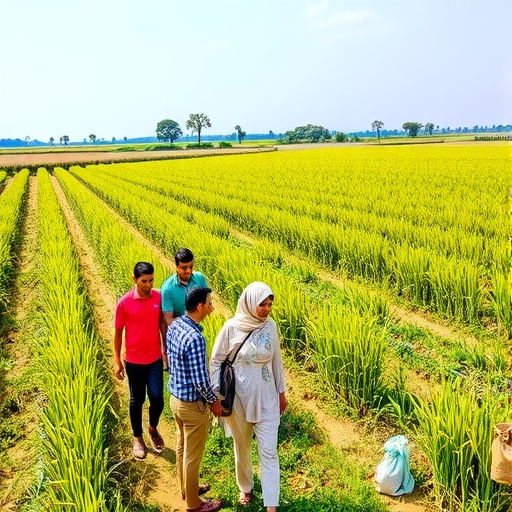
The Indonesian rice supply chain, a cornerstone of the nation’s agricultural economy, is on the brink of a significant transformation. A recent initiative spearheaded by researchers A.M. Azis, M. Irjayanti, and Y.R. Murti promises to establish an enhanced digital information system aimed at improving traceability and sustainability within this vital sector. As the demand for rice continues to rise, the necessity for a more efficient and transparent supply chain is becoming increasingly apparent. This new approach leverages cutting-edge technology to address longstanding challenges, promising a future where Indonesia’s rice production can meet the growing needs of its population.
In the heart of Southeast Asia, Indonesia is one of the world’s largest rice producers. However, the traditional methods of rice cultivation and distribution have long been accompanied by numerous inefficiencies. From outdated farming techniques to a fragmented supply chain, these issues have led to significant challenges in ensuring food security and maintaining environmental sustainability. Recognizing these obstacles, the research team has developed a digital information system that aims to unify various stakeholders in the rice supply chain and provide them with real-time data and analytics.
The digital information system integrates several technological advancements, including blockchain and IoT (Internet of Things) applications. By employing blockchain technology, the system ensures that every step of the rice production process is documented and immutable, providing an unparalleled level of transparency. This allows consumers to trace their rice back to its origin, fostering trust and accountability among farmers, distributors, and consumers. Meanwhile, IoT devices collect data on crop health and environmental conditions, enhancing farmers’ ability to make informed decisions regarding their practices.
Moreover, the implementation of this system is designed to improve sustainability within the rice supply chain. Traditional rice farming often relies heavily on chemical fertilizers and pesticides, contributing to soil degradation and water pollution. The digital platform promotes sustainable farming methods by providing farmers with data-driven insights on when and how much fertilizer to use, thereby minimizing environmental impact. This not only helps in conserving the ecosystem but also optimizes input costs, creating a win-win situation for farmers and the environment.
A key aspect of this initiative is its inclusivity. The research team recognizes that many smallholder farmers in Indonesia may lack access to modern technology and resources. Therefore, the digital information system has been developed with user-friendly interfaces and educational tools that empower these farmers. Training programs will be established to ensure that every participant in the supply chain can effectively utilize the new system. By bridging the technological gap, the initiative aims to uplift entire communities, driving economic growth and improving livelihoods.
The significance of enhancing traceability in the rice supply chain cannot be overstated. In an era where consumer preferences lean towards ethically sourced and environmentally friendly products, the necessity for robust traceability mechanisms becomes paramount. This digital platform will not only cater to domestic consumers but also position Indonesian rice in the global market, where demand for sustainably sourced food is skyrocketing. Enhanced traceability can also protect Indonesian farmers against market fluctuations by ensuring that they receive fair prices for their products.
In addition to benefits for farmers and consumers, the digital information system holds promise for governmental stakeholders. As policymakers strive to implement effective agricultural policies, access to data will enable informed decision-making. The collection of comprehensive data regarding production levels, market demands, and environmental impacts will aid in crafting initiatives that support sustainable agriculture on a national scale. By fostering a data-driven approach, the system contributes to a more resilient and adaptive agricultural sector.
Collaboration will be central to the successful implementation of this initiative. The research team is actively engaging with various stakeholders, including government agencies, non-governmental organizations, and private sector partners. This collaborative effort is vital in ensuring that the digital information system aligns with existing agricultural policies and infrastructures. By working together, stakeholders can pool resources, share expertise, and ultimately drive widespread adoption of the technology across the rice supply chain.
Furthermore, the project is taking a proactive approach to address potential challenges during implementation. One of the main concerns is the digital divide, which may exclude some farmers from reaping the benefits of the new system. To mitigate this risk, the research team is prioritizing outreach and support to underrepresented communities. Ensuring that all farmers can participate is critical to achieving the overall goals of sustainability and traceability.
As the project progresses, the researchers are also closely monitoring the environmental impact of the digital information system. By tracking changes in farming practices and their effects on local ecosystems, they aim to assess the sustainability of the initiative in real time. This ongoing evaluation will provide feedback for continuous improvement and adaptation, ensuring that the system remains effective as conditions evolve.
In summary, the research conducted by Azis, Irjayanti, and Murti signifies a pivotal moment in the evolution of Indonesia’s rice supply chain. Through the deployment of a sophisticated digital information system, the initiative aims to enhance traceability and sustainability, ultimately benefiting farmers, consumers, and the environment alike. As this project unfolds, the hope is that it will serve as a blueprint for similar efforts in other agricultural sectors, demonstrating the power of technology in promoting food security and sustainable practices.
As we look to the future, the implications of this transformational project extend beyond the borders of Indonesia. With the world grappling with the challenges of food production in the face of climate change and population growth, the lessons learned from this initiative could have a far-reaching impact. The integration of technology in agriculture is not just an option; it is becoming a necessity to ensure a food-secure and sustainable world for generations to come.
The convergence of technology and agriculture exemplified in this research provides a glimpse into a future where farmers are empowered with knowledge and tools that foster sustainable practices. As this digital information system continues to evolve, it may well usher in a new era of agricultural innovation, helping to navigate the complexities of modern food systems.
With these advancements on the horizon, the Indonesian rice supply chain stands poised for a remarkable transformation, one that prioritizes sustainability, efficiency, and transparency. As consumers increasingly demand accountability in their food choices, the success of this initiative may very well hold the key to a more sustainable agricultural future not just for Indonesia, but for the world at large.
Azis, A.M., Irjayanti, M. & Murti, Y.R. Advancing traceability and sustainability through a digital information system in Indonesia’s rice supply chain.
Discov Sustain (2026). https://doi.org/10.1007/s43621-025-02544-4
Cite Scienmag News
Alan Morgan. (January 4, 2026). Enhancing Rice Supply Chain Traceability in Indonesia. Scienmag. https://scienmag.com/enhancing-rice-supply-chain-traceability-in-indonesia/
Alan Morgan. "Enhancing Rice Supply Chain Traceability in Indonesia." Scienmag, 4 January 2026, https://scienmag.com/enhancing-rice-supply-chain-traceability-in-indonesia/. Accessed 3 September 2026.
Alan Morgan. "Enhancing Rice Supply Chain Traceability in Indonesia." Scienmag. January 4, 2026. https://scienmag.com/enhancing-rice-supply-chain-traceability-in-indonesia/


