


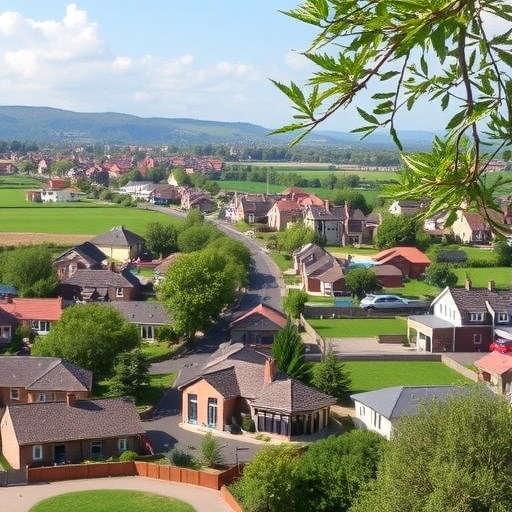
The expansion of rural settlements has historically been overshadowed by urban growth in discussions about human impact on biodiversity. However, a groundbreaking study by Liu, Fang, Huang, and their colleagues has emphasized that rural settlement expansion is now on par with urban developments in terms of its biodiversity consequences. As rural areas continue to urbanize, the implications for ecosystems are profound, calling for a recalibration of our understanding of habitat loss and biodiversity degradation. This study reveals that rural expansion, once considered a less significant threat, now poses a considerable challenge to maintaining global biodiversity.
At its core, the research indicates that the rapid growth of rural settlements is leading to irreversible changes in land use patterns. As agriculture and infrastructure extend into previously undisturbed landscapes, habitats are fragmented, resulting in significant species loss and ecological imbalance. The team’s data illustrate that rural development is creating a deterioration of natural habitats comparable to that caused by urbanization. The shift in perception is essential as conservation efforts are primarily focused on urban areas, often neglecting the equally pressing issues faced in rural regions.
Previous assumptions held that urban areas bore the brunt of biodiversity loss due to concentrated pollution and habitat disruption. This view has persisted despite acknowledgment of agricultural lands’ sprawling nature, often overlooked in academic literature and policy discussions. The study’s authors utilized comprehensive satellite imagery and biodiversity data to analyze the extent of rural expansion and compare its impacts with those of urban sprawl. Surprisingly, they found that rural areas contribute significantly to the overall degradation of ecosystems.
One of the startling revelations of the study is the sheer scale of land transformation occurring in rural settings. Whereas urban centers concentrate population and industries, rural areas are often characterized by expansive, low-density growth that may initially appear less damaging. However, this sprawl leads to extensive land conversion for agriculture, roads, and housing, which collectively exert a significant toll on biodiversity. Species that once thrived within these natural landscapes are being pushed to the brink, raising concerns about ecosystem services that are critical to human survival.
The analysis incorporates various ecological indicators, revealing trends that have significant implications for regional biodiversity. As rural areas evolve, historically rich ecosystems are being replaced with monocultures and fragmented habitats, leading to the decreased viability of many species. This alarming trend underscores the need for strategic land-use planning that considers the cumulative impacts of both urban and rural expansions on biodiversity in equal measure. Failure to do so may not only threaten wildlife but also diminish the quality of life for human populations that depend on healthy ecosystems.
Moreover, this study sheds light on the ongoing tension between agricultural expansion and biodiversity conservation. While rural development is necessary to feed a growing global population, the practices employed can have extensive ripple effects on local ecosystems. Unsustainable farming techniques, habitat destruction, and chemical runoff contribute significantly to habitat degradation. The researchers advocate for the adoption of sustainable agricultural practices that prioritize ecological health, proposing that solutions lie in enhancing biodiversity even within rural settings rather than pursuing unchecked expansion.
Another vital aspect examined in the study is the socio-economic context that drives rural settlement growth. The authors argue that migration patterns, economic incentives, and policy decisions often contribute to the rapid expansion of rural areas. Governments and policymakers must recognize that enhancing rural livelihoods does not have to come at the expense of ecological integrity. Forward-thinking policies that integrate conservation efforts with rural development needs can lead to pathways that promote sustainability while supporting economic growth.
The study’s findings call for immediate action from stakeholders at all levels. Urban planners, conservationists, and rural community leaders must work collaboratively to ensure that rural expansion does not compromise biodiversity. This includes reevaluating current zoning laws, investing in ecological restoration projects, and developing incentives for farmers and developers to adopt sustainable practices. Furthermore, public awareness campaigns can help highlight the importance of protecting rural ecosystems, fostering community buy-in and participation.
The implications of this research extend beyond just biodiversity; they engage with climatic changes and environmental sustainability as well. With climate challenges rapidly escalating, preserving diverse ecosystems becomes even more crucial in building climate resilience. Biodiverse landscapes are better positioned to adapt to shifting environmental conditions, thus serving as buffers against climate variability. It’s clear that the fate of biodiversity and rural settlements are intrinsically linked, necessitating a unified approach to environmental stewardship.
Lastly, as the study gains traction and attention, it provides a momentous opportunity for the global community to rethink conservation strategies and approaches. By emphasizing the crucial role that rural ecosystems play in the broader landscape of biodiversity, it opens a dialogue for innovative solutions that transcend traditional urban-centric perspectives. Fostering a culture of biodiversity conservation across all forms of land use is imperative if we are to weather ongoing environmental changes and secure a sustainable future for generations to come.
In conclusion, Liu and colleagues challenge us to expand our view of ecological threats beyond the limits of urbanization and address the hidden dimensions of rural development that are equally impactful. The study underscores an urgent call to action for conservationists, policymakers, and society as a whole to foster an integrated approach to biodiversity preservation. By balancing human development with the health of ecosystems, we can ensure that rural settlements serve as havens for biodiversity rather than contributors to its impending decline.
Liu, Z., Fang, C., Huang, S. et al. Global rural settlement expansion rivals its urban counterpart in biodiversity impact.
Commun Earth Environ (2025). https://doi.org/10.1038/s43247-025-03082-7
Cite Scienmag News
Margaret Porter. (December 14, 2025). Rural Settlement Growth Matches Urban Biodiversity Impact. Scienmag. https://scienmag.com/rural-settlement-growth-matches-urban-biodiversity-impact/
Margaret Porter. "Rural Settlement Growth Matches Urban Biodiversity Impact." Scienmag, 14 December 2025, https://scienmag.com/rural-settlement-growth-matches-urban-biodiversity-impact/. Accessed 3 September 2026.
Margaret Porter. "Rural Settlement Growth Matches Urban Biodiversity Impact." Scienmag. December 14, 2025. https://scienmag.com/rural-settlement-growth-matches-urban-biodiversity-impact/


