


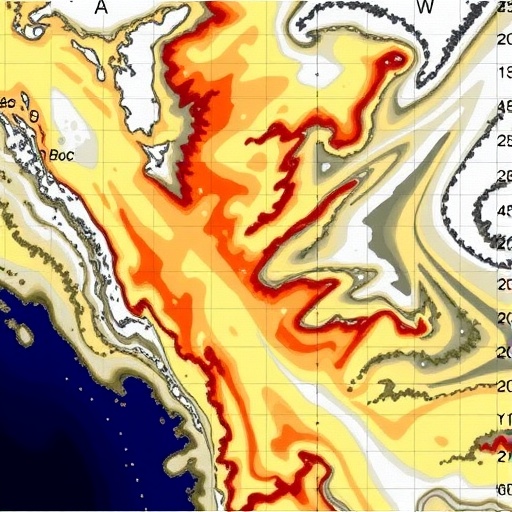
Early on the morning of August 10th, 2025, an extraordinary geological event unfolded in the Tracy Arm Fjord, a narrow inlet located south of Juneau, Alaska. This fjord, a popular destination for tourists and commercial cruise vessels, experienced a colossal landslide that precipitated one of the most significant tsunamis in recent history. The landslide involved a massive wedge-shaped rock mass perched above the terminus of the South Sawyer Glacier—a dynamic ice front that plays a critical role in the fjord’s environmental stability. When the rock mass collapsed, the sudden displacement of tens of millions of cubic meters of debris sent shockwaves through the glacier and water, generating a tsunami wave of unprecedented height and impact in the region.
This wave was not only remarkable due to its immense height—reaching an astonishing 481 meters at certain points along the fjord walls—but also because of the profound and localized damage it inflicted on the surrounding natural landscape. Unlike tsunamis triggered by distant seismic activity, landslide-generated tsunamis in narrow, confined environments such as fjords can produce devastatingly high and forceful waves that remain intensely localized. The Tracy Arm event vividly illustrated this phenomenon as the tsunami stripped vegetation from steep fjord walls, reshaped shorelines, and left a distinct high-water trimline visible from space and on the ground. The unique characteristics of such events highlight the different nature of hazards posed by landslide tsunamis compared to the more commonly studied earthquake-related waves.
Researchers led by Dan Shugar have provided an in-depth analysis of the Tracy Arm landslide-tsunami event, drawing upon seismic, satellite, and field data collected in the aftermath. Their investigation reveals that although the massive slope collapse seemed sudden, subtle seismic precursors were detectable in the hours and days leading up to the failure. The landslide generated long-period seismic waves equivalent to a magnitude 5.4 earthquake, measurable worldwide and offering a new perspective on the potential of seismic monitoring systems to provide early warning. This suggests a promising research avenue in the detection of subtle signals that precede such catastrophic failures, which could inform early warning systems in similarly vulnerable locations.
Glacier retreat emerges as a primary factor that likely primed the South Sawyer Glacier slope for failure. Over recent decades, the regional warming trend has accelerated glacier thinning and terminus retreat across Alaska and the broader Arctic and Subarctic regions. This climatic shift has reduced the structural support that glaciers historically provided to adjacent rock slopes, increasing their susceptibility to destabilization. The interaction between glacier dynamics and slope stability is complex; as glaciers thin and retreat, adjacent slopes may become oversteepened or lose the buttressing effect of ice. In combination with thawing permafrost and other geologic processes, these mechanisms elevate the risk of massive landslides and their associated hazards.
Once displaced, the material from the landslide plunged into the fjord with tremendous force, rapidly displacing ice and water to generate a powerful tsunami wave. The localized nature of fjords—narrow in width but extending several kilometers inland—amplifies the impact of such waves by trapping and channeling their energy. This effect resulted in extreme wave runup heights and a devastating impact radius that, while limited in spatial extent, posed significant risks to human life and infrastructure. At the time of the event, Tracy Arm was busy with maritime traffic; upwards of 20 boats, including large cruise ships carrying thousands of passengers, frequented the fjord daily during the summer season. The timing underscored the acute hazard posed by such events in areas popular with tourists.
Beyond the initial tsunami wave, the event triggered long-lasting oscillations within the fjord waters, known as a seiche. These standing wave patterns persisted for hours and even days, showcasing an additional hazard dimension as the continuous water resonance affected shorelines and vessels remaining in the fjord. The seiche’s presence was confirmed through a combination of satellite observations and seismic data, illustrating the multifaceted impact of the landslide beyond just the immediate wave. This lingering “ringing” of the fjord adds complexity to hazard assessments and necessitates integrating multiple monitoring technologies to fully understand the event’s temporal dynamics.
Importantly, the Tracy Arm case illuminates the broader implications for regions experiencing rapid environmental change. As glaciers retreat worldwide and permafrost thaws, these types of landslide-induced tsunamis may become more frequent and consequential. Human activity, including increased tourism and resource extraction in Arctic and Subarctic areas, further exacerbates exposure to these hazards. This convergence necessitates urgent development in event detection and risk mitigation methodologies tailored specifically for landslide-generated tsunamis. Traditional tsunami early warning systems, predominantly designed for seismic ocean-wide events, may not effectively capture the localized signals preceding and following such landslides.
The seismic signals preceding the Tracy Arm landslide provide a tantalizing glimpse into possible early detection capabilities. The long-period waves produced by ground movements of the sliding rock offer measurable precursors that might be exploited to warn of imminent failure. Coupled with remote sensing technologies capable of monitoring glacier retreat and slope deformation, a multi-pronged surveillance approach could revolutionize hazard forecasting. The authors emphasize the need for further research focused on identifying and characterizing precursory signals to refine predictive models and warning protocols.
Climate change also intricately ties into the geological processes at play. Warming trends not only drive glacier retreat but also influence permafrost thaw, soil moisture conditions, and hydrological cycles—all factors contributing to slope stability variability. Understanding the nuanced interplay between climatic drivers and geological responses is essential for constructing robust hazard models. Such models must integrate multidisciplinary data sets from geophysics, climatology, glaciology, and ecology to holistically assess and manage the growing risks posed by landscape destabilization in sensitive environments.
The findings from Tracy Arm represent a landmark case study that underscores the urgency of adapting to a rapidly changing Arctic. By dissecting the mechanics of the landslide and resultant tsunami, the analysis provides a framework for other regions at risk to develop improved monitoring infrastructure. Innovations could include enhanced seismic networks tuned to detecting low-frequency signals indicative of slope movement, satellite-based vegetation and water-level monitoring, and real-time data assimilation platforms that integrate heterogeneous sensor inputs.
This event also serves as a powerful reminder of humanity’s vulnerability when natural systems are pushed beyond historical thresholds. The densely trafficked fjord was nearly caught off-guard by a phenomenon that had, until now, been relatively undocumented in such scale and context. Lessons learned through this comprehensive study should inform regulatory policies on vessel traffic management, emergency preparedness, and environmental conservation efforts in fjord regions and other confined water bodies worldwide.
As the scientific community turns its attention to the increasing intersection of environmental change and geohazards, Tracy Arm stands as a sentinel event highlighting the critical role of interdisciplinary research. Progressing from data collection towards predictive understanding will require substantial investment and collaboration across institutional and national boundaries. However, the payoff—greater resilience against catastrophic landslide-generated tsunamis—could be transformative, potentially safeguarding countless lives and preserving fragile ecosystems in some of Earth’s most breathtaking and vulnerable landscapes.
In conclusion, the massive landslide-tsunami event in Tracy Arm Fjord is a compelling case of nature’s dynamic interplay between climate change, glacier dynamics, and geological hazards. Its study offers newfound hope that, through advanced monitoring and early warning innovations, humanity can better anticipate and mitigate the threats posed by similar future events. While the dangers are increasing, so too are the scientific tools and ecological imperatives driving a more proactive approach to managing our changing planet.
News Publication Date: 6-May-2026
Web References: http://dx.doi.org/10.1126/science.aec3187
References: Shugar, D., et al., (2026). A 481 m-high landslide-tsunami in a cruise ship-frequented Alaska fjord. Science.
Cite Scienmag News
Violet Maxwell. (May 6, 2026). 2025 Tracy Arm Fjord Megatsunami Analysis Reveals Pathways for Early Event Detection. Scienmag. https://scienmag.com/2025-tracy-arm-fjord-megatsunami-analysis-reveals-pathways-for-early-event-detection/
Violet Maxwell. "2025 Tracy Arm Fjord Megatsunami Analysis Reveals Pathways for Early Event Detection." Scienmag, 6 May 2026, https://scienmag.com/2025-tracy-arm-fjord-megatsunami-analysis-reveals-pathways-for-early-event-detection/. Accessed 3 September 2026.
Violet Maxwell. "2025 Tracy Arm Fjord Megatsunami Analysis Reveals Pathways for Early Event Detection." Scienmag. May 6, 2026. https://scienmag.com/2025-tracy-arm-fjord-megatsunami-analysis-reveals-pathways-for-early-event-detection/


