


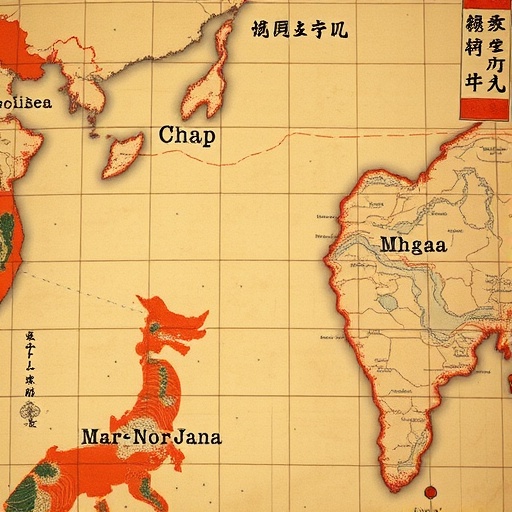
In a remarkable exploration of late fourteenth-century Northern China, a research team led by Guang et al. has unveiled groundbreaking insights into the production and usage of paper based on fragments unearthed at the Dove Cave site. This archaeological study not only sheds light on the historical significance of paper but also illustrates the cultural and social dynamics of that era. The findings are integral in understanding how paper became a pivotal component in East Asian societies.
The excavation of the Dove Cave site has yielded an impressive collection of paper fragments, each with unique characteristics that reflect the diverse methodologies employed in paper production during this period. The researchers meticulously analyzed the material, composition, and ink used on these fragments, offering a comprehensive picture of the technological advancements achieved in papermaking. This meticulous analysis showcases how the late 14th century was a transformative era for paper craftsmen, allowing for innovations that significantly enhanced both the quality and accessibility of paper.
Central to the research is the identification of key raw materials used in the paper production process. The analysis revealed that the primary materials included mulberry bark, hemp, and rags, each contributing to varying texture and durability. The researchers highlight how local ecosystems influenced the availability of these materials, suggesting a strong interconnection between the environment and the evolution of production techniques. This relationship indicates that paper was not merely a commodity but an integral aspect of the region’s cultural heritage.
Moreover, the study emphasizes the role of paper not just as a medium for writing but as a vital tool for communication, record-keeping, and literary expression. The fragments unearthed from Dove Cave contain inscriptions and illustrations, providing valuable insights into the scripts and artistic styles prevalent at the time. By examining these forms of expression, the researchers uncover the socio-political narratives that were prevalent during the late 14th century, documenting the complex interplay between power, culture, and technology.
An intriguing element of this research pertains to the socio-economic implications of paper usage. As paper became more widely available, it facilitated not just personal communication but also significant administrative and governmental functions. The ability to document transactions and craft legal agreements heralded a new era of bureaucracy, influencing trade and governance structures. The rich tapestry of paper usage illustrated in this study underscores how technological innovations directly correlate with shifts in social structure and economic practices.
The team also delved into the artistic significance of the paper fragments. They noted that the quality of paper directly influenced the quality of artwork produced during this time. The research indicates that shrine documents, religious texts, and poetry were often created on specialized types of paper, leading to a flourishing of the arts that would inspire generations to come. This correlation between paper quality and artistic output raises questions about the considerations artisans made regarding the materials they used and the implications for cultural expression.
In addition to examining paper fragments, the researchers compared their findings with other archaeological sites in Northern China. By cross-referencing data gathered from diverse locations, they have built a more nuanced understanding of regional differences in paper production techniques. This comparative analysis positions the Dove Cave site within a broader geographical and temporal context, highlighting the dynamic exchanges among different populations in the region.
Moreover, the implications of this research extend beyond a mere historical recount of papermaking. The team’s findings offer valuable lessons for contemporary sustainable practices. Understanding the processes and materials used by historical craftsmen can inform modern methodologies in environmentally-friendly paper production. By fostering an appreciation for traditional techniques, there lies potential not only for preservation but also for innovation in today’s paper industry.
The meticulous research undertaken by Guang and colleagues contributes to a deeper narrative about the human experience. Through the study of these paper fragments, they have opened a window into a world where communication, culture, and commerce were intricately woven. The reverberations of this period can be seen in modern practices concerning information dissemination and cultural enrichment.
Technological progress, as evidenced by the diversity and quality of paper found at the site, also suggests a growing literacy among the population during this timeframe. Thanks in part to this evolution in papermaking, a broader segment of society was likely able to engage with texts that had previously been the domain of the elite alone. This democratization of knowledge can be traced through historical texts and artifacts, depicting a society increasingly engaged in the swirling currents of thought and creativity.
The study combines rigorous scientific analysis with compelling storytelling, positioning paper as a critical component of human development. Far from a mundane material, paper embodied the spirit of innovation and creativity inherent in the late fourteenth century. Each fragment retrieved from the Dove Cave serves as a historical testament to the human drive for expression, connection, and progress.
In conclusion, this research is a vital contribution to the fields of archaeology and anthropology. It paints a vivid picture of life in Northern China during a pivotal historical moment when paper began to emerge as an indispensable tool for society. The excitement surrounding these revelations underscores the importance of continued archaeological endeavors in unearthing the past, allowing us to appreciate and understand the ongoing story of human civilization.
Cite Scienmag News
Courtney Benton. (December 11, 2025). 14th Century Northern China: Discoveries in Paper History. Scienmag. https://scienmag.com/14th-century-northern-china-discoveries-in-paper-history/
Courtney Benton. "14th Century Northern China: Discoveries in Paper History." Scienmag, 11 December 2025, https://scienmag.com/14th-century-northern-china-discoveries-in-paper-history/. Accessed 3 September 2026.
Courtney Benton. "14th Century Northern China: Discoveries in Paper History." Scienmag. December 11, 2025. https://scienmag.com/14th-century-northern-china-discoveries-in-paper-history/


