


GREENSBORO, NC, July 19, 2024 — With a $1.5 million state grant, UNC Greensboro (UNCG) faculty are leading a unique research effort to explore how complex molecules found in living organisms, such as fungi, could be used to engineer more environmentally friendly energy systems.

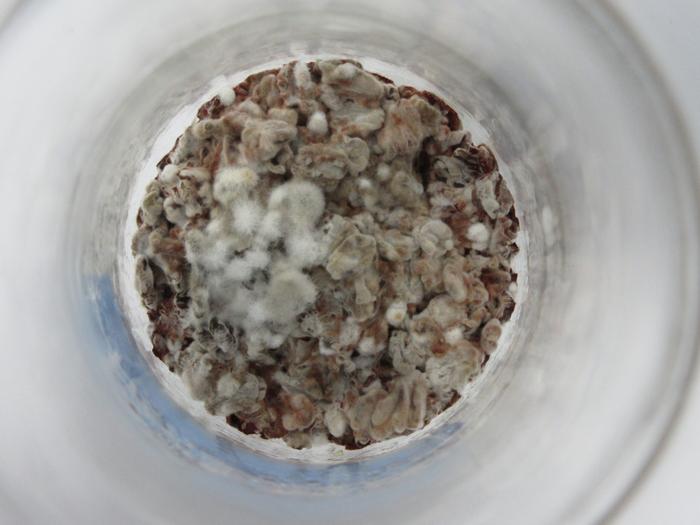
Credit: Dr. Nicholas Oberlies
GREENSBORO, NC, July 19, 2024 — With a $1.5 million state grant, UNC Greensboro (UNCG) faculty are leading a unique research effort to explore how complex molecules found in living organisms, such as fungi, could be used to engineer more environmentally friendly energy systems.
“People have been looking at natural products for centuries for medicinal applications,” said Dr. Shabnam Hematian, Bernard-Glickman Dean’s Professor in the Department of Chemistry and Biochemistry. “We believe that can be done for energy, too.”
The multi-institution initiative is called NICER — Nature Inspired Collaborative Energy Research. Led by Hematian, the research team includes two other UNCG faculty members, a private-sector researcher, and faculty from NC A&T State University, UNC Charlotte, and UNC-Chapel Hill.
NICER will explore how compounds found in fungi can be used to improve technologies for turning sunlight into electricity, transporting electricity in electronics and storing energy in batteries.
The project is funded by a $1.5 million Research Opportunities Initiative (ROI) grant funded by the N.C. General Assembly and administered by the UNC System. This is UNCG’s first UNC System ROI grant. The funding mechanism, established in the 2014-2015 budget bill, targets game-changing research taking place in six priority areas – advanced manufacturing; data sciences; defense, military, and security; energy; marine and coastal science; and pharmacoengineering.
Current energy technologies involve the extensive use of lithium and other elements that must be mined, which can be environmentally disruptive. Organic molecules from nature have the potential to increase the stability and lifetimes of these products, which could make energy technology less expensive and more sustainable. While organic molecules won’t eliminate the need for inorganic materials, Hematian says, they could reduce demand.
“What if we discover something that could help power this campus, power this town, power this state — prevent global climate change?” said Patricia A. Sullivan Distinguished Professor of Chemistry Dr. Nicholas Oberlies. Oberlies, who is a key leader on the project at UNCG, along with Dr. Minjeong Kim in computer science.
Novel organic compounds could solve many challenging chemistry and engineering problems. Hematian and Oberlies point out that nature has been evolving complex molecules to harvest, store and transport energy for hundreds of millions of years — far longer than humans have been engineering batteries and electronics.
The research collaborative will explore how substances created in the cells of fungi could enhance batteries, photovoltaic cells and electronic circuits. The NICER initiative’s focus on batteries as an initial application aligns with a growing manufacturing presence in the state focused on batteries and electric vehicles.
Oberlies, Hematian and their colleagues view the UNC System ROI grant money as seed funding, and they anticipate applying for federal grants as their research advances.
In addition to accelerating novel research, the current grant will also create opportunities for NICER scientists to train and mentor high school, undergraduate and graduate students in their labs, further strengthening the state’s STEM education and training efforts.
NICER researcher team
Shabnam Hematian, Ph.D., Lead PI, UNCG Bernard-Glickman Dean’s Professor
Nicholas Oberlies, Ph.D., UNCG Patricia A. Sullivan Distinguished Professor of Chemistry
Minjeong Kim, Ph.D., UNCG assistant professor & associate head of computer science
Xiaochuan Lu, Ph.D., NCA&T associate professor of applied engineering
Michael Walter, Ph.D., UNCC professor of chemistry
Yong Zhang, Ph.D., UNCC Howard C. & Sara H. Bissell Distinguished Professor in Engineering
Christopher Bejger, Ph.D., UNCC associate professor of chemistry
Jillian Dempsey, Ph.D., UNC-CH Bowman & Gordon Gray Distinguished Professor of Chemistry
Cedric Pearce, Ph.D., Mycosynthetix, Inc. CEO and CSO
About UNC Greensboro
Located in North Carolina’s third largest city, UNC Greensboro is among the most diverse, learner-centered public research universities in the state, with nearly 18,000 students in eight colleges and schools pursuing more than 150 areas of undergraduate and over 200 areas of graduate study. UNCG continues to be recognized nationally for academic excellence, access, and affordability. UNCG is ranked No. 1 most affordable institution in North Carolina for net cost by the N.Y. Times and No. 1 in North Carolina for social mobility by The Wall Street Journal — helping first-generation and lower-income students find paths to prosperity. Designated an Innovation and Economic Prosperity University by the Association of Public and Land-grant Universities, UNCG is a community-engaged research institution with a portfolio of more than $67M in research and creative activity. The University’s 1,100 faculty and 1,700 staff help create an annual economic impact for the Piedmont Triad region in excess of $1B.
Cite Scienmag News
Bethany Barker. (July 22, 2024). $1.5M state grant kickstarts efforts to use fungal molecules in batteries, photovoltaics and electronic circuitry. Scienmag. https://scienmag.com/1-5m-state-grant-kickstarts-efforts-to-use-fungal-molecules-in-batteries-photovoltaics-and-electronic-circuitry/
Bethany Barker. "$1.5M state grant kickstarts efforts to use fungal molecules in batteries, photovoltaics and electronic circuitry." Scienmag, 22 July 2024, https://scienmag.com/1-5m-state-grant-kickstarts-efforts-to-use-fungal-molecules-in-batteries-photovoltaics-and-electronic-circuitry/. Accessed 4 September 2026.
Bethany Barker. "$1.5M state grant kickstarts efforts to use fungal molecules in batteries, photovoltaics and electronic circuitry." Scienmag. July 22, 2024. https://scienmag.com/1-5m-state-grant-kickstarts-efforts-to-use-fungal-molecules-in-batteries-photovoltaics-and-electronic-circuitry/

