

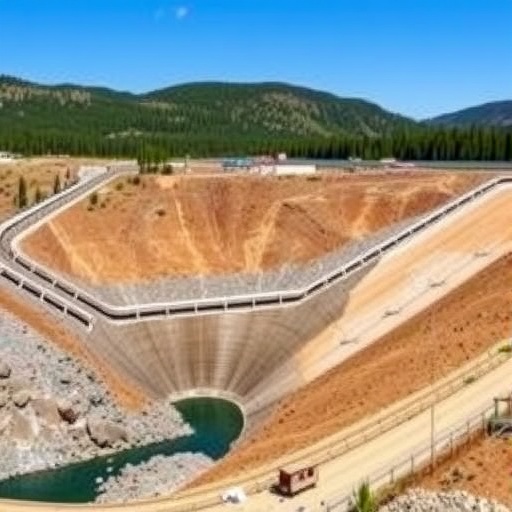
In the quest for sustainable mining practices, the metallurgical industry faces a significant challenge: the effective management of tailings produced during the zinc refining process. Tailings, which are the waste materials left after the extraction of metals, pose environmental risks and can lead to soil and water pollution if not managed properly. A promising solution lies in the solidification and stabilization of these tailings, a process that not only mitigates environmental hazards but also may allow for the recovery of valuable materials.
Recent research conducted by Fante et al. explores the solidification and stabilization of metallurgical tailings in detail, examining not only the environmental implications but also the microstructural and mechanical properties of the treated materials. The significance of this research cannot be overstated, as it represents a crucial step toward more sustainable practices in the metallurgical industry. By focusing on these aspects, the study sheds light on the long-term viability and safety of using zinc tailings in construction and other applications.
The process of solidification and stabilization involves the incorporation of binding agents that can effectively encapsulate the toxic components within the tailings. Such techniques help prevent contaminants from leaching into the environment, thus offering a comprehensive solution to waste management challenges common in mining operations. This research highlights various binding materials, including natural and synthetic additives, that demonstrate promising results in improving the structural integrity of tailings.
One of the key environmental concerns surrounding metallurgical tailings is their potential toxicity, mainly due to heavy metals and other hazardous substances. Researchers are increasingly focused on quantifying these risks and finding ways to neutralize them. Fante et al. conducted extensive analyses on the leaching behavior of heavy metals from treated tailings, providing critical data that could inform regulations and industry standards regarding tailings management. This research underscores the importance of regular monitoring and assessment of leaching potentials as a means to safeguard local ecosystems.
In examining the mechanical aspects of stabilized tailings, the authors conducted a series of tests to assess compressive strength, durability, and overall performance of the materials in different conditions. The results indicate that the solidified tailings exhibit enhanced mechanical properties compared to untreated samples. This finding suggests that stabilized tailings could find useful applications in construction materials, potentially replacing traditional raw materials and reducing the overall environmental footprint of building projects.
Additionally, the microstructural analysis performed in this study provides insights into how the solidification process alters the physical characteristics of the tailings. By utilizing techniques such as scanning electron microscopy, researchers were able to observe changes at the microscopic level, revealing the formation of new mineral phases that contribute to the stability and performance of the treated materials. Understanding these changes is vital for optimizing mixtures and processes used in the stabilization of tailings.
The implications of this research extend beyond environmental safety and structural integrity; they also have significant economic repercussions. The potential to utilize stabilized tailings as a resource instead of burying them as waste presents an opportunity for the mining industry to reimagine its operations. This paradigm shift could lead to a more circular economy within the mining sector where waste materials are reintegrated into productive applications, ultimately leading to enhanced sustainability and reduced costs.
Moreover, as global attention continues to turn toward responsible resource extraction, mining companies that implement effective tailings management strategies could find themselves at a competitive advantage. The awareness of stakeholders—ranging from regulators to consumers—regarding the environmental impacts of mining practices has grown significantly, and companies that prioritize sustainability can bolster their public image and consumer trust.
Fante et al. also emphasize the importance of regulatory frameworks in promoting the adoption of solidification and stabilization techniques. As legal mandates around waste management tighten globally, the mining sector will need to adapt accordingly. This research contributes essential knowledge that can help policymakers form regulations that strike a balance between mining operations and environmental conservation, providing guidance on best practices and innovative technologies.
The study’s findings are part of a broader movement towards the utilization of advanced technologies in mining waste management. Innovations such as geopolymers and nano-materials are garnering attention for their potential to enhance stabilization processes further. Future research may focus on integrating such technologies, offering a multi-faceted approach to the challenges posed by metallurgical tailings.
In conclusion, the solidification and stabilization of metallurgical tailings from the zinc process, as examined by Fante et al., represent significant progress in addressing environmental concerns associated with mining waste. Through rigorous analysis of environmental impacts, mechanical properties, and microstructural changes, this research offers a valuable roadmap for the metallurgical industry towards more sustainable practices. Moreover, the potential economic advantages of repurposing tailings position this study as not just an environmental necessity but an innovative step forward for the future of mining.
As industries consider the implications of climate change and strive to meet sustainability goals, research like this is pivotal. By continuing to explore and develop effective management strategies for metallurgical tailings, the industry can contribute to environmental protection while simultaneously embracing opportunities for innovation and growth. The journey of transforming waste into valuable resources has just begun, and studies like this one will play a crucial role in shaping the future landscape of sustainable mining practices.
Subject of Research: Solidification and stabilization of metallurgical tailings from the zinc process.
Article Title: Solidification/stabilization of metallurgical tailings from the zinc process: environmental, microstructural, and mechanical aspects.
Article References:
Fante, F., Lotero, A., Filho, H.C.S. et al. Solidification/stabilization of metallurgical tailings from the zinc process: environmental, microstructural, and mechanical aspects.
Environ Sci Pollut Res (2026). https://doi.org/10.1007/s11356-026-37393-9
Image Credits: AI Generated
DOI: https://doi.org/10.1007/s11356-026-37393-9
Keywords: Metallurgical tailings, solidification, stabilization, zinc process, environmental impact, microstructural analysis, mechanical properties, sustainable mining.


