


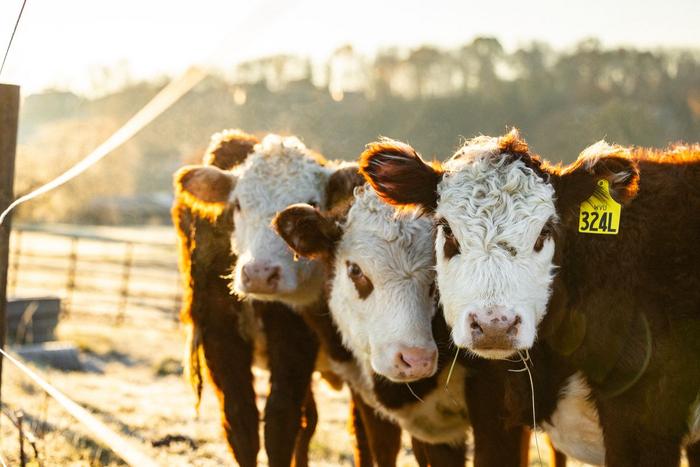
West Virginia University researchers are shining a light on the benefits of solar panels on small cattle farms with the support of $1.6 million from the U.S. Department of Energy.

Credit: WVU Photo/Mick Posey
West Virginia University researchers are shining a light on the benefits of solar panels on small cattle farms with the support of $1.6 million from the U.S. Department of Energy.
Matt Wilson, professor of animal sciences in the WVU Davis College of Agriculture, Natural Resources and Design and founder of the Alliance for Regenerative Livestock, said panels can generate solar energy on grazing lands and establish more sustainable cattle-raising practices.
Wilson, who is leading the research, will be applying dual-use solar — also known as agrivoltaics — which seeks ways to combine solar panels with agricultural uses like crop production, livestock or pollinator habitats.
As part of a collaboration with Appalachian Renewable Power, the University will be researching soil, grasses and cattle around the solar systems, while ARP will perform design and installation.
The grant comes as part of the DOE’s $71 million investment — including $16 million from the Biden Administration’s Bipartisan Infrastructure Law — in the development of a network of domestic solar energy manufacturers.
Currently, 68% of agricultural producers in West Virginia have some sort of off-farm income because they cannot make a living in agriculture alone. Wilson said technology like solar would help diversify a farm’s income stream. Moreover, the idea of new and greener technology may appeal to younger generations, as the average age of agricultural producers in West Virginia is around 70.
“Young people don’t want to go into agriculture because they perceive it’s backbreaking work and low technology,” Wilson said. “But there are opportunities for a high-tech, multi-revenue stream and comprehensive things that a person can do to make a living in agriculture.”
West Virginia receives an abundance of rain, which benefits the grasslands cattle require, but the state’s topography doesn’t lend itself to row-crop agriculture. Livestock, however, can graze on hillsides and mountainsides where renewable energy is also being generated.
Wilson said the notion is not without its detractors, however.
“One of the largest hurdles that renewable energy is starting to face is that everybody wants all their energy from a renewable source, but they don’t want to see the windmills. They don’t want to see the solar panels. They definitely don’t want to put up panels that displace agriculture,” he said.
Despite these common objections, solar developers prefer agricultural lands because there’s little need for remediation of environmental problems.
“From a cost perspective, if I’m a solar developer, I want to pick a place where I won’t have to worry about legacy chemicals,” Wilson said. “We’ve been trying to pursue agrivoltaics. If we could design the source system so that they were in a high-quality pasture where you’re both raising a calf crop and energy on the same acreage, instead of switching purposes, you’ve now got dual purpose.”
Wilson’s primary research has focused on improving the sustainability of the beef industry through breeding more robust animals that consume fewer resources. In the last two decades, he’s developed a system for measuring feed intake, water intake and beef herd performance, and will use it to study the animals as they graze under solar arrays.
He has proposed installing both traditional flat panels as well as bifacial solar photovoltaic cells held together by netting. The latter would prevent water runoff that might affect soil hydrology.
“That’s our big goal with this project,” he said. “Install some solar and then study how animals perform in that scenario, under the panels. Then we can start making recommendations for producers if they’re interested.”
Ember Morrissey, associate professor of environmental microbiology, has been studying the potential impacts of dual-solar use on soil health and is part of the project.
“My team will collect and analyze soil samples from pasture with the novel agrivoltaics panels as well as traditional pastures,” she said. “This will allow us to determine if incorporating solar panels into pasture ecosystems may alter soil health.”
Establishing policy going forward will also be key. Electricity producers don’t get paid for generation. Wilson envisions an agricultural exemption that would allow farmers to receive compensation for solar. Questions remain, however, as the arrays would generate more power than a farm would need.
“I’ve been starting to talk to faculty in engineering and other places about what we can do,” he said. “Can we convert some of that into electrolysis to produce hydrogen or other things?”
Cite Scienmag News
William Thompson. (June 11, 2024). WVU animal scientists say solar panels could make cattle grazing lands more profitable. Scienmag. https://scienmag.com/wvu-animal-scientists-say-solar-panels-could-make-cattle-grazing-lands-more-profitable/
William Thompson. "WVU animal scientists say solar panels could make cattle grazing lands more profitable." Scienmag, 11 June 2024, https://scienmag.com/wvu-animal-scientists-say-solar-panels-could-make-cattle-grazing-lands-more-profitable/. Accessed 4 September 2026.
William Thompson. "WVU animal scientists say solar panels could make cattle grazing lands more profitable." Scienmag. June 11, 2024. https://scienmag.com/wvu-animal-scientists-say-solar-panels-could-make-cattle-grazing-lands-more-profitable/

