

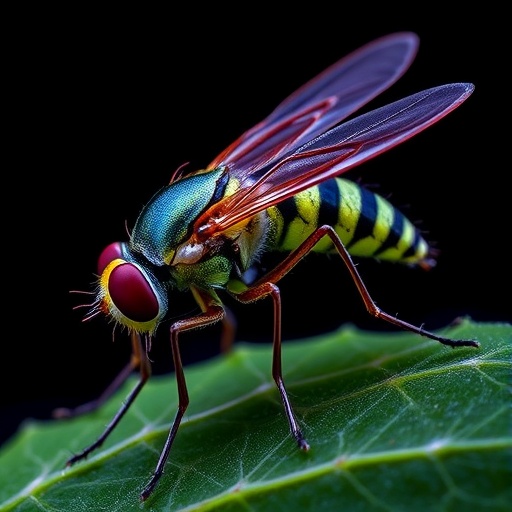
In a groundbreaking study published in BMC Genomics, a team of researchers led by Fang, Y., Ran, M., and Chen, L. delves into the complex interaction between the symbiotic bacteria Wolbachia and fruit flies, focusing on the detoxification processes triggered under nicotine stress. This research shines a light on the genetic mechanisms and metabolic pathways that are reshaped in Drosophila when exposed to nicotine, revealing the significant role of Wolbachia in enhancing detoxification and providing insights that could change our understanding of host-symbiont dynamics.
Nicotine, an alkaloid known for its high toxicity and addictive properties, poses a severe threat not only to human health but also to various insect species. The adaptation of Drosophila to their environments often includes developing resistance to such toxic compounds. What makes this study particularly fascinating is the role of Wolbachia, a type of intracellular bacteria that has been shown to influence the physiology and behavior of its hosts. This research seeks to elucidate the underlying mechanisms by which Wolbachia contributes to the detoxification of nicotine in Drosophila species.
The investigation commenced by examining the transcriptomic changes in Drosophila when subjected to nicotine. The researchers utilized next-generation sequencing technologies to generate comprehensive data regarding gene expression profiles in nicotine-exposed flies compared to control groups. Not only did the findings reveal significant alterations in the expression levels of detoxification genes, but they also highlighted how the presence of Wolbachia further modulated these changes. This dynamic relationship indicates a sophisticated level of interaction between the host’s genetic machinery and the symbiont’s influence.
Among the findings, upregulation of a suite of cytochrome P450 genes was observed, which are key to the metabolism of various xenobiotics, including nicotine. Cytochrome P450 enzymes carry out crucial metabolic reactions that help in the breakdown of toxic substances, thereby enhancing the survival of Drosophila in environments with high nicotine concentrations. The presence of Wolbachia appears to amplify this response, suggesting that the symbiont plays a pivotal role in facilitating a resilient metabolic profile in its insect host.
Beyond genetic expression, the team’s research further examined the metabolic shifts that occur under nicotine exposure. Utilizing metabolomics techniques, they were able to profile changes in metabolite concentrations within the flies. This data provided a clearer picture of how Wolbachia influences broader metabolic processes, illustrating a more complex network that coordinates detoxification strategies. Notably, alterations in energy metabolism were also documented, potentially indicating shifts in the flies’ overall fitness when faced with toxic environments.
The implications of this research extend beyond mere academic curiosity; understanding these interactions could open new pathways for pest management strategies. The concept of utilizing symbiotic bacteria, such as Wolbachia, to enhance detoxification processes in agricultural pests presents an innovative approach in combating pests that thrive in nicotine-rich environments, particularly in tobacco crops. This biotechnological angle could be instrumental in formulating environmentally friendly pest control methods that circumvent traditional chemical insecticides.
Moreover, this study emphasizes the significance of host-microbe interactions in a rapidly changing environment. With ecosystems facing increasing levels of pollutants and toxins, the ability of organisms to adapt through symbiotic relationships highlights a crucial adaptive mechanism. Understanding these relationships provides essential insights into ecological resilience and the evolutionary strategies employed by various species to survive.
As researchers aim to dive deeper into this area of study, several questions emerge regarding the specificity of the Wolbachia-Drosophila interaction. Do other symbiotic bacteria offer similar benefits in detoxifying various toxins? Are there specific strains of Wolbachia that outperform others in promoting this detoxification process? These inquiries pave the way for future research endeavors, encouraging collaboration across different scientific disciplines, including ecology, genetics, and toxicology.
In conclusion, this remarkable study not only elucidates the intricate relationship between Wolbachia and Drosophila but also expands our understanding of the broader implications of symbiotic relationships in the context of environmental stressors. The team’s findings underscore the need for continued exploration of host-symbiont dynamics, particularly regarding the genetic and metabolic frameworks that govern detoxification and resilience in the face of toxicity. This research sets a strong foundation for future work aimed at leveraging microbial symbionts as biocontrol agents and enhancing our understanding of adaptation strategies across diverse ecosystems.
As we consider the potential applications of these findings, it is essential to recognize the delicate balance present within ecosystems where microorganisms coexist with larger organisms. The insights gleaned from this research not only challenge previous notions of insect resilience but also inspire a new era of ecological understanding. The future holds promise for innovative methods that harness the power of symbiosis, opening avenues for sustainable practices that harmonize with nature’s intricacies.
Thus, as this study continues to gain attention in scientific circles, it remarkably highlights the need for more research on the interactions between organisms and their microbial partners. As we seek solutions to global challenges such as pesticide resistance and environmental degradation, the relationship between Drosophila and Wolbachia offers a fascinating glimpse into the potential of nature to teach us about resilience and adaptation.
Subject of Research: The role of Wolbachia in the detoxification processes of Drosophila under nicotine stress.
Article Title: Symbiont-mediated detoxification: Wolbachia alters the transcriptomic and metabolic landscape of Drosophila under nicotine stress.
Article References:
Fang, Y., Ran, M., Chen, L. et al. Symbiont-mediated detoxification: Wolbachia alters the transcriptomic and metabolic landscape of Drosophila under nicotine stress.
BMC Genomics (2026). https://doi.org/10.1186/s12864-025-12503-y
Image Credits: AI Generated
DOI:
Keywords: Wolbachia, Drosophila, detoxification, nicotine stress, transcriptomics, symbiosis, metabolism, cytochrome P450, pest control.


