


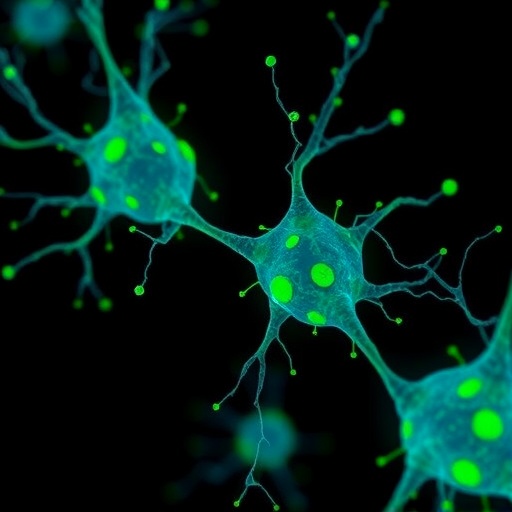
A groundbreaking study published in the prestigious journal Cell Research has unveiled a pivotal regulatory mechanism that governs the identity and self-renewal capabilities of diverse stem cell types. This discovery centers on the protein glycogen synthase kinase 3 alpha (GSK3α), illuminating its role as a universal “stemness checkpoint” across multiple developmental stages and species. Stem cell biology, a field that has long grappled with the complexities of self-renewal and differentiation, now faces a paradigm shift that elucidates a shared molecular checkpoint critical for maintaining stem cell identity.
For nearly twenty years, the consensus within the stem cell research community has been grounded on the principle that self-renewing stem cells evade differentiation by suppressing external and internal differentiation-inducing signals. Seminal work, such as the influential 2008 Nature publication by Qi-Long Ying and Austin Smith, defined this foundational concept by delineating the “ground state” of embryonic stem cell self-renewal. However, the molecular intricacies orchestrating this blockade remained elusive. The current study conducted by researchers at the University of Southern California (USC) and the National Institute of Environmental Health Sciences (NIEHS) has illuminated GSK3α as a critical molecular node that adjudicates stem cell fate decisions.
The investigative team delved into the functional roles of GSK3α by focusing on two principal stem cell populations derived from distinct developmental timelines: mouse embryonic stem cells (mESCs) and epiblast stem cells (mEpiSCs). These stem cells conventionally necessitate divergent culture environments to preserve their unique identities—mESCs thrive under one set of conditions promoting naïve pluripotency, whereas mEpiSCs require another, reflective of their primed pluripotent state. Intriguingly, inhibition of GSK3α signaling maintained the distinct identities of both stem cell types simultaneously, even when co-cultured in the same experimental environment for extended periods exceeding one month. This robust maintenance of identity under GSK3α inhibition signifies a conserved checkpoint that transcends developmental stage-specific signaling demands.
Extending their analyses beyond the embryonic context, the researchers assessed neural stem cells and “formative stem cells,” an intermediate stage bridging naïve and primed states. Consistent with the core findings, these diverse stem cell populations similarly depended on GSK3α’s modulation to preserve their stemness. This broad applicability underscores the concept that stem cell maintenance is dictated not merely by disparate, isolated pathways but by a unifying checkpoint mechanism operational across a spectrum of stem cell states.
The implications of this discovery ripple beyond rodent models — parallel studies confirmed that the GSK3α checkpoint mechanism is conserved across species, including rats, rabbits, bovines, and humans. This cross-species conservation attests to GSK3α’s fundamental biological function in stem cell regulation, hinting at its evolutionary importance. By pinpointing a shared molecular regulator, the study not only enhances our understanding of the basic biology governing pluripotency and differentiation but also facilitates advancements in stem cell culture technologies.
From a practical perspective, these insights offer promising avenues for optimizing stem cell maintenance protocols in laboratory settings. The capacity to manipulate a common stemness checkpoint could revolutionize approaches to stem cell expansion, enabling more stable, reproducible cultures that retain their pluripotent or multipotent character for extended intervals. This has direct relevance for numerous biomedical applications, including developmental biology studies, disease modeling, pharmacological screening, and regenerative medicine.
Moreover, the research intimates a compelling link between checkpoint activation and stem cell aging. The progressive engagement of differentiation checkpoints mediated by GSK3α may contribute to the functional decline of stem cells within tissues, an age-related phenomenon that impacts organismal regeneration and homeostasis. As such, therapeutic modulation of GSK3α activity might emerge as a novel strategy to mitigate age-associated tissue degeneration and promote long-term healthspan by preserving stem cell vigor.
The collaborative nature of this research involved contributions from scientists across prestigious institutions, including USC, NIEHS, Creighton University, and the University of Michigan Medical School. The multidisciplinary approach incorporated advanced experimental methodologies to dissect cellular signaling cascades and stem cell state transitions with unprecedented precision.
Funding support was secured through federal grants from the NIH, specifically from the National Institute of Environmental Health Sciences, alongside contributions from private foundations dedicated to advancing regenerative medicine and stem cell research. The team has also filed a provisional patent application outlining the potential applications of GSK3α targeting strategies, signaling forthcoming developments toward clinical translation.
In sum, this seminal work redefines our conceptual framework for stem cell biology by identifying GSK3α as a conserved molecular checkpoint that governs stemness across developmental states and species. This not only bridges gaps in our fundamental understanding of stem cell regulation but also charts new courses for therapeutic innovation, aging research, and the generation of reliable stem cell resources for diverse scientific and medical endeavors.
The anticipation surrounding these findings is palpable within the scientific community, as they promise to catalyze a wave of innovations in how scientists cultivate and harness stem cells. By demystifying the common regulatory nodes that maintain cellular identity, this study paves the way for refining stem cell applications from bench to bedside.
Cite Scienmag News
Drew Townsend. (April 9, 2026). “’Stemness Checkpoint’ Key to Regulating Stem Cell Identity”. Scienmag. https://scienmag.com/stemness-checkpoint-key-to-regulating-stem-cell-identity/
Drew Townsend. "“’Stemness Checkpoint’ Key to Regulating Stem Cell Identity”." Scienmag, 9 April 2026, https://scienmag.com/stemness-checkpoint-key-to-regulating-stem-cell-identity/. Accessed 3 September 2026.
Drew Townsend. "“’Stemness Checkpoint’ Key to Regulating Stem Cell Identity”." Scienmag. April 9, 2026. https://scienmag.com/stemness-checkpoint-key-to-regulating-stem-cell-identity/


