


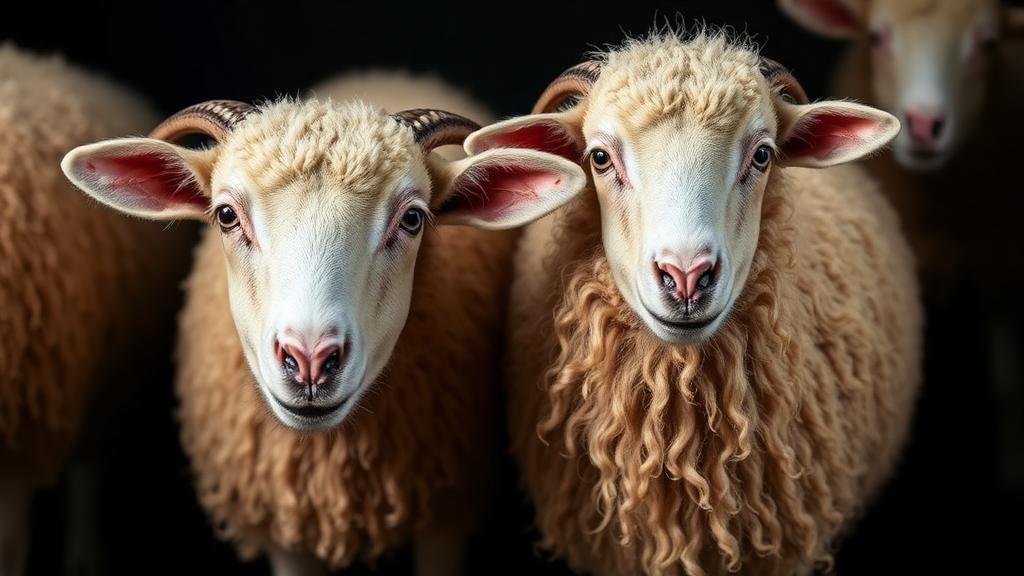
Few parasites inflict suffering on sheep with the sheer efficiency of Haemonchus contortus, the barber’s pole worm. This hematophagous gastrointestinal nematode is widely recognized as one of the most significant parasites affecting sheep and goats worldwide, with annual losses estimated at between 30 and 300 million dollars. The worm’s strategy is brutally simple: adult worms pierce the abomasal mucosa of the host’s stomach and feed directly on blood. Each adult worm can consume roughly 50 microliters of blood per day, and in heavily infected animals the cumulative loss can reach 50 to 600 milliliters daily. The consequences are anemia, hypoproteinemia, submandibular edema, weight loss, decreased wool and milk production, and, in severe cases, death. Anemia attributable to rapid blood loss becomes detectable approximately 10 to 12 days after infection, leaving young or susceptible animals particularly vulnerable to nutrient imbalances and fatal outcomes.
The biology of the parasite compounds the problem. H. contortus follows a direct life cycle characterized by fecal-oral transmission, with a pre-patent period of just 17 to 21 days. Infective larvae ingested from pasture mature into blood-feeding adults in the abomasum, and the eggs shed in feces rapidly contaminate grazing land, perpetuating the cycle. This prolific reproductive capacity means that pasture contamination can escalate quickly, and it explains why a single grazing season can transform a modest infection into a herd-level crisis. Without effective intervention, the parasite’s speed and fecundity overwhelm the defenses of susceptible animals.
For decades, the primary weapon against H. contortus has been anthelmintic drugs, which fall into three major classes: benzimidazoles, cholinergic agonists, and macrocyclic lactones. Widespread and often indiscriminate use of these compounds, however, has driven the emergence of multidrug resistance within parasite populations. Genetic modifications in H. contortus have altered effective drug targets, changed physiochemical interactions, and modified drug distribution within the worm, rendering once-reliable treatments increasingly ineffective. The combination of the parasite’s prolific nature and the shrinking arsenal of effective drugs highlights an urgent need for improved control strategies that do not depend solely on chemical treatment.
Paradoxically, the solution may already exist within the sheep genome itself. Sheep were among the first animals domesticated by humans, and although all breeds share a common ancestor, substantial genetic diversity between breeds influences economically relevant traits ranging from carcass and wool characteristics to disease resistance. Natural resistance against H. contortus has been documented most prominently in hair sheep breeds, which originate from humid tropical climates where constant parasite pressure acted as a powerful selective force. By contrast, wool breeds developed in the cooler environment of Europe were selected for production traits without that environmental pressure against parasitism, leaving them markedly more susceptible to infection.
The differences between these breed groups are striking when measured directly. Hair sheep breeds such as the St. Croix, Gulf Coast Native, and Barbados Blackbelly demonstrate higher levels of resistance to H. contortus, shown by increased packed cell volumes and decreased fecal egg counts and worm burdens in the abomasum at necropsy compared with European wool breeds such as the Suffolk and Dorset. Comparative studies among the resistant tropical breeds revealed that the St. Croix displays the highest resistance of all, outperforming Gulf Coast Native, Barbados Blackbelly, and crossbred wool sheep. This exceptional phenotype makes the St. Croix an ideal model for studying natural parasite resistance, although the breed lacks many economically desirable production traits, underscoring the importance of understanding the mechanisms that drive resistance so they can be introduced into more productive lines.
Host genetics is a major contributor to variation in resistance, even though factors such as sex, age, and previous exposure also play roles. Evidence for a genetic basis comes from the marked differences observed both between breeds and among individuals within the same breed. One practical example is the Katahdin, a breed originally developed in the 1950s by crossing parasite-resistant St. Croix hair sheep with production-oriented breeds including the Suffolk and Wiltshire Horn. Although Katahdins are widely regarded as parasite resistant, considerable variation exists in post-weaning fecal egg count estimated breeding values among them, revealing substantial room for continued genetic improvement through selective breeding.
The genetics of resistance, however, is far from simple. Post-weaning fecal egg count is moderately heritable, with estimates ranging from 0.23 to 0.46, yet parasite resistance behaves as a complex, polygenic trait shaped by many genes rather than a single major locus. No single resistance gene has been identified; genome-wide association studies and regional heritability mapping in sheep have instead pointed to multiple genomic regions contributing to the phenotype. This distributed genetic architecture means that understanding how these differences influence immune function remains a critical and active area of research, one that must bridge population genetics and immunology before breeding programs can fully exploit natural resistance.
What is clear is that resistance is immunologically mediated. Natural resistance to H. contortus acts against the infective L3 larval stage, preventing the establishment of adult worms in the abomasum without any reliance on anthelmintic drugs. Gastrointestinal nematodes generally elicit a T-helper 2 type immune response in the host, characterized by production of the key cytokines interleukin-4, IL-5, and IL-13, which mediate host protection. In resistant St. Croix sheep, this Th2 response develops early in the abomasum and is marked by increased eosinophilia, mastocytosis, elevated IgG and IgA, and robust production of IL-4, IL-5, and IL-13. The centrality of adaptive immunity is demonstrated by depletion experiments: removing CD4-positive T cells from resistant sheep resulted in increased fecal egg counts and worm burdens, confirming that resistance depends on mounting the appropriate adaptive response in time.
Timing appears to be the decisive difference between resistant and susceptible animals. In susceptible breeds such as the Suffolk, the immune response to H. contortus is delayed, permitting the parasite to establish itself and forcing farmers to rely on anthelmintic treatment to prevent mortality. This suggests that differences in the speed and magnitude of the host immune response are the mediating factor separating the resistant from the susceptible phenotype. Despite the identification of these robust Th2-like responses in resistant sheep, the exact mechanisms that initiate and amplify them in St. Croix animals remain unknown, representing one of the central unanswered questions in the field.
Alternative control methods offer only partial relief. Copper oxide wire particles have gained popularity over the past decade, but their anthelmintic activity in infected lambs is relatively short-lived, lasting up to 35 days, and treatment often still requires conventional drugs. Barbervax, the only commercially available vaccine against H. contortus, is approved in Australia, the United Kingdom, and South Africa, but its variable efficacy and high economic cost illustrate the difficulty of vaccine development for this parasite. In parasite-susceptible Merino sheep, Barbervax achieved a 60 to 75 percent decrease in fecal egg counts under low and moderate trickle infections of 300 and 600 infective larvae per week, yet it failed to confer protection under high-level exposure of 1,200 or 2,400 larvae per week. Because vaccination may not protect animals facing heavy infections or heavily contaminated pasture, alternative strategies are essential. In this context, the parasite-resistant St. Croix sheep stands out as an ideal model for elucidating how the early Th2-like response is amplified, allowing researchers to characterize the initiators and mechanisms that drive resistance during infection. A deeper understanding of the Th2-type immune response in resistant sheep is expected to inform the development of cellular and cytokine-based immunotherapy strategies, offering a path toward controlling H. contortus without the dependence on anthelmintic drugs that has fueled the current resistance crisis.
Subject of Research: Natural genetic and immunological resistance to the blood-feeding nematode Haemonchus contortus in sheep breeds
Article Title: Born to resist: Understanding natural resistance to Haemonchus contortus in sheep
Article References: Teddleton, H., & Shepherd, E. (2026). Born to resist: Understanding natural resistance to Haemonchus contortus in sheep. PLOS Pathogens, 22(10), e1014658. https://doi.org/10.1371/journal.ppat.1014658
Image Credits: AI Generated
DOI: 10.1371/journal.ppat.1014658
Keywords: Haemonchus contortus, sheep, parasite resistance, hair sheep, St. Croix, Th2 immune response, anthelmintic resistance, genetics, Katahdin, Barbervax, gastrointestinal nematodes, immunology
Cite Scienmag News
Kristina Jarvis. (October 10, 2026). Why Some Sheep Are Born to Beat a Deadly Blood-Sucking Parasite. Scienmag. https://scienmag.com/why-some-sheep-are-born-to-beat-a-deadly-blood-sucking-parasite/
Kristina Jarvis. "Why Some Sheep Are Born to Beat a Deadly Blood-Sucking Parasite." Scienmag, 10 October 2026, https://scienmag.com/why-some-sheep-are-born-to-beat-a-deadly-blood-sucking-parasite/. Accessed 10 October 2026.
Kristina Jarvis. "Why Some Sheep Are Born to Beat a Deadly Blood-Sucking Parasite." Scienmag. October 10, 2026. https://scienmag.com/why-some-sheep-are-born-to-beat-a-deadly-blood-sucking-parasite/


