


Generative artificial intelligence has made eloquence astonishingly cheap. A half-formed intuition can be handed to a language model in the morning and returned by afternoon as a polished manuscript, complete with an abstract, symmetrical headings, and the confident cadence of a tenured concept. That transformation sits at the heart of a provocative opinion essay published in the journal AI & Society, in which scholar Sibok Kim argues that the most dangerous effect of AI on intellectual life is not machine hallucination but something subtler: the ability of a machine to make a thought look finished before the human being has actually finished thinking it. A false citation, Kim notes, can be checked. A beautifully phrased half-thought may never be checked at all.
Kim, writing from Atlanta at the age of seventy-six and drawing on a formation that spans Korea and America, Christian theology and Chinese thought, describes working with AI as being surrounded by thirty exceptionally capable doctoral students. One offers a term, another restructures the argument, a third suggests what the writer really means, and others return carrying notes from Peirce, Wittgenstein, Confucius, or contemporary sociolinguistics. The experience is exhilarating, and Kim does not deny it. But the metaphor breaks down at a crucial point. Thirty real doctoral students are thirty centers of resistance. One will dislike the argument, another will say Peirce has been misunderstood, a third will accuse the writer of romanticizing East Asia. Someone, sooner or later, will deliver the sentence every scholar needs to hear: the work is beautiful, and it is also wrong.
AI can imitate such objections, but imitation of plurality is not plurality. Current systems, Kim argues, inhabit overlapping textual worlds and share habits of exposition. They are gifted at coherence. Give them two distant ideas and they will often find a bridge before asking whether one ought to exist. This, in the essay’s framing, may be generative AI’s characteristic epistemic danger: the texture of consensus without the evidential weight of consensus. Five machines admiring an idea do not constitute peer review, yet five machines can help that idea put on a suit and tie by afternoon. The old difficulty of scholarship was that a living question might die before a scholar could pursue it. The new difficulty is that a foolish question can become a polished manuscript before dinner.
The essay’s sharpest formulation concerns what AI has actually democratized. Public discussion often claims that these tools have democratized intelligence. Kim counters that they have done something more unsettling: subsidized the appearance of intelligence. Eloquence can now be rented. Erudition can be rented. Structure can be rented. Even the external appearance of judgment can be rented by the hour, or by the token. This does not mean the renter is stupid, and Kim is emphatic on that point, describing a daily practice of using AI gratefully as an extraordinary workshop. A question that once required weeks of preparation can now be tested while it is still warm. Confucian zhengming, the rectification of misalignment between name and reality, can be placed beside Peircean semiotics, Wittgenstein can be invited to disturb the arrangement, and a sociolinguist’s objection can be summoned in seconds. The library is illuminated at three in the morning. The translator is awake.
Speed, Kim acknowledges, preserves the temperature of a question, and that is no small gift. But speed also creates a new temptation: linguistic completion before intellectual completion. The machine closes sentences, fills conceptual gaps, smooths awkward transitions, and reconciles tensions with extraordinary politeness. What once remained visibly unresolved can now be made to look settled. Fluent closure has become almost free, and the institutional consequences follow directly. When half-formed thoughts can be dressed for submission in an afternoon, journals inherit part of the cost that AI has removed from authors. Editors and peer reviewers become unpaid inspectors of premature coherence. The manuscript becomes cheaper to produce precisely when judgment becomes more expensive to supply.
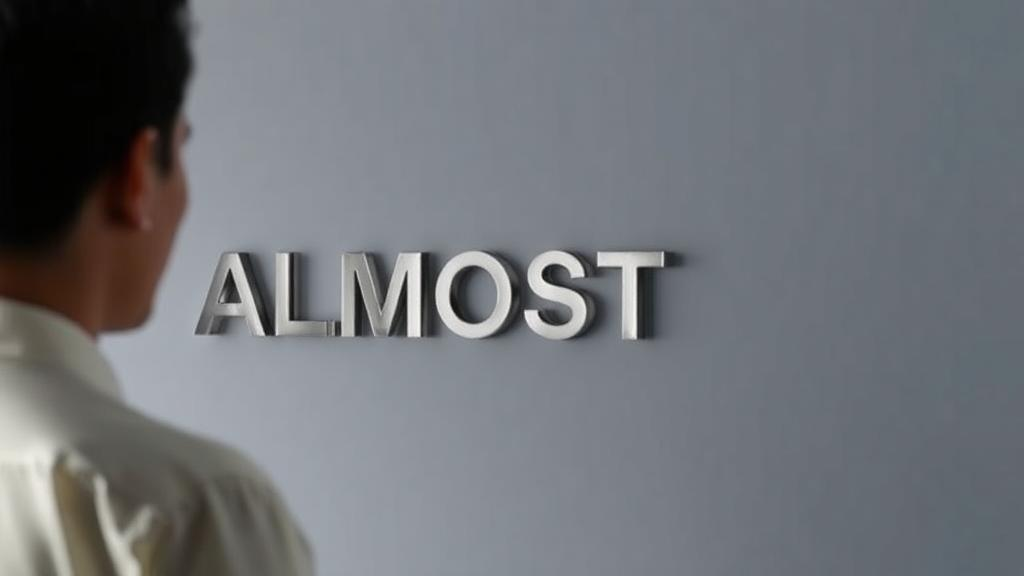
Kim’s personal response is to cultivate a virtue that sounds almost trivial but carries considerable technical weight: the ability to say almost. Almost right. Almost clear. Almost mine. Almost worthy of publication. The discipline involves a battery of resistant responses to fluent output: the draft is too smooth, the problem has been Westernized, the concepts should not be reconciled yet, the word is technically correct but existentially wrong, the English has been improved while the thought has been weakened, the concept is right but the center of gravity is wrong. Kim increasingly suspects that this capacity will matter more than brilliant prompting. Prompt engineering, in the essay’s wry framing, is becoming a minor priesthood, complete with incantations and claims to esoteric skill. Learn the spells by all means, but the deeper human competence is recognizing when an elegant answer has betrayed the question.
The problem is especially acute for thinkers who work across languages and civilizations. A thought may arrive with a Korean emotional temperature, a Chinese conceptual skeleton, a Christian theological horizon, and a Western philosophical question, and academic English asks it to pass through customs. AI is a magnificent customs broker, Kim writes. It can move the cargo quickly. It can also quietly replace the cargo. To guard against that substitution, Kim has adopted a deliberately primitive discipline: before inviting AI into an important thought, two or three ugly sentences of the original intuition are preserved on the page, sometimes in Korean, sometimes grammatically incomplete. The purpose is not legal ownership, since the mythology of the solitary author was always exaggerated and people think with teachers, enemies, books, languages, lovers, traditions, and ghosts. The purpose is intellectual provenance, the ability to trace a refined phrase back to the crude perception from which it grew.
That provenance question is illustrated with a phrase from Kim’s own writing, indexicality without occupancy, and the Korean intuition behind it: AI speaks like a person of authority, but there is no one behind the words to bear responsibility; there is a sign, but no person there. The important question, Kim argues, is not whether the machine offered the elegant phrase or whether the human refined it through forty exchanges, but whether the language clarified the original intuition or replaced it. Formal governance will not settle this. Academia will need disclosure rules for AI use, publishers will invent policies, and universities will produce forms, all necessary and all predictably bureaucratic. The more intimate problem will remain unregulated: whether scholars will still recognize their own thoughts after the machines have improved them.
Kim is less worried that AI will become intelligent than that human beings will become satisfied with the signs of intelligence, and academia already rewards those signs: a polished abstract, correct vocabulary, a symmetrical framework, six boxes in a diagram, a confident conclusion beginning with a call for fundamental reconceptualization. AI did not invent academic vanity, the essay observes; it simply industrialized some of its preferred costumes. The antidote is not nostalgia, and Kim explicitly refuses to dismiss a technology that enables what the essay calls speculative adjacency, bringing distant bodies of thought into rapid, exploratory contact. When the hallways become short enough, the architecture of thinking changes. But the cheaper inquiry becomes, the more expensive discernment must become. Not every connection deserves development, not every curiosity deserves a paper, and not every publishable paragraph contains a thought worth publishing. In the old economy of scholarship, scarcity imposed crude discipline through limited books, research trips, conversations, and years. AI has removed many of those restraints, and what is needed now, Kim writes, is intellectual fasting.
The essay closes on a question that reframes the entire debate. Rather than asking whether AI will make us more intelligent, a question that flatters machine and human alike, Kim asks whether, surrounded by nearly free fluency, we are becoming more discriminating. Are our questions improving? Can we recognize a false harmony? Can we preserve an inelegant intuition long enough to discover what it means? Can we throw a curveball that breaks the window of premature coherence and then inspect the glass? Above all, can we still say almost when the machine gives us exactly the beautiful answer we hoped to hear? That small word, Kim suggests, may become one of the last defenses of formed intellect. AI has made fluency cheap. Judgment is now expensive, and we should spend accordingly.
Subject of Research: The epistemic impact of generative AI on human judgment, intellectual provenance, and scholarly writing
Article Title: The ability to say “almost”
Article References: Kim, S. (2026). The ability to say “almost”. AI & SOCIETY. https://doi.org/10.1007/s00146-026-03297-y
Image Credits: AI Generated
DOI: 10.1007/s00146-026-03297-y
Keywords: generative AI, artificial intelligence, epistemology, academic writing, peer review, judgment, prompt engineering, intellectual provenance, AI & Society, scholarship, language models, critical thinking
Cite Scienmag News
Denise Maddox. (September 30, 2026). Why Saying ‘Almost’ May Be the Rarest Skill in the Age of AI Fluency. Scienmag. https://scienmag.com/why-saying-almost-may-be-the-rarest-skill-in-the-age-of-ai-fluency/
Denise Maddox. "Why Saying ‘Almost’ May Be the Rarest Skill in the Age of AI Fluency." Scienmag, 30 September 2026, https://scienmag.com/why-saying-almost-may-be-the-rarest-skill-in-the-age-of-ai-fluency/. Accessed 4 October 2026.
Denise Maddox. "Why Saying ‘Almost’ May Be the Rarest Skill in the Age of AI Fluency." Scienmag. September 30, 2026. https://scienmag.com/why-saying-almost-may-be-the-rarest-skill-in-the-age-of-ai-fluency/


