


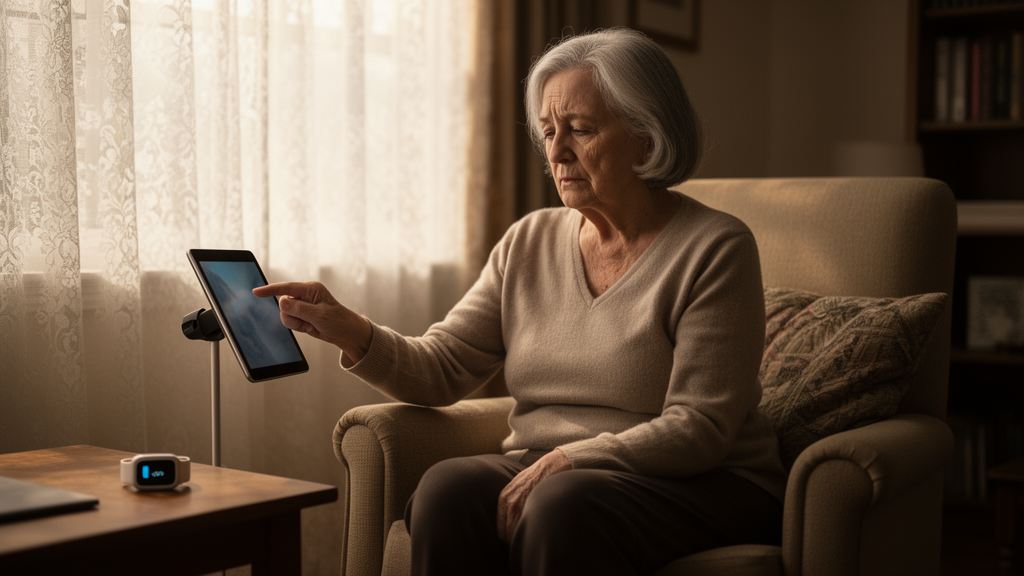
Smart elderly care technology promises to transform how the world’s rapidly aging populations receive care, from AI-powered health monitoring to robotic assistance and telehealth platforms. Yet a new qualitative meta-synthesis published in BMC Geriatrics reveals that the success of these innovations hinges not on the sophistication of the technology itself, but on the lived experiences, perceptions, and engagement of the older adults who are meant to use it. The study, conducted by researchers at Zhejiang Chinese Medical University in Hangzhou, China, systematically synthesized qualitative evidence to identify exactly what drives older adults to embrace or abandon smart care services.
The research team, led by Xinyi Wang, Muzi Chen, Yi Shen, and Xiuyue Qiu, performed a comprehensive search of nine major databases, including PubMed, Web of Science, Embase, CINAHL, the Cochrane Library, Scopus, CNKI, Wanfang Data, and the VIP Database, covering qualitative studies published from inception to August 2025. Two reviewers independently screened the studies and appraised methodological quality using the Joanna Briggs Institute Critical Appraisal Checklist for Qualitative Research, while three researchers extracted and coded the qualitative data. From this rigorous process, eleven studies were analyzed using Thomas and Harden’s thematic coding approach, a well-established method for synthesizing qualitative findings across multiple primary studies.
The meta-synthesis identified three overarching themes that together map the psychological and social terrain of technology adoption in later life. The first theme captured the key facilitators that promote older adults’ acceptance of smart elderly care services. The second theme illuminated the core barriers that hinder their utilization. The third theme revealed older adults’ needs and expectations regarding how these services should be designed and delivered. This tripartite framework offers researchers, policymakers, and technology developers a structured understanding of why adoption succeeds or stalls.
Among the facilitators, perceived usefulness emerged as a dominant force. Older adults were more willing to adopt smart care technologies when they could clearly see how these tools would improve their daily lives, whether by enhancing safety, simplifying health management, or maintaining independence. Technological convenience and ease of use also played a critical role, as devices and platforms that felt intuitive rather than intimidating lowered the psychological threshold for engagement. Internal needs, such as the desire for security, connection, and autonomy, further motivated adoption, while social support from family members, friends, and caregivers provided the encouragement and practical assistance that transformed tentative interest into sustained use.
On the barrier side, the synthesis found that limited digital literacy represented one of the most significant obstacles. Many older adults had never received formal training in using digital devices, and the rapid pace of technological change left them feeling excluded from an increasingly connected world. Inadequate device adaptability compounded this problem, as many smart care products were designed without sufficient consideration of age-related changes in vision, hearing, dexterity, and cognition. Insufficient external support and resources, including inadequate guidance from healthcare professionals and limited access to technical assistance, further deepened the divide between what the technology could offer and what older adults could actually access.
The third theme, older adults’ needs and expectations, revealed a clear desire for individualized care. Older adults expected smart elderly care services to better address their personal needs through age-friendly design optimization, rather than offering one-size-fits-all solutions. They also expressed a wish for ongoing multidimensional guidance during use, drawing on family members, healthcare professionals, and other support networks. This expectation challenges the common assumption that older adults simply need initial training; instead, they seek continuous, responsive support that evolves as their confidence and circumstances change.
The findings arrive at a critical moment. Global population aging is placing increasing pressure on healthcare and long-term care systems worldwide, and smart elderly care technologies, leveraging the Internet, artificial intelligence, and other digital innovations, have been widely implemented across care settings as promising solutions to improve the quality and efficiency of elderly care. However, as the study’s authors emphasize, the effectiveness of these technologies largely depends on older adults’ experiences, perceptions, and engagement, which are influenced by multiple interrelated factors. A device that works perfectly in a laboratory setting may fail entirely in the home of an older adult who finds its interface confusing or its purpose unclear.
The meta-synthesis approach is particularly valuable because it moves beyond the limitations of any single study. By systematically combining qualitative findings from eleven separate investigations, the researchers were able to identify patterns that might not be visible in individual projects, while the use of the Joanna Briggs Institute checklist ensured that only methodologically sound studies contributed to the synthesis. Thomas and Harden’s thematic coding approach, which involves line-by-line coding of study findings, grouping codes into descriptive themes, and then developing analytical themes, provided a transparent and replicable framework for this integration.
For technology developers, the message is unambiguous: age-friendly design is not optional. Products must be built with genuine consideration of the sensory, motor, and cognitive realities of aging, and interfaces must be optimized for clarity and simplicity. For healthcare systems, the synthesis highlights the need for structured digital literacy programs and for healthcare professionals to be trained as technology guides, not just clinical providers. For families, the findings underscore that social support is not merely helpful but functionally essential, as the encouragement and practical assistance of loved ones can determine whether a smart care device becomes a daily companion or a drawer-bound relic.
As smart elderly care services continue to expand across the globe, this meta-synthesis provides a crucial evidence-based foundation for designing interventions that actually work for the people they are meant to serve. By identifying perceived usefulness, technological convenience, internal needs, and social support as key facilitators, while flagging limited digital literacy, inadequate device adaptability, and insufficient external support as significant barriers, the study offers a roadmap for bridging the gap between technological promise and real-world adoption. The future of elderly care may well be smart, but only if it is also human-centered, accessible, and continuously supported.
Subject of Research: Smart elderly care technology adoption among older adults
Article Title: Determinants of older adults’ adoption and use of smart elderly care services: a qualitative meta-synthesis
Article References: Wang, X., Chen, M., Shen, Y., & Qiu, X. (2026). Determinants of older adults’ adoption and use of smart elderly care services: a qualitative meta-synthesis. BMC Geriatrics. https://doi.org/10.1186/s12877-026-08478-4
Image Credits: AI Generated
DOI: 10.1186/s12877-026-08478-4
Keywords: smart elderly care, aging population, qualitative meta-synthesis, digital literacy, gerontechnology, BMC Geriatrics, social support, age-friendly design, Determinants, older, adults, adoption
Cite Scienmag News
Ophelia Keating. (October 16, 2026). Why Older Adults Resist Smart Care Technology: New Meta-Synthesis Reveals Key Barriers. Scienmag. https://scienmag.com/why-older-adults-resist-smart-care-technology-new-meta-synthesis-reveals-key-barriers/
Ophelia Keating. "Why Older Adults Resist Smart Care Technology: New Meta-Synthesis Reveals Key Barriers." Scienmag, 16 October 2026, https://scienmag.com/why-older-adults-resist-smart-care-technology-new-meta-synthesis-reveals-key-barriers/. Accessed 16 October 2026.
Ophelia Keating. "Why Older Adults Resist Smart Care Technology: New Meta-Synthesis Reveals Key Barriers." Scienmag. October 16, 2026. https://scienmag.com/why-older-adults-resist-smart-care-technology-new-meta-synthesis-reveals-key-barriers/


