


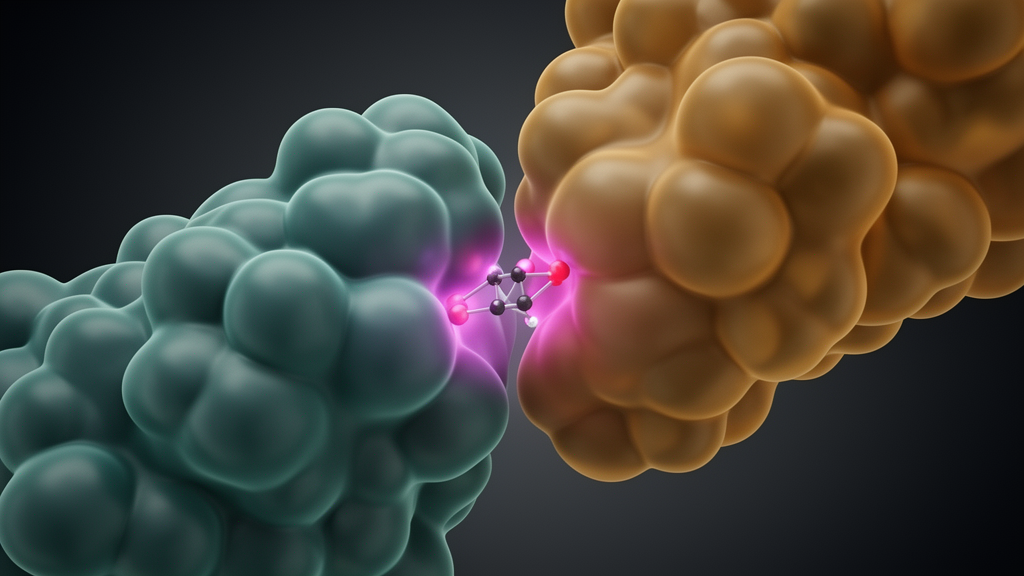
Most proteins in the human proteome lack chemical probes. Identifying small-molecule ligands for proteins that are difficult to assay or lack well-defined binding pockets remains a major challenge for chemical biology and drug discovery. Activity-based protein profiling (ABPP) and related chemical proteomic strategies offer a distinct advantage: they evaluate small molecules for interactions with endogenous proteins in native biological systems, enabling the discovery of ligands that bind dynamic and regulated protein domains and complexes that are challenging to reconstitute in purified recombinant systems. A team at Scripps Research led by Benjamin Cravatt and Bruno Melillo has now pushed this approach further, showing that structurally elaborated tryptoline acrylamide stereoprobes can profoundly reshape the protein interaction landscape of the human proteome, and that these elaborations can yield first-in-class covalent ligands targeting nonorthosteric sites on proteins, including tool compounds that perturb the mitochondrial HSP70 chaperone system.
The design of electrophilic compound libraries that maximize structural diversity presented to the proteome is a crucial feature of ABPP efforts aimed at broadly interrogating the ligandability of biological systems. Previous studies leveraging electrophilic fragments that target cysteine residues have provided initial deep covalent ligandability maps of human cells, but these fragment–cysteine interactions generally display low potency and selectivity, complicating studies of their functional effects in cells. The Cravatt laboratory recently described more elaborated libraries of electrophilic compounds constructed around rigid, sp3-rich cores displaying variable recognition and reactive groups. These diversity-oriented synthesis-inspired libraries are generated in stereopure form—stereoprobes—such that ABPP results can be mined for stereoselective small-molecule–protein interactions, a hallmark of specific molecular recognition events. Among the classes of stereoprobes investigated by ABPP, the tryptoline acrylamides have shown remarkably diverse interactions with the human proteome. A focused library of approximately 28 tryptoline acrylamides tested at low-micromolar concentrations in human cancer cells engaged more than 300 proteins with high occupancy and stereoselectivity.
However, the most common sites of structural diversification studied to date are proximal to the acrylamide reactive group and may therefore simultaneously impact both its intrinsic electrophilicity and steric accessibility. Motivated to more thoroughly understand the contribution of molecular recognition to the covalent ligandability profiles of electrophilic stereoprobes, the team designed and analyzed eight sets of tryptoline acrylamides featuring elaborated distal ring modifications at the C6 and C7 positions of the tryptoline core. These substituents—phenylacetylene, benzodioxole, fluorophenyl ether and N-methyl triazole—varied in size, flexibility, polarity and lipophilicity, yet occupied unhindered positions expected to minimally impact the geometry of the tryptoline core itself. Each set contained all four possible stereoisomers, enabling analysis of stereoselectivity, chemoselectivity and regioselectivity of elaborated tryptoline acrylamide–cysteine interactions in human cells.
Performing cysteine-directed ABPP experiments in the Ramos human B lymphoid cancer line, the researchers treated cells with elaborated stereoprobes and unelaborated parent stereoprobes, then assessed blockade of cysteine reactivity with an iodoacetamide–desthiobiotin probe. Across more than 24,000 cysteines quantified in total from over 7,000 proteins, 95 cysteines were identified as liganded by the elaborated stereoprobes. These liganded cysteines were found in structurally and functionally diverse proteins, and the vast majority were quantified in at least one replicate ABPP experiment performed with each of the ten stereoprobe sets, facilitating analysis of structure–activity relationships. Of the 95 cysteines liganded by the elaborated stereoprobes, 54 were preferentially engaged compared to the parent stereoprobes, while fewer cysteines showed preferential engagement by the parent stereoprobes. Within the elaborated stereoprobe set, a clear structure–activity relationship emerged: most cysteines liganded by these compounds showed a strong preference for modifications at either the C6 or C7 position, and even within each position, most liganding events preferred a single R-group structural elaboration. The trans stereoisomers generally engaged more cysteines than the cis stereoisomers, although all four stereochemical configurations liganded distinct sets of cysteines.
The stringency of these stereoprobe–cysteine interactions—which reflected stereoselectivity, regioselectivity and chemoselectivity—presented an opportunity to evaluate their predictability by modern machine learning-based cofolding methods. The team generated noncovalent protein–ligand complex predictions for the liganding events identified by cysteine-directed ABPP using Boltz-2, a recently introduced open-source model for macromolecular complex prediction. This effort generated predictions for 102 unique proteins with 1 or more of 32 unique stereoprobes, producing a total of 1,710 models for 171 protein–ligand pairs. Only 23 of 102 proteins produced at least one predicted structure with the ligand within 5 angstroms of the known liganded cysteine. By cross-referencing UniProt active site and binding site annotations, the researchers found that the subset of successful predictions was enriched in proteins containing known orthosteric small-molecule binding pockets, including kinases and metabolic enzymes. Among proteins with orthosteric site annotations, the success of predictions was very high for liganded cysteines located within 5 angstroms of the orthosteric site—239 of 252 predictions—but dramatically lower for liganded cysteines located elsewhere in the protein, with only 22 of 548 predictions succeeding.
Further assessment revealed a large cluster of proteins with liganded cysteines at nonorthosteric sites for which Boltz-2 incorrectly predicted stereoprobe binding at the orthosteric sites. In the kinase IKBKB, for example, the liganded cysteine C464 is located on a non-kinase domain helix distal from the ATP-binding pocket; yet Boltz-2 consistently placed the stereoprobe ligand in this orthosteric pocket, where known ligands such as staurosporine bind in crystal structures. The team wondered whether filling the orthosteric site with an established ligand could improve predictions. Cofolding the E3 ligase CRBN with a nonorthosteric stereoprobe ligand in the presence and absence of the orthosteric ligand lenalidomide showed that blocking orthosteric sites displaced the stereoprobe from the orthosteric pocket but did not reliably relocate it in proximity to the true liganded cysteine. The researchers term this systematic misplacement of nonorthosteric ligands to orthosteric pockets ‘orthostery burnout,’ reflecting a bias likely induced by imbalanced training on orthosteric sites. Similar findings emerged with AlphaFold3, which also showed only modest success at placing stereoprobes in proximity to liganded cysteines.
The team then leveraged this ligandability map to functionally characterize liganding events on proteins that lack chemical probes. GRPEL1 is a nucleotide exchange factor for the mitochondrial chaperone HSPA9 (mortalin/mtHSP70), which regulates the import, folding and degradation of proteins to support mitochondrial biogenesis and homeostasis. The C7 phenylacetylene stereoprobes WX-71b and WX-71c each enantioselectively liganded C124 in GRPEL1 in Ramos cells, and recombinant wild-type GRPEL1 stably expressed in HCT-116 cells exhibited a similar enantioselective reactivity profile with alkyne tryptoline acrylamides. These alkyne stereoprobes did not react with a C124A-GRPEL1 mutant. WX-71b and WX-71c, but not their respective enantiomers, blocked the alkyne probe–GRPEL1 interaction, with WX-71b showing higher potency at a half-maximal inhibitory concentration of 2.3 micromolar. Based on structures of human GRPEL1–HSPA9 and bacterial GrpE–DnaK complexes, which place C124 near the interface of GRPEL1 and HSPA9, the researchers hypothesized that GRPEL1 ligands might perturb the GRPEL1–HSPA9 complex in cells.
Consistent with this premise, immunoprecipitation–mass spectrometry and immunoprecipitation–western blotting experiments showed that WX-71b, but not its inactive enantiomer WX-71d, disrupted GRPEL1 binding to HSPA9 in cells expressing a Flag epitope-tagged wild-type GRPEL1 protein, but not a C124A-GRPEL1 mutant. The disruption of the GRPEL1–HSPA9 complex was sustained for up to 24 hours, matching the duration of GRPEL1 C124 engagement by WX-71b as determined by gel ABPP. Converse experiments in HCT-116 cells stably expressing Flag-tagged HSPA9 further verified the stereoselective disruption of the GRPEL1–HSPA9 complex by WX-71b. Most of the other HSPA9-associated proteins were unaffected by the GRPEL1 ligand, suggesting that other HSPA9 interactors may stay bound to this protein in the absence of GRPEL1. The tryptoline acrylamide stereoprobes also stereoselectively and site-specifically reacted with recombinant purified wild-type GRPEL1 protein, and co-incubation with purified HSPA9 blocked stereoselective engagement of wild-type GRPEL1 by the alkyne probes, supporting that covalent liganding of GRPEL1 C124 is mutually exclusive with HSPA9 binding.
Having established that tryptoline acrylamides stereoselectively and site-specifically disrupt GRPEL1 interactions with HSPA9 in cells, the researchers next investigated how GRPEL1 ligands impact mitochondrial biology. Protein-directed ABPP experiments revealed that WX-71b only interacted with a handful of other off-targets in HCT-116 cells and showed minimal engagement of the splicing factor SF3B1, a frequent target of (1R,3S)-tryptoline acrylamides leading to general impairments in cell growth. WX-71b also did not engage GRPEL2, a paralog of GRPEL1 that shares approximately 45 percent sequence identity, including the conserved liganded cysteine. Using a doxycycline-inducible mitochondrial-localized enhanced green fluorescent protein reporter system, the team found that mitochondrial protein import in HCT-116 cells was disrupted by WX-71b, but not by the inactive enantiomer WX-71d. Additional experiments in HCT-116 cell models stably expressing wild-type or C124A-GRPEL1 against a background of CRISPR–Cas9-mediated disruption of endogenous GRPEL1 revealed that WX-71b impaired mitochondrial import in cells expressing wild-type GRPEL1, but not the C124A mutant. WX-71b did not alter the mitochondrial membrane potential, indicating that its effects on protein import were not indirectly due to membrane depolarization.
Global mitochondrial protein import was examined by pulse-chase stable isotope labeling by amino acids in cell culture quantitative proteomics, which revealed that WX-71b-treated wild-type GRPEL1 cells showed a general decrease in heavy amino acid-labeled mitochondrial proteins compared to control groups. The stereoselective impairment in import was observed for proteins from different submitochondrial compartments, with inner mitochondrial membrane and matrix proteins showing the strongest effect. In addition to suppressing mitochondrial protein import, WX-71b also stereoselectively decreased basal and maximal respiration in both parental and wild-type GRPEL1-expressing cells, an effect markedly attenuated in C124A-GRPEL1-expressing cells. Mitochondrial stress caused by impairments in protein import and respiration can lead to activation of the integrated stress response, and WX-71b promoted a stereoselective increase in integrated stress response biomarkers ATF4 and CHOP in wild-type GRPEL1-expressing cells, though this effect was much less dramatic than that caused by the oxidative phosphorylation uncoupling agent FCCP. Using an HCT-116 cell model expressing parkin and a mitochondrial matrix-targeted mKeima reporter protein, the researchers observed by flow cytometry that WX-71b, but not WX-71d, increased the mitophagy index of parental HCT-116 cells, and promoted a similar stereoselective increase in wild-type GRPEL1-expressing cells that was much greater in magnitude than in C124A-GRPEL1-expressing cells. These findings indicate that acute chemical disruption of the GRPEL1–HSPA9 complex leads to rapid impairments in mitochondrial import and respiration and corresponding activation of the integrated stress response and mitophagy in human cells, illuminating tryptoline acrylamides as a versatile source of covalent ligands targeting nonorthosteric sites on proteins across the human proteome.
Subject of Research: Tryptoline stereoprobe elaboration identifies inhibitors of the GRPEL1–HSPA9 complex
Article Title: Tryptoline stereoprobe elaboration identifies inhibitors of the GRPEL1–HSPA9 complex
Article References: Hayward, R. E., Berkeley, R. F., Gao, Z., Garhammer, M., Morizono, M. A., Njomen, E., Li, H., DeMeester, K. E., Cociorva, V., Herzik, M. A., Jr., Hartl, F. U., Melillo, B., & Cravatt, B. F. (2026). Tryptoline stereoprobe elaboration identifies inhibitors of the GRPEL1–HSPA9 complex. Nature Chemical Biology. https://doi.org/10.1038/s41589-026-02348-1
Image Credits: AI Generated
DOI: 10.1038/s41589-026-02348-1
Keywords: Tryptoline, stereoprobe, elaboration, identifies, inhibitors, GRPEL1, HSPA9, complex, scientific research
Cite Scienmag News
Ophelia Keating. (October 16, 2026). Tryptoline stereoprobe elaboration identifies inhibitors of the GRPEL1–HSPA9 complex. Scienmag. https://scienmag.com/tryptoline-stereoprobe-elaboration-identifies-inhibitors-of-the-grpel1-hspa9-complex/
Ophelia Keating. "Tryptoline stereoprobe elaboration identifies inhibitors of the GRPEL1–HSPA9 complex." Scienmag, 16 October 2026, https://scienmag.com/tryptoline-stereoprobe-elaboration-identifies-inhibitors-of-the-grpel1-hspa9-complex/. Accessed 16 October 2026.
Ophelia Keating. "Tryptoline stereoprobe elaboration identifies inhibitors of the GRPEL1–HSPA9 complex." Scienmag. October 16, 2026. https://scienmag.com/tryptoline-stereoprobe-elaboration-identifies-inhibitors-of-the-grpel1-hspa9-complex/


