


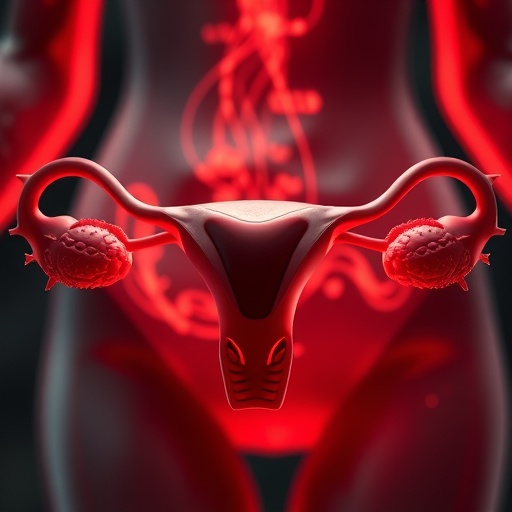
For generations, the processes governing female fertility have been largely ascribed to the quality and quantity of eggs housed within the ovaries. However, groundbreaking research now challenges these long-standing notions by illuminating a far more intricate picture: the ovary functions not merely as a receptacle for eggs but as a complex ecosystem wherein multiple cellular and molecular players influence the trajectory of reproductive aging. Leveraging innovative three-dimensional imaging and cutting-edge single-cell sequencing technologies, scientists from the University of California, San Francisco, in collaboration with the Chan Zuckerberg Biohub, provide compelling insights that redefine our understanding of ovarian biology and aging.
The ovary’s biological clock is notoriously unforgiving, with female fertility beginning to decline markedly after the mid-twenties and accelerating into the late thirties. Traditionally, this decline has been attributed primarily to the deterioration in egg quality and the decreasing reserve of viable oocytes. Yet, this reductive narrative overlooks the comprehensive cellular environment that envelops the eggs—constituting elements that are now demonstrated to shift profoundly as aging advances.
Central to this paradigm shift is a novel imaging technique developed by the research team, enabling visualization of eggs within intact ovarian tissue in three dimensions. This approach contrasts sharply with previous modalities that relied on slicing ovaries into thin sections, thereby potentially distorting spatial relationships between cells and tissue compartments. Utilizing this method, the researchers observed in murine models analogous to human ages 30 to 40 years, a precipitous reduction in both dormant immature oocytes and those actively progressing through maturation phases, paralleling observed declines in human fertility and decreased efficiency in in vitro fertilization (IVF) procedures.
Extending these observations to human ovarian specimens yielded unanticipated revelations: rather than an even distribution, oocytes cluster within distinct pockets sporadically interspersed throughout the ovarian cortex. These clusters are enveloped by regions conspicuously devoid of eggs. Crucially, the density of oocytes within these niches diminishes significantly with advancing age, suggesting that microenvironmental factors within these pockets may dictate the longevity and developmental competence of individual eggs.
Molecular interrogation via single-cell RNA sequencing provided further nuance to this evolving story. The painstaking manual isolation of individual oocytes circumvented the technical challenges posed by their sheer size and fragility, enabling an unprecedented transcriptional atlas of ovarian cellular constituents. Analysis of over 100,000 cells identified eleven primary cell populations, including fibroblasts, endothelial cells, and immune cells, among which the presence of glial cells—traditionally linked to neural support in the central nervous system—was particularly striking.
This finding dovetails with the intriguing observation of dense sympathetic nerve networks innervating the ovary, which intensify with age. Experimental neural ablation in mice revealed a dichotomous role for these nerves: augmenting the pool of quiescent eggs while simultaneously diminishing the proportion of eggs committing to the maturation pathway. Thus, sympathetic innervation appears to serve a regulatory function, modulating the balance between egg dormancy and developmental activation. The identification of glia and sympathetic nerves within the ovarian microenvironment situates the nervous system as a critical axis in reproductive aging, opening new avenues of inquiry into neuro-endocrine interactions within the ovary.
Age-related transformations extend beyond neural components: fibrogenic changes in stromal fibroblasts amplify inflammation and induce extracellular matrix remodeling manifesting as fibrosis. Notably, these fibrotic alterations emerge in women in their fifties, preceding comparable pathological scarring reported in canonical fibrotic diseases of the lungs or liver. This premature connective tissue remodeling underscores the ovary as a site of accelerated aging, with implications reaching far beyond fertility, influencing systemic health trajectories during aging and post-menopause.
The implications of viewing ovarian aging through an ecological lens are profound. Fertility decline, traditionally approached as a problem isolated to oocyte physiology, must now be reframed in the context of intercellular and tissue-level dynamics. Understanding the crosstalk between eggs, stromal cells, immune constituents, nerves, and vasculature may unravel novel therapeutic targets to preserve or restore ovarian function.
Remarkably, the high fidelity of murine models to human ovarian biology highlighted in this study affirms the utility of rodents for experimental interventions aiming to modulate ovarian aging. Despite disparities in reproductive lifespan and cycle periodicity, the conserved cellular architecture and aging patterns validate translational pathways for future research.
Encouraged by these insights, the research collective is embarking on pharmacological explorations aimed at delaying ovarian aging. Potential treatments could recalibrate neuro-immune signaling or mitigate inflammatory remodeling, ultimately extending the reproductive window and ameliorating health risks associated with premature ovarian failure or menopause. Such interventions hold promise not only for fertility preservation but also for the attenuation of post-menopausal morbidities, including cardiovascular and metabolic diseases.
In sum, this seminal study reframes the ovary from a passive vessel of eggs to a dynamic and integrative biological ecosystem. By elucidating the cellular interplay that orchestrates egg maturation and ovarian aging, this work paves a transformative path for reproductive medicine and healthy aging research. The ovary, long emblematic of female fertility, may also emerge as a linchpin in the quest for extended healthspan, reiterating the scientific aphorism that the whole is more than the sum of its parts.
Cite Scienmag News
Drew Townsend. (October 9, 2025). Why Does Female Fertility Decline Rapidly? The Ovary Holds the Answer. Scienmag. https://scienmag.com/why-does-female-fertility-decline-rapidly-the-ovary-holds-the-answer/
Drew Townsend. "Why Does Female Fertility Decline Rapidly? The Ovary Holds the Answer." Scienmag, 9 October 2025, https://scienmag.com/why-does-female-fertility-decline-rapidly-the-ovary-holds-the-answer/. Accessed 5 September 2026.
Drew Townsend. "Why Does Female Fertility Decline Rapidly? The Ovary Holds the Answer." Scienmag. October 9, 2025. https://scienmag.com/why-does-female-fertility-decline-rapidly-the-ovary-holds-the-answer/


