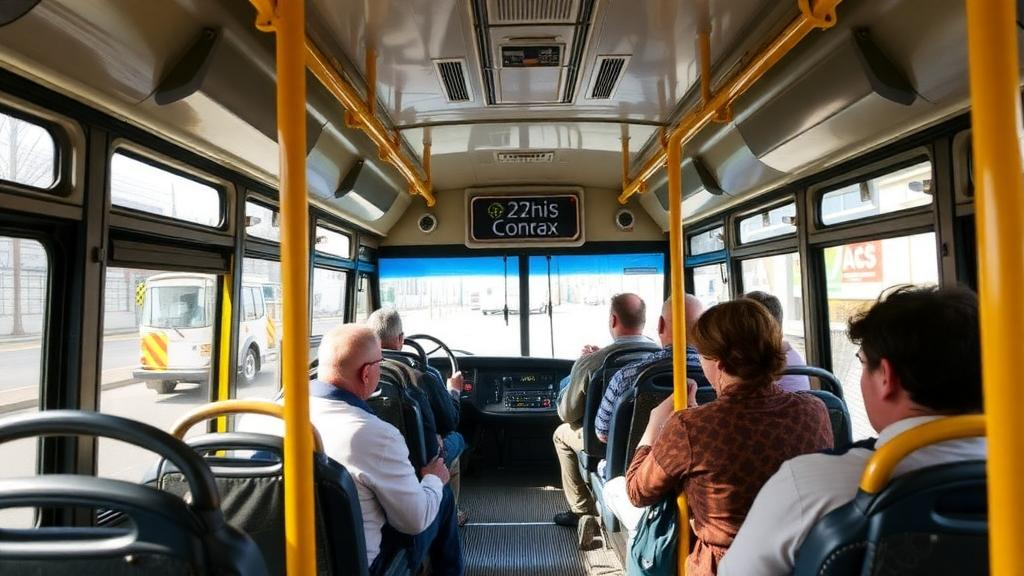
In the crowded bus terminals of Dhaka, Bangladesh, a troubling pattern has persisted for years: passengers boarding buses driven by teenagers or drivers without valid professional licenses. A new study published in Frontiers in Future Transportation reveals that this tolerance is not simply ignorance of the danger but a complex psychological and institutional phenomenon shaped by weak enforcement, normalized corruption, economic sympathy, and social pressure. The research, led by Mahbub Hassan of Chulalongkorn University and colleagues, introduces a novel analytical framework called the Structural and Institutional Tolerance of Enforcement (SITE) model to explain why commuters continue to accept services operated by legally ineligible drivers despite the well-documented safety risks.
The stakes are considerable. Bangladesh’s Road Transport Authority documented 5,495 road crashes and 5,024 deaths in 2023, followed by 5,856 crashes and 5,480 deaths in 2024. Independent monitoring by the Road Safety Foundation recorded 7,584 crashes and 7,359 deaths nationwide in 2025. Among crashes involving drivers younger than 18 years recorded by the Dhaka Metropolitan Police between 2011 and 2022, 45.24 percent were classified as fatal. Although these records included multiple vehicle categories and did not isolate public buses, the figures underscore a substantial safety burden that has prompted researchers to look beyond driver behavior alone.
The SITE framework integrates three established theoretical traditions: Institutional Theory, which explains how gaps between formal rules and routine practice can erode regulatory authority; Social Norm Theory, which describes how perceptions of commonly observed behavior shape judgments about what is acceptable; and the Psychometric Paradigm of Risk Perception, which examines how subjective assessments of danger influence responses to hazardous conditions. The researchers proposed that commuter tolerance is shaped by six factors: Perceived Enforcement Weakness, Corruption Normalization, Economic Empathy, Social Norm Acceptance, Personal Risk Perception, and Regulatory Trust.
To test these relationships, the team conducted structured face-to-face surveys with 320 adult commuters at six major transit hubs across Dhaka, including Mohakhali, Gabtoli, Sayedabad, Gulistan, Mirpur 1, and Farmgate. Respondents were required to have used bus services at least once per week during the preceding three months. The questionnaire contained 35 items measuring seven reflective constructs, each assessed on a five-point Likert scale. The instrument was translated into Bangla through forward and back-translation procedures and pilot tested with 30 commuters before the main survey.
The researchers analyzed the data using partial least squares structural equation modeling (PLS-SEM), a statistical technique well suited to estimating relationships among latent attitudinal constructs. The measurement model demonstrated satisfactory reliability and validity, with all indicator loadings exceeding 0.708 and composite reliability values ranging from 0.879 to 0.898. The structural model explained 45.5 percent of the variance in Public Tolerance, a substantial proportion for a behavioral attitude model.
All six hypothesized associations were statistically supported. Perceived Enforcement Weakness, Corruption Normalization, Economic Empathy, and Social Norm Acceptance were each positively associated with commuter tolerance, meaning that commuters who perceived enforcement as ineffective, regarded corruption as routine, sympathized with economically vulnerable drivers, or believed that other passengers accepted the practice were more willing to tolerate underage and unlicensed bus drivers. In contrast, Personal Risk Perception and Regulatory Trust were negatively associated with tolerance, indicating that commuters who felt greater personal danger or had more confidence in regulatory institutions were less willing to accept such services.
Personal Risk Perception had the largest path coefficient in absolute magnitude, suggesting that the subjective sense of vulnerability to collision, injury, or death is the strongest single countervailing force against tolerance. Economic Empathy had the largest positive coefficient, indicating that sympathy toward drivers facing poverty or limited employment opportunities is a powerful driver of acceptance. The researchers emphasize that Economic Empathy should not be interpreted as indifference to road safety but rather as a moral tension between concern for passenger safety and concern for economically disadvantaged workers.
A direction-sensitive importance-performance map analysis (IPMA) provided additional policy insights. Personal Risk Perception had the largest total effect in absolute magnitude, while Regulatory Trust recorded the lowest performance score at 34.272 on a scale from 0 to 100. This combination suggests that confidence in transport regulatory institutions is comparatively weak among surveyed commuters and represents an underdeveloped protective condition. The performance scores for the tolerance-promoting constructs ranged from 61.825 to 65.063, indicating that these conditions are comparatively elevated in the studied environment.
The findings carry significant implications for road safety policy in Bangladesh and beyond. The researchers identify four evidence-informed policy domains: risk communication and credential verification, institutional legitimacy and enforcement, operator accountability and economic protection, and social norm change. They suggest that transport authorities could disseminate verified information about crash risks, develop secure digital systems for verifying professional driver credentials, increase transparency in licensing and enforcement procedures, and direct accountability toward vehicle owners and operators rather than stigmatizing economically vulnerable young drivers.
The study also connects its findings to the United Nations Sustainable Development Goals, particularly SDG 3 on health, SDG 11 on sustainable cities, and SDG 16 on strong institutions. The researchers caution that their cross-sectional design establishes theory-consistent associations rather than causal effects and that the purposive sampling strategy limits statistical generalization. Nevertheless, the SITE framework offers a foundation for future longitudinal and experimental research into how institutional, social, and psychological conditions jointly shape public acceptance of unsafe transport practices, potentially informing interventions that could save lives in rapidly motorizing cities worldwide.
Subject of Research: Commuter tolerance of underage and unlicensed bus drivers in Dhaka, Bangladesh
Article Title: Determinants of commuter tolerance toward underage and unlicensed bus drivers: an empirical investigation using the structural and institutional tolerance of enforcement (SITE) framework
Article References: Hassan, M., Chandra Ray, S., Amin, M. B., Chandra Debnath, G., & Nagy, Z. (2026). Determinants of commuter tolerance toward underage and unlicensed bus drivers: an empirical investigation using the structural and institutional tolerance of enforcement (SITE) framework. Frontiers in Future Transportation, 7, Article 1874850. https://doi.org/10.3389/ffutr.2026.1874850
Image Credits: AI Generated
DOI: 10.3389/ffutr.2026.1874850
Keywords: road safety, commuter behavior, underage drivers, unlicensed drivers, public transport, Dhaka, SITE framework, enforcement, corruption normalization, risk perception, regulatory trust, Bangladesh
Cite Scienmag News
Scienmag. (October 16, 2026). Why Commuters Keep Riding Buses Driven by Underage and Unlicensed Drivers. https://scienmag.com/why-commuters-keep-riding-buses-driven-by-underage-and-unlicensed-drivers/
Scienmag. "Why Commuters Keep Riding Buses Driven by Underage and Unlicensed Drivers." Scienmag, 16 October 2026, https://scienmag.com/why-commuters-keep-riding-buses-driven-by-underage-and-unlicensed-drivers/. Accessed 16 October 2026.
Scienmag. "Why Commuters Keep Riding Buses Driven by Underage and Unlicensed Drivers." Scienmag. October 16, 2026. https://scienmag.com/why-commuters-keep-riding-buses-driven-by-underage-and-unlicensed-drivers/