


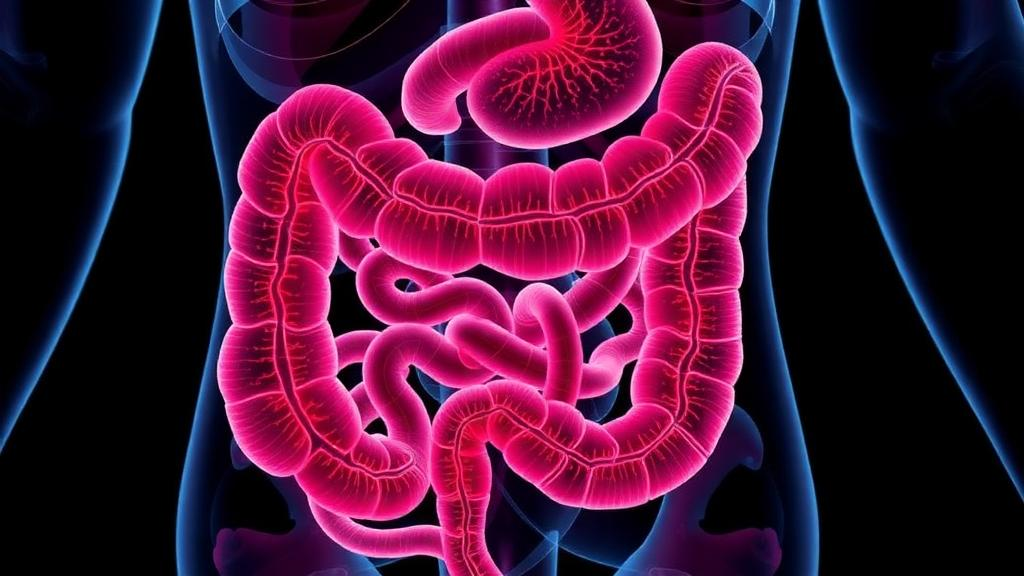
When a child arrives at the hospital with abdominal pain and blood in the stool, one of the most feared explanations is inflammatory bowel disease, a chronic immune condition that demands lifelong treatment. But a new study from Shanghai Children’s Hospital is a sharp reminder that the picture is not always what it seems. In a report published in BMC Pediatrics, a team of pediatric gastroenterologists describes three children whose colonoscopies revealed multiple ulcers scattered across the large intestine, a finding that strongly suggested inflammatory bowel disease, yet turned out to be caused by three entirely different infectious agents: the amoeba Entamoeba histolytica, the Epstein-Barr virus, and the bacterium Salmonella Typhimurium. In every case, targeted anti-infective therapy produced significant healing of the ulcers, a result that would have been impossible had the children been treated for a misdiagnosed autoimmune condition.
The study, led by Jiexia Gao and corresponding author Haifeng Liu of the hospital’s Department of Gastroenterology II, was conducted as a retrospective analysis of pediatric patients who presented with gastrointestinal symptoms and were ultimately found to have infection-related multiple colonic ulcers. The clinical motivation is straightforward: as digestive endoscopy has become more widely used in children, doctors are detecting colonic ulcers at a rising rate, and distinguishing between infectious causes and inflammatory bowel disease early in the workup has become one of the most consequential decisions in pediatric gastroenterology. Getting it wrong in either direction carries serious consequences, because the treatments for the two categories of disease are not merely different but in some cases actively harmful if applied to the wrong patient.
The technical challenge at the heart of the report is that infectious colitis and inflammatory bowel disease can look remarkably similar on endoscopic examination. Colonoscopy in all three children showed varying degrees of multiple colonic ulcers, the kind of finding that in many centers would trigger an immediate workup for ulcerative colitis or Crohn’s disease. The overlapping symptoms compound the difficulty. The main complaints in all three cases were abdominal pain and hematochezia, the passage of fresh blood with the stool, which are classic presenting features of both infection-driven inflammation and chronic immune-mediated bowel disease. Without a deliberate search for pathogens, the infectious origin of the ulcers could easily have been missed, and the children might have been started on immunosuppressive therapy designed to dampen the immune system rather than eliminate a microbe.
The first of the three cases involved Entamoeba histolytica, the single-celled parasite responsible for amoebic dysentery. This protozoan invades the lining of the colon and can produce deep, flask-shaped ulcers that bleed and cause cramping pain, an endoscopic appearance that can be mistaken for the continuous mucosal inflammation of ulcerative colitis. Diagnosis typically depends on identifying the organism or its genetic material in stool or tissue samples, and treatment requires specific anti-amoebic drugs rather than the corticosteroids or biologics used for inflammatory bowel disease. The Shanghai team confirmed the pathogen in their patient and documented significant improvement of the ulcers on follow-up after targeted anti-infective treatment, underscoring that a correct microbiological diagnosis converts a potentially chronic, relapsing condition into a curable one.
The second case was caused by Epstein-Barr virus, the ubiquitous human herpesvirus best known for causing infectious mononucleosis. Epstein-Barr virus is an increasingly recognized contributor to gastrointestinal disease, and in some patients it establishes a persistent, active infection in the gut that produces ulceration of the intestinal mucosa. The authors of the report highlight the importance of Epstein-Barr virus-encoded RNA, known as EBER, a molecular marker that can be detected in tissue biopsies by in situ hybridization and that allows pathologists to identify viral presence directly within ulcer tissue. They also reference chronic active Epstein-Barr virus infection, a severe and potentially life-threatening entity in which the virus persists in an uncontrolled fashion. Distinguishing a self-limited or treatable Epstein-Barr virus-associated colitis from Crohn’s disease, which produces patchy, skip lesions of deep inflammation, is a diagnostic exercise that depends heavily on this kind of molecular pathology rather than on endoscopic appearance alone.
The third case was caused by Salmonella Typhimurium, a serotype of the foodborne bacterium Salmonella enterica. Salmonella infection classically produces acute bacterial colitis with diarrhea, fever, and sometimes bloody stool, and in some patients the inflammation becomes severe enough to generate discrete colonic ulcers visible on colonoscopy. Bacterial culture of stool or tissue is the standard route to confirmation, and appropriate antibiotic therapy or supportive care, guided by the susceptibility of the organism, addresses the root cause. As with the amoeba and the virus, the report documents that once the bacterium was identified and treated, the colonic ulcers improved significantly on follow-up, a trajectory very different from the chronic relapsing course expected in untreated inflammatory bowel disease.
The central conclusion the authors draw is that multiple colonic ulcers in children can indeed be caused by infections, and that timely diagnosis requires the integration of pathogen detection with clinical, endoscopic, and pathological findings, followed by targeted treatment. This multimodal approach is the technical core of the paper. Clinical history provides clues such as travel, diet, sick contacts, and the acuity of symptom onset. Endoscopy defines the distribution and morphology of the lesions. Histopathology of biopsy specimens can reveal features that favor infection, such as certain patterns of inflammation, or that favor chronic immune disease, such as basal plasmacytosis and crypt architectural distortion. Layered on top of all of this is direct microbiological testing, including stool studies, cultures, serology, and molecular assays such as EBER in situ hybridization, which together can pin down a specific culprit organism.
The broader significance of the report lies in what it warns against. Immunosuppressive therapy, the mainstay of treatment for ulcerative colitis and Crohn’s disease, works by blunting the immune response in the gut. If that therapy is given to a child whose ulcers are actually driven by an amoeba, a virus, or a bacterium, the result can be uncontrolled proliferation of the pathogen and worsening disease. The authors emphasize that ruling out infection and clarifying the underlying cause early, before committing a child to a diagnosis of inflammatory bowel disease, is essential to ensure timely and appropriate treatment. Their three cases, each caused by a biologically unrelated microbe spanning a protozoan, a herpesvirus, and an enteric bacterium, illustrate just how wide the infectious differential diagnosis for colonic ulceration can be.
The study also reflects a changing diagnostic landscape in pediatric medicine. The increasing use of digestive endoscopy in children means that colonic ulcers are being found more often, including in patients whose symptoms might once have been managed without a definitive anatomical diagnosis. That greater detection rate raises the stakes for accurate etiological classification, because every endoscopically identified ulcer now demands an explanation. The Shanghai team’s experience suggests that pathogen testing should be treated as a routine and early component of the workup for pediatric colonic ulcers, rather than as a fallback pursued only after immunosuppressive therapy has failed. Their retrospective series, while small, adds to a literature they review showing that infectious mimics of inflammatory bowel disease are neither rare nor exotic.
For clinicians, the practical message is a disciplined diagnostic sequence: when a child presents with abdominal pain, hematochezia, and endoscopic evidence of multiple colonic ulcers, obtain thorough microbiological studies alongside the standard inflammatory bowel disease evaluation, interpret the endoscopic and histological findings in light of the pathogen results, and reserve immune-directed therapy for cases in which infection has been reasonably excluded. For the three children in this report, that discipline paid off in the most concrete way possible. Follow-up after targeted anti-infective treatment showed significant improvement of their ulcers, demonstrating that an accurate early diagnosis can spare young patients both the burden of a chronic disease label and the risks of treatments they never needed.
Subject of Research: Infectious causes of multiple colonic ulcers in children that mimic inflammatory bowel disease
Article Title: Resembling inflammatory bowel disease: infectious causes of multiple colonic ulcers in children—three case reports and a literature review
Article References: Gao, J., Lin, K., Gu, Z., Wang, L., Feng, Y., & Liu, H. (2026). Resembling inflammatory bowel disease: infectious causes of multiple colonic ulcers in children—three case reports and a literature review. BMC Pediatrics. https://doi.org/10.1186/s12887-026-07745-y
Image Credits: AI Generated
DOI: 10.1186/s12887-026-07745-y
Keywords: colonic ulcers, children, inflammatory bowel disease, Entamoeba histolytica, Epstein-Barr virus, Salmonella Typhimurium, colonoscopy, infectious colitis, pediatric gastroenterology, EBER, misdiagnosis, anti-infective treatment
Cite Scienmag News
Ophelia Keating. (October 2, 2026). When Gut Ulcers Mimic Inflammatory Bowel Disease: Three Childhood Infections That Fooled Doctors. Scienmag. https://scienmag.com/when-gut-ulcers-mimic-inflammatory-bowel-disease-three-childhood-infections-that-fooled-doctors/
Ophelia Keating. "When Gut Ulcers Mimic Inflammatory Bowel Disease: Three Childhood Infections That Fooled Doctors." Scienmag, 2 October 2026, https://scienmag.com/when-gut-ulcers-mimic-inflammatory-bowel-disease-three-childhood-infections-that-fooled-doctors/. Accessed 4 October 2026.
Ophelia Keating. "When Gut Ulcers Mimic Inflammatory Bowel Disease: Three Childhood Infections That Fooled Doctors." Scienmag. October 2, 2026. https://scienmag.com/when-gut-ulcers-mimic-inflammatory-bowel-disease-three-childhood-infections-that-fooled-doctors/


