


When the COVID-19 pandemic shuttered schools and universities in early 2020, few subjects seemed more vulnerable to the sudden shift online than art education. Studio-based teaching, with its shared materials, physical demonstrations, and the quiet intimacy of watching a student’s hand move across a page, appeared almost impossible to translate into a video call. Yet art teachers around the world did adapt, and in doing so they accumulated a body of practical knowledge that, until recently, remained largely locked inside individual classrooms and personal memory. A doctoral thesis defended at Tallinn University by Antonina Korepanova now sets out to change that, transforming scattered pandemic-era experiences into a structured, reusable resource for the wider teaching community.
Korepanova’s research begins from a deceptively simple observation: during the emergency transition to distance learning, art teachers solved real pedagogical problems, but those solutions were rarely documented or shared. Teachers experimented in isolation, discovering workarounds for everything from assessing three-dimensional work through a laptop camera to keeping students motivated when the social energy of the studio vanished. Once schools reopened, much of this hard-won expertise risked evaporating. The thesis treats those experiences as data, capturing what worked, why it worked, and under what conditions a given approach can be expected to work again. The result is a catalogue of what the researcher calls teaching patterns, each one a compact description of a recurring problem paired with solutions that proved effective in practice.
The empirical foundation of the study is substantial. Korepanova interviewed 24 university-level art teachers drawn from the United States, Europe, and China, all of whom had taught both face-to-face and online. To complement the interviews, she organised a group discussion with seven teachers focused specifically on generative artificial intelligence, a topic that has rapidly reshaped the landscape of visual arts education since the pandemic. She then compared these first-hand accounts with 48 published studies, triangulating lived experience against the academic literature. This mixed approach, grounded in case-study methodology, allowed her to identify problems that were not idiosyncratic to individual teachers but recurring across institutions and continents.
The analysis surfaced 15 distinct problems that art teachers encounter when teaching online, organised into six categories. Some of these are familiar to anyone who taught remotely during the pandemic: technical failures, reduced student engagement, the difficulty of sustaining dialogue through a screen. Others are specific to the visual arts and demand solutions that no generic online-teaching handbook provides. How does a teacher evaluate the texture of a sculpture from a compressed video feed? How can colour mixing be demonstrated when every student’s monitor renders colour differently? How do you preserve the serendipitous peer learning that happens when students see each other’s work evolve in real time? These discipline-specific challenges required discipline-specific answers, and the teachers’ experiences supplied them.
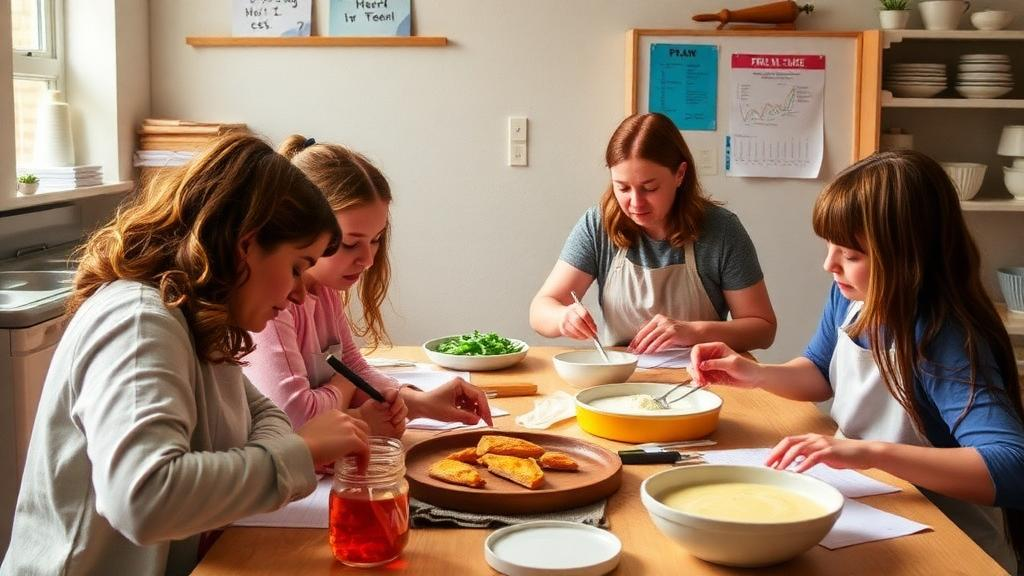
From the interview data, three main strategies emerged as the ways teachers dealt with these problems, and each strategy carries its own set of teaching patterns. A teaching pattern, in Korepanova’s formulation, briefly describes a teaching problem and the solutions that proved effective, grounded in the accumulated experience of real teachers. She offers an analogy that makes the concept immediately accessible: if we draw a parallel with cooking, teaching patterns are a bit like a recipe. A recipe does not dictate every movement of your hands, but it tells you what ingredients to combine, in what order, and what to expect as a result. Similarly, a teaching pattern gives an educator a tested starting point rather than a rigid script, something that can be followed, adjusted, and refined according to the class at hand.
This recipe metaphor also explains why the pattern format is so well suited to pandemic lessons. Emergency remote teaching forced teachers to improvise, and improvisation produces tacit knowledge, the kind of expertise that practitioners hold but rarely articulate. Converting tacit knowledge into named, describable patterns makes it transferable. A teacher in Tallinn who never taught online before 2020 can now consult patterns distilled from the experiences of colleagues in Ohio, Beijing, or Berlin, learning in an afternoon what those teachers discovered through months of trial and error. The thesis examines both patterns characteristic of online art teaching specifically and patterns involving the use of artificial intelligence image-processing tools, reflecting the two technological frontiers that have most changed art classrooms in recent years.
One of the study’s more provocative findings concerns design thinking, the problem-solving approach that has become something of a foundation myth in creative education. Design thinking frames learning as a cycle of empathising, ideating, prototyping, and testing, and it is often treated as the core of what art teachers do. Korepanova’s research shows that this covers only part of the teaching profession. As she puts it, art teachers do not just help pupils come up with ideas and create objects; they also contribute to supporting pupils’ personal and professional development. That developmental dimension, the mentoring, the confidence-building, the career guidance, the emotional support that a studio teacher provides, does not map neatly onto design frameworks, and it became especially visible in its absence when teaching moved online and informal mentoring moments disappeared.
Recognising this gap has a practical consequence in how the teaching patterns are organised. Rather than indexing patterns solely by activity or technology, the doctoral thesis links them to the learning objectives that teachers aim to achieve. This linkage turns the pattern collection into a decision-support tool: a teacher preparing a particular lesson can start from the objective, whether it is technical skill acquisition, creative ideation, or personal development, and then select the pattern best suited to that goal. In an online environment where attention is scarce and every minute of synchronous contact counts, this kind of goal-oriented planning is more than a convenience. It is a way of ensuring that the medium does not quietly narrow the curriculum, reducing art education to whatever happens to be easiest to deliver through a screen.
The research also produced something tangible beyond the thesis itself. To enable teachers to share their experiences systematically, Korepanova created a prototype of an open web tool that presents teaching patterns through data visualisation. The idea is to make the pattern library navigable and alive, allowing teachers to explore connections between problems, strategies, and objectives rather than paging through a static document. Visualisation matters here because patterns are relational objects: a single strategy may address several problems, and a single problem may be met with several approaches. Seeing those relationships mapped helps teachers understand not just what to do but when and why, which is precisely the knowledge that was lost when pandemic classrooms dissolved.
Perhaps the most encouraging conclusion of the study is that online art education presents specific, yet surmountable, challenges. The pandemic is over, but its lessons are not obsolete. Hybrid teaching, emergency closures, and digitally mediated learning remain part of the educational landscape, and many of the solutions documented in the research are equally suitable for use in the ordinary, physical classroom. A pattern developed for critiquing student work over video, for example, can structure a critique session on campus; a technique for sustaining motivation remotely can enrich face-to-face mentoring. What began as an emergency response has matured into a durable pedagogical resource, one that honours the ingenuity of teachers who, with little warning and little support, figured out how to keep creativity alive through a screen, and then made sure that ingenuity would not be forgotten.
Subject of Research: Art teachers' online teaching experiences during the COVID-19 pandemic and their conversion into reusable teaching patterns
Article Title: Lessons learned: art teachers’ experiences of online teaching during the pandemic became teaching patterns
Article References: Lessons learned: art teachers’ experiences of online teaching during the pandemic became teaching patterns. (n.d.). Original publication
Image Credits: AI Generated
DOI: Not provided
Keywords: art education, online teaching, COVID-19 pandemic, teaching patterns, distance learning, design thinking, Tallinn University, doctoral thesis, generative artificial intelligence, pedagogy, higher education, educational technology
Cite Scienmag News
Courtney Benton. (October 14, 2026). When Art Class Moved Online, Teachers Found Recipes That Still Work. Scienmag. https://scienmag.com/when-art-class-moved-online-teachers-found-recipes-that-still-work/
Courtney Benton. "When Art Class Moved Online, Teachers Found Recipes That Still Work." Scienmag, 14 October 2026, https://scienmag.com/when-art-class-moved-online-teachers-found-recipes-that-still-work/. Accessed 14 October 2026.
Courtney Benton. "When Art Class Moved Online, Teachers Found Recipes That Still Work." Scienmag. October 14, 2026. https://scienmag.com/when-art-class-moved-online-teachers-found-recipes-that-still-work/


