


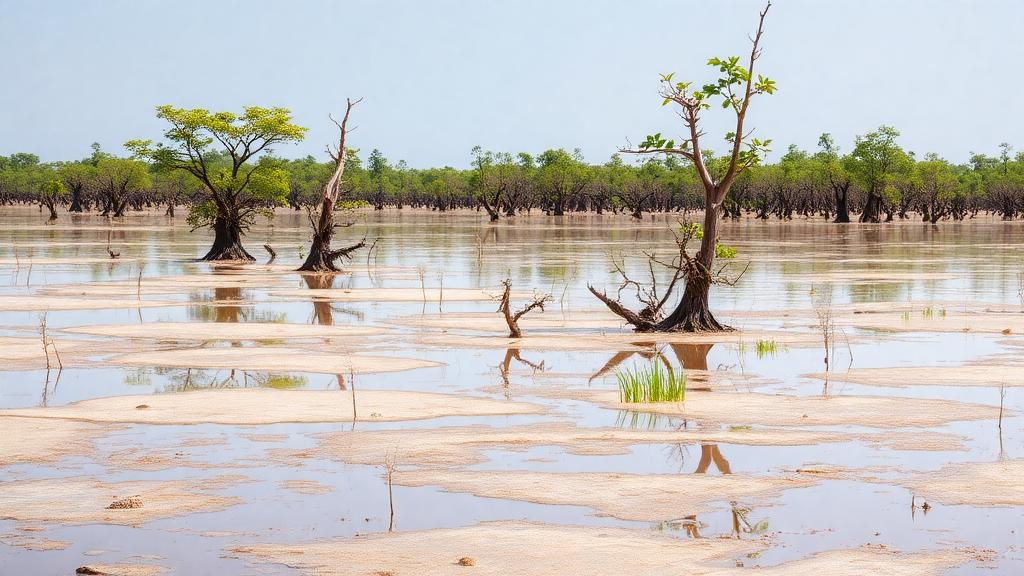
Across Europe, planners are increasingly turning to nature-based solutions (NBS) as a way to adapt to climate change, reduce risks and prevent natural disasters. Among these measures, wetlands stand out for their capacity to act like natural sponges, absorbing stormwater, moderating droughts and floods, filtering pollutants and cooling their surroundings. Yet a persistent barrier has limited their uptake: investors and decision-makers often lack clear information about whether these green measures actually make economic sense. A new study published in the journal Nature Conservation tackles that gap head-on, applying cost–benefit analysis (CBA) to three very different wetland projects and showing that, from a societal perspective, the numbers can be strikingly favourable.
The research, led by a team working on ecosystem service valuation in Central Europe, examines a rural wetland in Bratčice in the Czech Republic, an urban wetland complex in the city of Pilsen, and a large-scale floodplain restoration in the Middle Elbe region of Germany. The study demonstrates how the benefits of wetlands, which accrue to a wide range of societal beneficiaries beyond the landowners who bear the costs, can be systematically identified, quantified and translated into monetary terms. The results provide evidence-based arguments for public communication and decision-making, addressing one of the most significant barriers to NBS implementation: low awareness of their socio-economic benefits.
The economic logic behind the analysis rests on the concept of ecosystem services, the benefits that humans derive from nature. These are conventionally divided into provisioning services such as water and biomass, regulating services such as flood risk reduction and water purification, cultural services such as recreation and aesthetics, and supporting services such as biodiversity. Wetlands deliver benefits across all four categories simultaneously, an advantage over so-called grey infrastructure, which typically addresses only a single function. Because many of these benefits take the form of positive externalities without visible market prices, the study applies environmental economics valuation methods, including the market price method, the avoided or substitute cost method, hedonic pricing proxies for property value uplift, and benefit transfer from meta-analytical studies.
In the rural case study at Bratčice, a degraded fire reservoir full of sediments and foul-smelling water was revitalised in 2019 into a natural pond with wooden footbridges, a pre-treatment wetland and leisure equipment. Rainwater from more than 2.5 hectares of rooftops and public areas is now diverted through the wetland before flowing into the pond, replacing the original sewer discharge, and retained water is reused for irrigating local greenery. The assessment monetised stormwater retention, air quality improvement, carbon sequestration valued at EU Emissions Trading System prices, irrigation savings, recreational benefits and property value increases of 3 to 5 percent for nearby homes. Over a 25-year period, monetised benefits reach EUR 562,000, exceeding costs by roughly EUR 60,000, with a payback period of 15 years from a social perspective.
The urban case study in Pilsen tells an even more dramatic story. The Lobezská jezírka park, built as part of the Úslava river revitalisation, comprises four wetlands with a combined flood retention capacity of approximately 8,000 cubic metres, one suitable for swimming and another serving as a water playground for children. Benefits were estimated using benefit transfer, parameterising meta-analytic value functions for wetlands and urban green spaces with local biophysical and socio-economic characteristics. The monetised benefits, dominated by recreation, aesthetics and flood regulation, amount to EUR 14.2 million over 25 years, exceeding costs of EUR 1.3 million by EUR 12.9 million. The payback period is just one year, reflecting how rapidly the benefits of urban wetlands accumulate when their multiple functions are considered together.
The German case study, the Lödderitz Forest in the Middle Elbe floodplain, represents a fundamentally different scale of intervention. A dike relocation completed in 2017 reconnected roughly 600 hectares of former floodplain to the active floodplain, one of the largest remaining hardwood floodplain forest complexes in Germany. Here the researchers took a deliberately conservative approach: the primary flood protection function was not monetised at all, because translating flood peak attenuation into economic terms would require detailed hydraulic modelling. Instead, only nutrient retention of nitrogen and phosphorus was valued, using an avoided cost approach based on the expense of alternative agricultural abatement measures. Even this single benefit accounts for 48 to 65 percent of total investment costs, indicating that the full economic case for large-scale restoration is likely to be substantial once flood regulation and other services are included.
The technical rigour of the analysis is reinforced by a scenario-based sensitivity analysis focused on the discount rate, a variable that strongly influences the temporal distribution of costs and benefits and can disadvantage long-term environmental gains. All flows were discounted at a baseline rate of 4 percent, in line with European Commission guidance, and tested against alternative rates of 2 and 6 percent. The results confirm that while discounting assumptions affect the magnitude of net present values, they do not alter the main conclusions. Bratčice remains positive under all scenarios, Pilsen stays strongly positive with net benefits between EUR 10.4 and EUR 26.5 million depending on rate and horizon, and the Lödderitz Forest remains negative under the conservative monetisation scope, though its net present value improves to around EUR −1.2 million at a 2 percent rate.
The authors are candid about the limits of monetisation. The Pilsen estimates rest on benefit transfer rather than primary local measurements, introducing uncertainty from transfer errors and scaling assumptions, so the absolute magnitudes should be read as indicative of order of magnitude rather than precise site-specific values. More fundamentally, the analysis confronts what the literature calls a measurability trap: only those ecosystem services for which reliable biophysical data and established valuation methods exist enter the final calculation. Biodiversity support, long-term health improvements and parts of microclimate regulation remain unmonetised, meaning the resulting net present values should be viewed as conservative lower-bound estimates of the true societal worth of these projects.
The study also situates its economic findings within the broader governance landscape that shapes whether favourable cost–benefit results actually translate into implementation. Surveys among Czech farmers identify administrative burdens, complicated ownership structures and legislation as the main barriers to adopting adaptation measures, with financial constraints rated as less crucial than bureaucracy. Research on willingness to adopt unsubsidised measures highlights self-identity as a key motivational driver, and fragmented incentives, transaction costs and entrenched preferences for conventional grey infrastructure can lock decision-makers into familiar technical solutions even when NBS are efficient over longer horizons. Distributional asymmetries matter too: benefits such as flood protection accrue broadly to society, while costs are often borne locally through land-use restrictions and foregone income.
The overarching message is that socio-economic assessment is not a luxury but a practical instrument for planning and communication. Monetised benefits, expressed in terms that stakeholders can grasp, provide an important input for convincing public and private investors to support wetland restoration in urban areas, agricultural landscapes and river–floodplain systems alike. The payback periods of one to fifteen years across the Czech case studies, and the demonstration that even a single conservatively valued benefit covers half or more of the costs of large-scale floodplain restoration, offer exactly the kind of easily graspable evidence that has been missing. The authors argue that abandoning monetary valuation because of its uncertainties would be inadvisable; instead, continued development of valuation methods and systematic data collection are needed, with results communicated alongside clear assumptions and a simple distributional perspective of who pays and who benefits.
Subject of Research: Socio-economic valuation of wetland restoration as nature-based solutions
Article Title: Nature-based solutions with sponge functions: socio-economic importance and valuation
Article References: Macháč, J., Zaňková, L., Hekrle, M., & Scholz, M. (2026). Nature-based solutions with sponge functions: socio-economic importance and valuation. Nature Conservation, 62, 289-315. https://doi.org/10.3897/natureconservation.62.164530
Image Credits: AI Generated
DOI: 10.3897/natureconservation.62.164530
Keywords: nature-based solutions, wetlands, ecosystem services, cost-benefit analysis, floodplain restoration, climate adaptation, Nature-based, solutions, sponge, functions, socio-economic, importance
Cite Scienmag News
Gavin Prescott. (October 17, 2026). Wetlands pay back: sponge landscapes prove their socio-economic worth. Scienmag. https://scienmag.com/wetlands-pay-back-sponge-landscapes-prove-their-socio-economic-worth/
Gavin Prescott. "Wetlands pay back: sponge landscapes prove their socio-economic worth." Scienmag, 17 October 2026, https://scienmag.com/wetlands-pay-back-sponge-landscapes-prove-their-socio-economic-worth/. Accessed 17 October 2026.
Gavin Prescott. "Wetlands pay back: sponge landscapes prove their socio-economic worth." Scienmag. October 17, 2026. https://scienmag.com/wetlands-pay-back-sponge-landscapes-prove-their-socio-economic-worth/


