


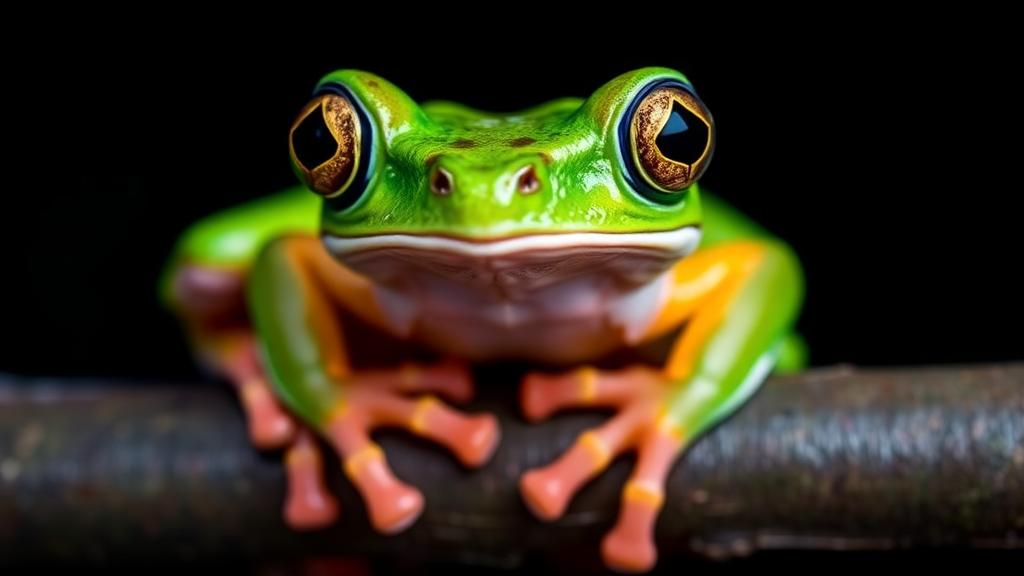
Amphibians are in trouble. More than 40 percent of amphibian species worldwide are now considered threatened with extinction, making frogs, salamanders and caecilians the most endangered class of vertebrates on the planet. Habitat destruction, pollution, invasive species and the spread of deadly diseases such as chytridiomycosis have combined into what many conservation biologists describe as an existential crisis. For some species, the only realistic path to long-term survival may involve human intervention at the level of cells: captive breeding programs, assisted reproductive technologies and, increasingly, the cryogenic storage of living tissue in liquid nitrogen. A new study of Australian tree frogs shows how such frozen cell banks can do double duty, safeguarding genetic material for the future while simultaneously revealing chromosomal fingerprints that help distinguish even the most deceptively similar species.
The research, published in the journal Comparative Cytogenetics, focuses on three members of the Litoria ewingii species group, a cluster of nine small Australian tree frogs first delineated through mating call comparisons, genetic compatibility trials and biochemical analyses. The three species in question, Litoria paraewingi, Litoria ewingii and Litoria jervisiensis, all belong to the family Pelodryadidae, a group of roughly 232 species distributed across Australia, Melanesia and eastern Indonesia that accounts for about 28 percent of frog diversity in that region. Molecular phylogenies suggest the family diverged between 50 and 100 million years ago, at a time when the Australian and New Guinean landmass was separating from Antarctica. Despite this deep evolutionary history, classification within the family has remained contentious, partly because a comprehensively sampled and well-resolved phylogeny has been lacking.
What makes the new work particularly striking is that the karyotype of Litoria paraewingi had never been described before. This species is what taxonomists call cryptic: it looks so similar to Litoria ewingii that its very existence as a separate species was only established through detailed call analysis, breeding experiments and molecular genetics. Chromosomes, however, can betray differences that external morphology conceals. To expose them, the researchers turned to a technique more commonly associated with stem cell laboratories than with field herpetology: somatic cell culture.
The team obtained toe clippings from deceased, unsexed specimens of Litoria ewingii collected in southern Victoria and Litoria jervisiensis from Myall Lakes National Park in New South Wales, and from a male Litoria paraewingi collected in Big River State Forest, Victoria. Cells from these tissues were grown in culture and then cryopreserved in liquid nitrogen, where they remained for remarkably long periods: 15 months for the Litoria ewingii cells, 15 months for Litoria paraewingi and three months for Litoria jervisiensis. After thawing, the cells were revived in 24-well plates and passaged for karyotyping and recryopreservation. All specimens were collected under appropriate state permits and institutional animal ethics approvals, in compliance with Australian wildlife regulations.
For chromosome analysis, the researchers stained metaphase spreads with DAPI, a fluorescent dye that binds preferentially to AT-rich DNA and highlights chromosomal architecture under the microscope. Images were captured at 1000-times magnification under oil immersion, and centromeric positions and relative chromosome lengths were measured using ImageJ software with the Levan plugin. Following standard cytogenetic conventions, chromosomes were classified as metacentric, submetacentric or subtelocentric according to long arm to short arm ratios of 1 to 1.69, 1.7 to 2.99 and 3 to 6.99 respectively, and arranged in descending order of size, with the largest designated chromosome 1.
The results were unambiguous on one point: all three species share the same diploid number, 2n = 26, meaning each somatic cell carries 26 chromosomes in 13 pairs. Of the first 23 metaphase spreads scored for Litoria ewingii, 70 percent showed the full 26 chromosomes; for Litoria paraewingi the figure was 87 percent, and for Litoria jervisiensis, 94 percent of 71 spreads. The anomalous counts, ranging from 16 to 25 chromosomes, most likely reflect technical chromosome loss during cell dropping and spreading rather than genuine aneuploidy, since reconstruction of the anomalous karyotypes revealed no trisomies or repeated losses of specific chromosome pairs. Such technical artifacts are common in chromosome preparation and do not undermine the conclusions.
Beyond the shared chromosome count, however, the three karyotypes diverge in telling ways. In Litoria paraewingi, chromosomes 1, 2, 6 and 7 are submetacentric, chromosomes 3 and 5 are subtelocentric, and the remainder are metacentric. In both Litoria ewingii and Litoria jervisiensis, by contrast, chromosome 1 is metacentric and chromosomes 8 and 10 are submetacentric, morphologies that Litoria paraewingi does not share. Most notably, a DAPI-negative region, presumed to represent the nucleolus organiser region, the chromosomal site of the genes encoding ribosomal RNA, was readily identifiable on the long arm of chromosome 1 in every examined metaphase spread of Litoria ewingii and Litoria jervisiensis, but in none of the 15 Litoria paraewingi spreads. The Litoria jervisiensis karyotype further differs from the other two by an apparent inversion of relative length order between its metacentric chromosome 3 and subtelocentric chromosome 4, and by chromosome 6 being metacentric rather than submetacentric. Chromosomes 2, 5, 7, 9, 11, 12 and 13, meanwhile, are highly conserved across all three species, underscoring a shared karyotypic blueprint with species-specific modifications layered on top.
The absence of a visible nucleolus organiser region in Litoria paraewingi is intriguing rather than definitive. The researchers note that in the related species Litoria littlejohni, the nucleolus organiser region sits subterminally on the long arm of chromosome 11 and its satellites are not always observable with conventional staining, being revealed instead by silver nitrate staining. It is therefore possible that Litoria paraewingi possesses a nucleolus organiser region that conventional DAPI staining simply fails to resolve, perhaps because it lacks obvious satellites or lies in a position that does not produce a clear DAPI-negative constriction. The authors suggest that future work using silver nitrate staining or fluorescence in situ hybridisation with 18S or 28S ribosomal DNA probes could settle the question definitively.
These chromosomal data carry real phylogenetic weight. The greatest number of morphological differences was observed between Litoria paraewingi and Litoria jervisiensis, and the pattern of shared and divergent chromosome morphologies reinforces the species separations previously established through behavioural, genetic compatibility, biochemical and molecular genetic analyses. For a cryptic species like Litoria paraewingi, whose distinction from Litoria ewingii rests on subtle call differences and molecular markers, the divergent morphologies of chromosomes 1, 8 and 10 provide an entirely independent line of cytological evidence.
Just as important is what the study demonstrates about cryobanking itself. By showing that karyotypically normal cells can be recovered from cells frozen for over a year, the work provides assurance that cryopreserved somatic cell lines from these frogs remain a viable resource for future conservation initiatives. In mouse embryonic stem cells, maintenance of more than 50 percent euploid karyotype is known to be essential for successful cloning outcomes and, by extension, gamete production, and the same principle is expected to apply to amphibian induced pluripotent stem cell technologies aimed at cloning and gamete generation. With amphibian sperm cryopreservation currently the only routine reproductive cell banking option, somatic cell lines that retain normal chromosomes after freeze-thaw cycles represent a crucial hedge against extinction. For three small Australian tree frogs, the chromosomes frozen in liquid nitrogen may prove to be as valuable as any reserve of habitat.
Subject of Research: Cytogenetics of Australian tree frogs
Article Title: Karyotypic description and comparison of Litoria ( L. ) paraewingi (Watson et al., 1971), L. ewingii (Duméril et Bibron, 1841) and L. jervisiensis (Duméril et Bibron, 1841) ( Amphibia , Anura )
Article References: Mollard, R., Mahony, M., & West, M. (2024). Karyotypic description and comparison of Litoria (L.) paraewingi (Watson et al., 1971), L. ewingii (Duméril et Bibron, 1841) and L. jervisiensis (Duméril et Bibron, 1841) (Amphibia, Anura). Comparative Cytogenetics, 18, 161-174. https://doi.org/10.3897/compcytogen.18.129133
Image Credits: AI Generated
DOI: 10.3897/compcytogen.18.129133
Keywords: amphibians, cytogenetics, karyotype, Litoria, tree frogs, cryopreservation, conservation, chromosomes, Pelodryadidae, cryptic species, nucleolus organiser region, DAPI staining
Cite Scienmag News
Margaret Porter. (October 17, 2026). Frog chromosomes reveal hidden differences in three Australian tree frog species. Scienmag. https://scienmag.com/frog-chromosomes-reveal-hidden-differences-in-three-australian-tree-frog-species/
Margaret Porter. "Frog chromosomes reveal hidden differences in three Australian tree frog species." Scienmag, 17 October 2026, https://scienmag.com/frog-chromosomes-reveal-hidden-differences-in-three-australian-tree-frog-species/. Accessed 17 October 2026.
Margaret Porter. "Frog chromosomes reveal hidden differences in three Australian tree frog species." Scienmag. October 17, 2026. https://scienmag.com/frog-chromosomes-reveal-hidden-differences-in-three-australian-tree-frog-species/


