


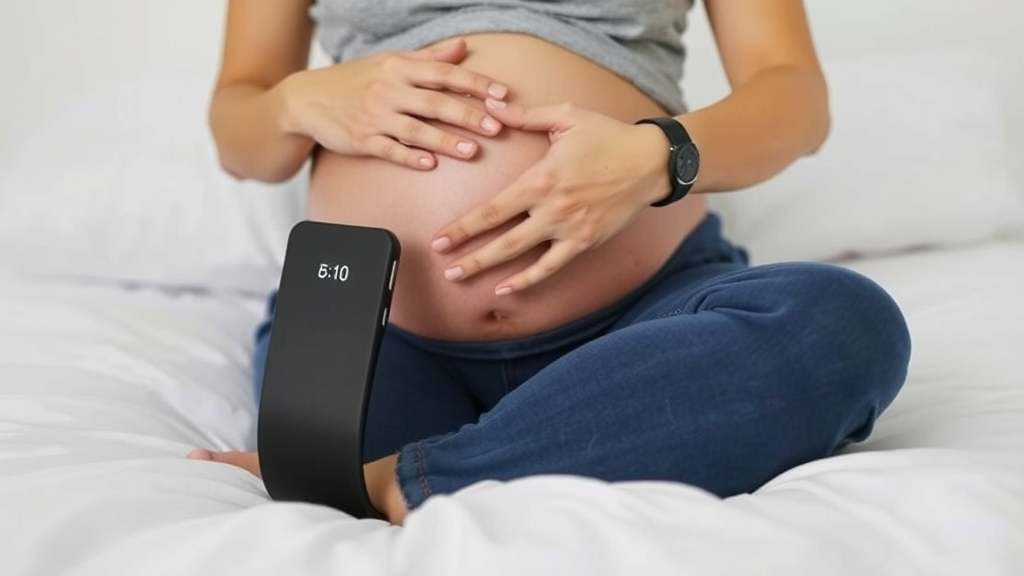
Pregnancy transforms nearly every aspect of a person’s daily life, and one of the most profound shifts happens in the quiet rhythm of movement and rest. As the weeks pass, moderate-to-vigorous exercise tends to decline, sedentary time often creeps upward, and sleep becomes shorter, more fragmented, and less satisfying. Researchers have long wanted to capture these changes in fine detail, week by week, to pinpoint the exact moments when behavior shifts and to design interventions that arrive at the right time. Now, a new feasibility study suggests that research-grade wearable technology, paired with simple text-message sleep diaries, can deliver that detailed picture across most of pregnancy — provided researchers plan carefully for sore wrists, dying batteries, and the fatigue of the third trimester.
The study, conducted by investigators at the Kaiser Permanente Northern California Division of Research together with colleagues at the University of Alabama at Birmingham and Stanford University School of Medicine, set out to answer a deceptively simple question: can pregnant individuals wear a research-quality accelerometer around the clock for months while also completing daily sleep diaries, and will they find the experience tolerable? Published in the Journal of Activity, Sedentary and Sleep Behaviors, the research offers one of the first tests of this combined approach using a fully validated, research-grade device rather than the consumer fitness trackers that have dominated prior longitudinal studies in this population.
The distinction between research-grade and consumer-grade devices is more than academic. Consumer wearables such as Fitbit and Garmin trackers are inexpensive, familiar, and easy to deploy at scale, and several earlier pregnancy studies reported that they could feasibly track 24-hour movement over many months. But their proprietary algorithms process raw sensor data into summary categories such as ‘active time’ whose meaning relative to public health guidelines remains unclear. Researchers typically cannot access the underlying raw acceleration signals, which limits their ability to apply standardized processing methods, compare results across studies, or probe nuanced day-to-day and week-to-week patterns. Research-grade accelerometers, by contrast, record raw data at high sampling frequencies, allowing investigators to apply transparent, validated algorithms for classifying sleep, sedentary behavior, and physical activity intensity.
Yet objective device data alone cannot tell the whole story of sleep. Sleep health is a multidimensional construct that includes subjective experiences — how satisfied a person feels with their sleep, how rested they feel during the day, how long it takes them to drift off. To capture those dimensions, the study paired continuous accelerometer wear with the consensus sleep diary, a validated self-report instrument administered by text message one hour after each participant’s usual wake time for seven consecutive days each month. The diaries asked about bedtime, wake time, sleep latency, the number and duration of nighttime awakenings, naps, and perceived sleep quality and sufficiency, creating a subjective complement to the objective motion record.
Ten pregnant members of the Kaiser Permanente Northern California healthcare system were recruited at 10 weeks’ gestation through email invitations and an eligibility survey administered in REDCap. The criteria excluded those on bed rest or activity restriction and those who regularly wore a wrist activity tracker, since either could confound the measurements. All ten participants were employed full-time, married or living with a partner, and highly educated, with a median age of 33 years; half were experiencing their first pregnancy. Each participant received an ActiGraph CentrePoint Insight Watch, a data hub, and a charger by mail, with instructions to wear the device 24 hours a day on the non-dominant wrist, removing it only to charge. Data uploaded wirelessly once per day to a cloud platform, where the research team could monitor adherence in near real time. Participants received gift cards totaling up to 200 dollars for completing the study and a follow-up interview.
The accelerometer data were processed with impressive technical rigor. Raw signals sampled at 32 hertz were aggregated into 60-second epochs, and the Choi algorithm identified wear versus non-wear time. A day counted as valid only if the participant wore the device for at least 10 waking hours. To separate sleep from waking, the team applied the Tracy bedrest algorithm, which estimates in-bed and out-of-bed times from the movement signal itself. Within waking hours, a validated two-regression algorithm classified each second of acceleration as sedentary or active and predicted energy expenditure in metabolic equivalents, or METs. Minutes were then binned into sedentary behavior at or below 1.5 METs, light-intensity activity between 1.6 and 2.9 METs, and moderate-to-vigorous physical activity at or above 3 METs — the full vocabulary of the 24-hour movement framework.
The adherence results were encouraging, with one instructive exception. Nine of the ten participants provided at least four valid accelerometer days per week for an average of 15 weeks, with individual totals ranging from 10 to 23 weeks. Average daily wear time among those nine was a remarkable 23.7 hours, indicating that most participants genuinely kept the watch on around the clock. Adherence hovered between 60 and 90 percent of participants meeting the weekly threshold from gestational weeks 13 through 26, but declined after week 27, with only 55 percent sustaining valid weeks in the third trimester. One participant contributed no usable accelerometer data at all because of charging problems that could not be resolved during the study. Sleep diary completion, by contrast, was consistently strong: at least 70 percent of participants completed four or more of the seven monthly diaries in every follow-up month, and all ten completed the text-based diaries for an average of five of the six study months.
The acceptability findings revealed what participants actually thought of the experience. All respondents said the setup instructions were easy to understand and follow, and 78 percent found the sleep diaries easy to answer — every participant chose text messaging over email as the delivery method, a preference the authors highlight as a practical lesson for future studies. Seven of the nine respondents found the watch comfortable both day and night, but the dissenting minority offered pointed criticism: the device was too large and bulky, and the watch band was uncomfortable and not durable. One-third of participants experienced technical problems, most commonly involving device connectivity or charging, though most were resolved through troubleshooting or equipment replacement. When asked why they joined, a majority cited the desire to contribute to research, followed by the incentive and curiosity about their own accelerometer data — a motivational profile the authors suggest could be leveraged through reminder messages emphasizing the value of each participant’s data.
Placed against earlier work, the wear-time results sit intriguingly between the consumer-device literature. Prior pregnancy studies using the Garmin Vivosmart HR reported adherence on 75 to 87 percent of calendar days, while studies using the Fitbit Flex reported 22 to 53 percent. This study recorded wear on roughly 61 percent of calendar study days, suggesting that research-grade and consumer-grade devices may produce comparable wear profiles during pregnancy — meaning the choice between them can be driven by data quality needs rather than adherence fears alone. The authors are careful to note that the small feasibility sample, enrolled late in the first trimester, was highly educated and fully employed, so adherence might differ in more socioeconomically diverse populations or among night-shift workers. The weekly and trimester movement and sleep patterns they present are demonstrations of the processing pipeline, not generalizable findings about pregnancy itself.
The study’s practical recommendations read like a field manual for anyone planning long-term wearable research in pregnancy. Match watch and band size to wrist size to protect both comfort and data quality. Stock spare equipment, train staff in basic troubleshooting, and prepare participants to recognize and report device problems. Send reminders during mid-to-late pregnancy, when wear declines as physical discomfort rises. And administer sleep diaries by text message in the morning, the format participants embraced most readily. With those adjustments, the authors conclude, comprehensive longitudinal measurement of the 24-hour movement profile — sleep, sedentary time, light activity, and vigorous exercise together — is not only possible across pregnancy but acceptable to the people who make it possible: the participants themselves.
Subject of Research: Longitudinal wearable monitoring of 24-hour movement and sleep across pregnancy using research-grade accelerometers and sleep diaries
Article Title: Feasibility and acceptability of longitudinal measurement of 24-hour movement profiles across pregnancy using research-grade devices paired with sleep diaries
Article References: Ryan, E., Asera, A., Pettee Gabriel, K., Manber, R., Quesenberry, C. P., Hallenbeck, B. R., Avalos, L. A., Hedderson, M. M., & Badon, S. E. (2026). Feasibility and acceptability of longitudinal measurement of 24-hour movement profiles across pregnancy using research-grade devices paired with sleep diaries. Journal of Activity, Sedentary and Sleep Behaviors, 5(1), Article 10. https://doi.org/10.1186/s44167-026-00101-6
Image Credits: AI Generated
DOI: 10.1186/s44167-026-00101-6
Keywords: pregnancy, accelerometer, wearable technology, sleep diaries, physical activity, sedentary behavior, 24-hour movement behaviors, actigraphy, feasibility study, sleep health, longitudinal monitoring, maternal health
Cite Scienmag News
Harold Sullivan. (September 22, 2026). Wearable Sensors Track Sleep and Movement Across Pregnancy, Study Finds. Scienmag. https://scienmag.com/wearable-sensors-track-sleep-and-movement-across-pregnancy-study-finds/
Harold Sullivan. "Wearable Sensors Track Sleep and Movement Across Pregnancy, Study Finds." Scienmag, 22 September 2026, https://scienmag.com/wearable-sensors-track-sleep-and-movement-across-pregnancy-study-finds/. Accessed 4 October 2026.
Harold Sullivan. "Wearable Sensors Track Sleep and Movement Across Pregnancy, Study Finds." Scienmag. September 22, 2026. https://scienmag.com/wearable-sensors-track-sleep-and-movement-across-pregnancy-study-finds/


