


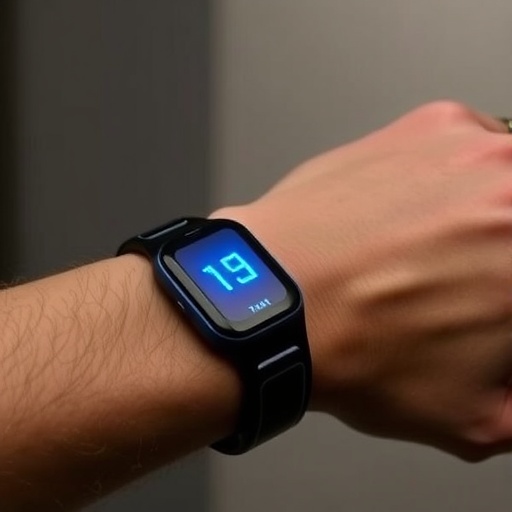
In a groundbreaking advancement for the management of Parkinson’s disease, scientists have unveiled innovative research centered on wearable sensor technology capable of tracking and differentiating walking and non-walking behaviors as indicators of disease progression. This cutting-edge study promises to transform the way clinicians monitor early to mid-stage Parkinson’s, providing unprecedented insights into the subtle motor and non-motor fluctuations that characterize this neurodegenerative disorder. By harnessing real-time, continuous data collection from wearable devices, the research introduces a dynamic new frontier for therapeutic assessment and personalized care.
Parkinson’s disease (PD) notoriously involves a progressive decline in motor function, traditionally evaluated through clinical observations during office visits. These snapshots, however, often fail to capture the full spectrum of daily motor variability exhibited by patients. This new study challenges the status quo by employing wearable sensors capable of differentiating between walking and non-walking states, enabling detailed and continuous monitoring that reflects patients’ real-world functioning far more accurately than periodic clinical assessments.
At the core of this research lies the deployment of multi-axial accelerometers and gyroscopes embedded in compact, unobtrusive wearables. These devices continuously record raw movement data, which is then meticulously analyzed using advanced algorithms designed to isolate specific patterns characteristic of walking and various non-walking activities. By distinguishing these behavioral states, researchers can quantify progression markers that are intricately linked to Parkinsonian motor deficits and daily activity levels.
One pivotal aspect of the study is the incorporation of machine learning models capable of interpreting complex data streams into actionable clinical metrics. The researchers trained these models on extensive datasets to recognize gait abnormalities such as decreased stride length, increased gait variability, and alterations in cadence—all hallmark features that worsen as Parkinson’s disease advances. Concurrently, non-walking parameters such as periods of immobility, posture transitions, and upper limb activity were scrutinized, revealing nuanced impairments often overlooked in traditional evaluations.
Continuous monitoring using wearable sensors represents a paradigm shift, enabling the detection of disease progression with unparalleled sensitivity. This methodology allows clinicians to observe subtle deteriorations in motor function well before they manifest as overt symptoms noticeable during routine examinations. The early identification of such changes opens avenues for timely intervention, potentially slowing disease progression and enhancing patient quality of life.
The study further highlights the utility of combining walking and non-walking metrics to develop comprehensive progression indices. Parkinson’s disease impacts a diverse array of motor functions, and reliance on walking analysis alone can miss critical aspects of the patient’s condition. Integration of non-walking activity data enriches the clinical picture, reflecting both bradykinesia and akinesia manifestations, as well as changes in spontaneity and motor initiative that profoundly affect patients’ daily experiences.
Detailed longitudinal tracking in the study revealed patterns indicating that certain non-walking behaviors, such as reduced frequency of purposeful limb movement during sedentary periods, occur early and progress alongside walking impairments. These findings underscore the complexity of Parkinson’s motor dysfunction, suggesting that wearable sensor analysis encompassing multiple behavioral domains yields a far more sensitive and holistic marker of disease status than singular measures.
Another compelling innovation within this research is the potential for remote monitoring, facilitating telemedicine approaches that are increasingly vital in contemporary healthcare paradigms. Patients can wear sensors during their normal routines, transmitting data to care teams without the need for frequent in-person visits. This capability not only enhances patient convenience but also mitigates risks associated with travel and reduces healthcare burdens, particularly important for those with limited mobility.
The implications of this work extend beyond clinical monitoring into clinical trial design and drug development. Wearable-sensor based progression markers provide objective outcome measures critical for evaluating therapeutic efficacy in experimental treatments. This objective and continuous assessment framework overcomes limitations of subjective rating scales, accelerating the identification of promising interventions and refining dosing strategies.
Technically, this research leverages state-of-the-art sensor fusion techniques and signal processing methodologies to mitigate noise and enhance data reliability. The algorithms employ probabilistic models and pattern recognition to discern Parkinsonian movement signatures from everyday activities and environmental variations. Such sophistication ensures robustness of progression markers, paving the way for widespread clinical adoption and regulatory acceptance.
Importantly, the study addresses potential challenges in real-world deployment of such technology, including device adherence, data privacy, and interpretability of sensor-derived metrics. Strategies proposed involve user-friendly designs that encourage sustained wear, encrypted data transmission protocols ensuring confidentiality, and development of clinician dashboards presenting clear, actionable insights from complex sensor data streams.
The potential socio-economic benefits heralded by this approach are substantial. Enhanced monitoring could reduce hospitalizations, delay institutionalization, and decrease caregiver burden by enabling proactive disease management grounded in precise, objective data. As Parkinson’s disease incidence rises globally with aging populations, scalable solutions like wearable sensor monitoring are essential to meet growing healthcare demands efficiently.
Looking ahead, the research team envisions integration of multimodal sensor data—including electromyography, skin conductance, and heart rate variability—to capture autonomic and muscular changes accompanying Parkinson’s progression. Combining physiological markers with behavioral metrics could revolutionize personalized therapeutic regimens and provide biomarkers for sub-typing Parkinson’s disease, tailoring interventions to individual patient profiles.
In conclusion, this seminal study signals transformative progress in Parkinson’s disease management, leveraging wearable sensor technology to capture walking and non-walking behaviors as novel progression markers. This nuanced, data-driven approach aligns with the precision medicine revolution, offering hope for improved patient outcomes through earlier detection, continuous monitoring, and personalized therapeutic interventions. As this technology evolves toward routine clinical use, it promises to redefine standards of care in neurodegenerative disease.
Cite Scienmag News
Diana Fleming. (April 18, 2026). Wearable Sensors Track Parkinson’s Progression Accurately. Scienmag. https://scienmag.com/wearable-sensors-track-parkinsons-progression-accurately/
Diana Fleming. "Wearable Sensors Track Parkinson’s Progression Accurately." Scienmag, 18 April 2026, https://scienmag.com/wearable-sensors-track-parkinsons-progression-accurately/. Accessed 4 September 2026.
Diana Fleming. "Wearable Sensors Track Parkinson’s Progression Accurately." Scienmag. April 18, 2026. https://scienmag.com/wearable-sensors-track-parkinsons-progression-accurately/


