


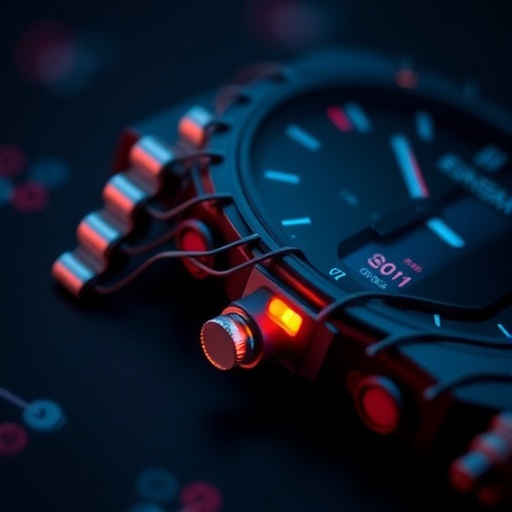
A smartwatch may be doing far more than counting steps. It may be quietly recording a shifting portrait of how the body ages—minute by minute, day after day. In a new study published in Nature Communications, researchers J. Shim and J. P. Onnela examine how commercial wearable devices can be used for the longitudinal digital phenotyping of activity rhythms and biological aging. The work places everyday sensor data at the center of a rapidly expanding scientific effort to understand health not as a single measurement taken in a clinic, but as a dynamic pattern unfolding continuously in ordinary life. The implications are potentially enormous: the same devices worn to monitor exercise, sleep, or heart rate could help researchers detect subtle changes in physiology years before conventional signs of disease become obvious.
The concept at the heart of the research is “digital phenotyping”—the use of data generated by personal digital devices to characterize an individual’s behavior, physiology, and health over time. Unlike a traditional clinical test, which offers a snapshot, a wearable can collect repeated measurements across weeks, months, or even years. Accelerometers can register movement and rest; optical sensors can estimate heart rate; sleep algorithms can infer periods of inactivity; and connected platforms can organize these signals into detailed time series. The study focuses particularly on activity rhythms, meaning the regular cycles in movement and rest that reflect the interaction of the body’s internal clock, sleep-wake behavior, environment, and daily routines. These rhythms can reveal information that a simple daily step total may miss.
A person who walks 8,000 steps every day may appear stable when judged by a weekly average, yet the timing, intensity, and fragmentation of those steps could be changing. Movement might be increasingly concentrated in short bursts, shifted toward later hours, or interrupted by longer sedentary periods. Such changes may indicate alterations in sleep, circadian regulation, physical capacity, mood, or recovery. To capture these patterns, researchers can analyze wearable signals using methods from time-series analysis, signal processing, and computational biology. Measures such as rhythm strength, regularity, amplitude, timing, and day-to-day variability transform raw sensor readings into interpretable features. Together, they create a behavioral signature—one that may change gradually as the body moves through the aging process.
This is where biological aging enters the picture. Chronological age is simply the number of years a person has lived, but biological age refers to the condition and functional state of the body. Two people of the same chronological age can have sharply different levels of cardiovascular fitness, metabolic health, immune function, and physical resilience. Researchers have developed biological-age estimates using molecular markers, clinical measurements, and physiological data. Wearable-based approaches offer a different perspective by observing what people actually do in daily life. Activity rhythms may act as a real-world indicator of functional aging because they reflect mobility, energy, recovery, circadian stability, and the ability to maintain consistent routines outside controlled laboratory settings.
The longitudinal aspect of the study is especially important. A single day of wearable data can be distorted by illness, travel, unusual work hours, weather, or a missed device charge. Long-term monitoring makes it possible to distinguish temporary disruptions from persistent trends. Statistically, researchers can model an individual’s activity trajectory and examine how rhythm-related features evolve over time. They may also compare those trajectories with established indicators of aging, allowing them to investigate whether changes in movement patterns correspond to broader biological decline or resilience. This approach shifts the scientific question from “How active is this person today?” to “How is this person’s daily activity system changing, and what might that change reveal about future health?”
Commercial wearables make such research unusually scalable. Instead of requiring participants to visit a laboratory for repeated assessments, investigators can potentially study large populations using devices already worn by millions of people. That creates an unprecedented volume of passive health data, gathered in natural environments rather than under artificial experimental conditions. It also opens the possibility of identifying early warning signals: a gradual weakening of daily rhythms, increasing irregularity, or a sustained reduction in movement could prompt closer clinical evaluation. In the future, algorithms might help distinguish a short-term response to stress from a longer-term change associated with frailty, chronic disease, or accelerated aging.
Yet the apparent simplicity of wearable data conceals substantial technical and scientific challenges. Commercial devices do not measure every variable directly. Step counts depend on proprietary algorithms; sleep is inferred rather than observed; heart-rate readings can be affected by skin contact, motion, and device placement; and different brands may produce non-equivalent measurements. User behavior also shapes the data. People may remove devices during exercise, charge them at inconsistent times, or wear them less regularly when they feel unwell. These gaps can introduce bias, particularly if the people most at risk of declining health are also the least likely to generate continuous records. Any biological-aging model built from wearables must therefore account for missing data, device changes, demographic differences, and the limits of consumer-grade sensors.
The research also raises an important question about what activity rhythms actually represent. A less regular movement pattern might reflect biological aging, but it could also reflect shift work, caregiving responsibilities, disability, depression, socioeconomic conditions, or an unpredictable living environment. The same wearable signature may have multiple explanations. For that reason, digital phenotyping is most powerful when combined with contextual information and validated against clinical outcomes. Machine-learning models can detect complex patterns that conventional statistics might overlook, but their predictions still require careful interpretation. A model may identify who is at higher risk without explaining why, and a correlation between irregular rhythms and aging does not by itself prove that one causes the other.
If the approach proves robust, its impact could extend well beyond research laboratories. Clinicians might eventually use longitudinal wearable profiles to monitor rehabilitation, detect functional decline, personalize exercise recommendations, or evaluate whether an intervention is improving daily-life recovery. Public-health researchers could study how work schedules, urban design, pollution, and social conditions shape activity rhythms across entire populations. Individuals could receive feedback based not only on how much they move, but also on whether their patterns are becoming more stable, adaptable, and compatible with healthy sleep. Such systems would need to avoid turning normal variation into a diagnosis or encouraging constant self-surveillance. The goal would be early insight and better care—not a new source of anxiety.
Shim and Onnela’s study arrives as wearable technology is transforming the definition of a health measurement. Blood tests and imaging remain indispensable, but they capture only selected moments and biological compartments. Commercial sensors offer a complementary view: behavior in context, repeated continuously, and connected to the rhythms of ordinary life. By examining activity patterns over time, the research explores whether these signals can serve as a digital window into biological aging. The most viral aspect of the idea is also the most scientifically provocative: aging may leave detectable traces not only in cells and organs, but in the timing, regularity, and texture of everyday movement. The challenge now is to determine how accurately those traces can be read—and how responsibly they can be used.
Cite Scienmag News
Beatrice Stafford. (August 22, 2026). Wearable Devices Track Activity Rhythms to Reveal Biological Aging Over Time. Scienmag. https://scienmag.com/wearable-devices-track-activity-rhythms-to-reveal-biological-aging-over-time/
Beatrice Stafford. "Wearable Devices Track Activity Rhythms to Reveal Biological Aging Over Time." Scienmag, 22 August 2026, https://scienmag.com/wearable-devices-track-activity-rhythms-to-reveal-biological-aging-over-time/. Accessed 3 September 2026.
Beatrice Stafford. "Wearable Devices Track Activity Rhythms to Reveal Biological Aging Over Time." Scienmag. August 22, 2026. https://scienmag.com/wearable-devices-track-activity-rhythms-to-reveal-biological-aging-over-time/


