


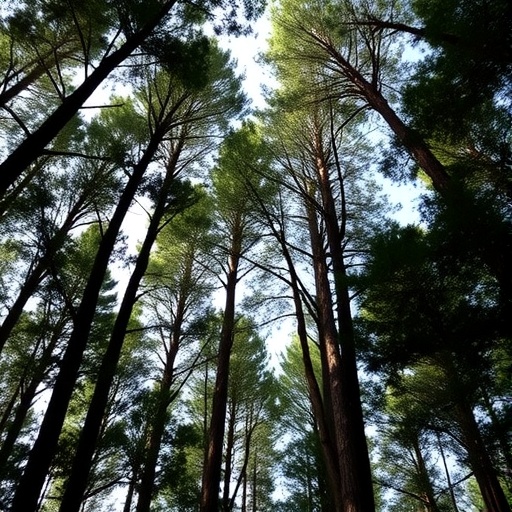
Forests are indispensable ecosystems that have sustained human civilization for millennia, providing critical services ranging from carbon sequestration to raw materials, recreation, and climate regulation. However, the intricate and expansive nature of forest environments renders them challenging to study comprehensively. Traditional methods of forest biomass assessment, particularly ground-based tree measurements, are laborious and often impractical over sprawling or inaccessible terrain. This limitation has historically impeded the development of precise biomass estimation models, critical for effective forest management and global carbon cycle monitoring.
The advent of drone technology coupled with Light Detection and Ranging (LiDAR) systems heralds a transformative era in forestry research. LiDAR uses rapid laser pulses to generate accurate three-dimensional spatial data reflecting the structural complexity of vegetation. Unlike manual surveys, LiDAR enables efficient collection of detailed measurements of forest canopy and individual tree architectures, capturing data at scales and resolutions previously unattainable. Researchers at Kyoto University capitalized on these technological advancements to pioneer a comprehensive large-scale forest biomass assessment across diverse forest ecosystems throughout Japan.
Leveraging unmanned aerial vehicles (UAVs) equipped with LiDAR sensors, the team surveyed 23 forest census plots encompassing a broad latitudinal gradient from the cold sub-boreal forests of Hokkaido to the subtropical woodlands of Okinawa. The dataset comprised 4,326 canopy trees distributed among 149 species, capturing an unprecedented species-rich assemblage with varied morphologies and physiological traits. Integrating these airborne measurements with exhaustive ground-based field observations allowed the researchers to develop refined, species-specific allometric equations to estimate both stem diameter and above-ground biomass based on crown structural parameters.
This study represents one of the most thorough investigations into natural forest biomass estimation using drone-derived data to date. Analyzing crown attributes such as tree height and crown area, the team’s modeling framework could explain 72% of the observed biomass variability across species. Incorporating functional classifications—distinguishing conifers from deciduous and evergreen broadleaf species—increased predictive accuracy further to 79%. The inclusion of species-level detail enhanced model performance even more dramatically, accounting for 83% of biomass variance.
A notable insight from this comprehensive analysis is the quantified relationship between canopy trees and total forest biomass. Although UAV-LiDAR primarily captures data from upper canopy layers and cannot directly observe understory vegetation, the study found that canopy trees contribute approximately 75% of total biomass on average across diverse forest types. This finding substantiates the utility of drone-derived canopy measurements as reliable proxies for broader forest biomass estimation, enabling more holistic carbon accounting when combined with appropriate understory models.
The implications of this research extend well beyond academic curiosity, offering a scalable, repeatable, and data-driven approach to forest resource assessment. Such capability is instrumental in enabling precise long-term monitoring of biomass dynamics, crucial for validating carbon credit calculations under emerging environmental policy frameworks. Furthermore, accurate biomass estimation provides indirect yet valuable insight into ecosystem health and biodiversity, informing conservation strategies that seek to maintain species diversity and forest resilience amid climate change and anthropogenic pressures.
Kyoto University’s innovative methodology showcases the potential fusion of remote sensing technology with ecological fieldwork to overcome challenges posed by the complexity of natural ecosystems. The integration of UAV-LiDAR with species-specific allometric modeling signifies a paradigm shift towards precision forestry, highlighting how technological innovation can amplify ecological knowledge and forest stewardship. The accessibility and efficiency of the approach also point to broader applicability in global forest monitoring efforts, particularly in species-rich and topographically complex regions.
Additionally, the team’s findings underscore the importance of tailoring biomass estimation models to accommodate species diversity and functional traits to enhance accuracy. This nuanced understanding surpasses generic biomass equations that may obscure interspecific variability, carrying profound implications for quantifying carbon stocks and fluxes more reliably. The reliance on crown structural features, which can now be rapidly surveyed from the air, presents a practical and robust parameter set transcending typical height-only models.
By bridging the technological gap between UAV-LiDAR sensing and ecological modeling, Kyoto University researchers have laid a solid foundation for advancing sustainable forestry practices. The tools developed not only aid scientific exploration but also empower forest managers, policymakers, and conservationists with actionable data that can drive more effective biodiversity conservation and climate mitigation efforts. The study exemplifies how cutting-edge sensor technologies aligned with ecological expertise can foster a deeper understanding of our planet’s vital forest ecosystems.
In sum, this groundbreaking research marks a significant stride forward in forest biomass assessment methodology. It combines precision remote sensing technology with ecological insight to produce species- and structurally-informed allometric models, transforming our ability to quantify and monitor forest biomass across complex natural landscapes. As environmental challenges intensify, such innovations will be indispensable for safeguarding forest carbon stocks, supporting global climate goals, and preserving the rich biological heritage embedded within the world’s forests.
News Publication Date: 28-Oct-2025
Web References: http://dx.doi.org/10.1080/13416979.2025.2576384
References: Development of crown-based allometric equations for estimating stem diameter and above-ground biomass using UAV-LiDAR in 23 species-rich natural forests of Japan, Journal of Forest Research, DOI: 10.1080/13416979.2025.2576384
Cite Scienmag News
Gavin Prescott. (October 29, 2025). Watchful Eyes Loom Over the Forest Canopy. Scienmag. https://scienmag.com/watchful-eyes-loom-over-the-forest-canopy/
Gavin Prescott. "Watchful Eyes Loom Over the Forest Canopy." Scienmag, 29 October 2025, https://scienmag.com/watchful-eyes-loom-over-the-forest-canopy/. Accessed 5 September 2026.
Gavin Prescott. "Watchful Eyes Loom Over the Forest Canopy." Scienmag. October 29, 2025. https://scienmag.com/watchful-eyes-loom-over-the-forest-canopy/


