


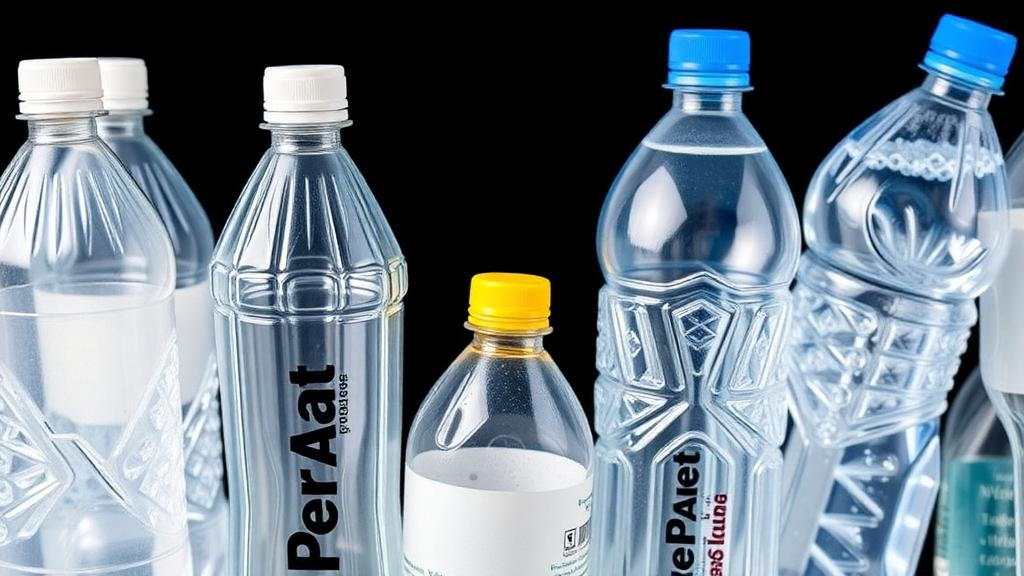
Every year, humanity discards tens of millions of tonnes of polyethylene terephthalate, the plastic behind beverage bottles, and most of it ends up in landfills or incinerators. A research team from the Korea Institute of Energy Research, Korea University, Kunsan National University, and Incheon National University has now shown that this waste stream can be chemically reborn as a high-performance component inside hydrogen electrolyzers. In a study published in Frontiers in Membrane Science and Technology, the researchers converted waste PET bottles into benzene-1,4-dicarboxylic acid, a dicarboxylate linker, and used it to synthesize a mixed-ligand metal–organic framework called BDC-ZIF-8. When embedded in a naphthalene-containing polybenzimidazole matrix, this upcycled filler transformed a dense polymer separator into an ion-solvating mixed-matrix membrane with markedly lower ionic resistance and stable alkaline water electrolysis performance.
The target application is alkaline water electrolysis, one of the most mature and cost-effective routes to green hydrogen because it relies on non-precious-metal electrodes and concentrated potassium hydroxide electrolyte. Conventional alkaline electrolyzers use porous diaphragms, such as the commercial Zirfon 500 separator, whose electrolyte-filled pores conduct hydroxide ions. This design carries an intrinsic trade-off: increasing porosity lowers ionic resistance but raises the risk of hydrogen and oxygen gas crossover, which threatens product gas purity and can create hazardous gas mixtures. Anion exchange membranes avoid this problem by conducting hydroxide ions through fixed cationic groups, but those groups degrade under concentrated KOH at elevated temperatures. Ion-solvating membranes offer a third path: they are dense films that transport potassium and hydroxide ions through an absorbed KOH/water phase, without any fixed ionic groups that could be chemically attacked.
The challenge for ion-solvating membranes is that their conductivity depends entirely on how much electrolyte the polymer retains. The team chose poly [2,2′-(1,4-naphthalene)-5,5′-bibenzimidazole], or NPBI, as the matrix because its rigid aromatic backbone and bulky naphthalene units preserve dimensional stability in hot concentrated alkali. However, dense NPBI still limits ion transport because conduction is governed by the amount and distribution of the retained KOH/water phase. The researchers therefore synthesized NPBI by polycondensing 3,3′-diaminobenzidine with 1,4-naphthalenedicarboxylic acid in Eaton’s reagent, achieving a yield above 78 percent, and then dispersed BDC-ZIF-8 filler at loadings of 10 to 50 weight percent relative to the polymer mass. The membranes were cast from DMAc solutions and dried to an average thickness of 23 ± 2 micrometers, roughly twenty times thinner than the 500-micrometer Zirfon reference separator.
The upcycling chemistry itself is elegant. Transparent PET bottles were washed, dried, and cut into flakes, then depolymerized in an ethanol/water mixture with sodium hydroxide at 80 °C for 12 hours under ambient pressure. Acidification with hydrochloric acid to a pH below 3 precipitated the recovered BDC with a yield exceeding 98 percent. Elemental analysis confirmed the recovered linker contained 57.53 weight percent carbon and 3.71 weight percent hydrogen with no detectable nitrogen or sulfur impurities, matching commercial BDC. The team then combined zinc nitrate hexahydrate, 2-methylimidazole, and the recovered BDC in a molar ratio of approximately 11.1:10.0:1.0 and heated the mixture solvothermally at 140 °C for 24 hours. The resulting BDC-ZIF-8 retained the main diffraction peaks of the ZIF-8 framework at 7.3, 10.4, and 12.7 degrees, while developing additional weak peaks at 8.3 and 9.1 degrees that reflect secondary coordination environments introduced by the dicarboxylate linker.
Porosity measurements revealed why this filler is so effective at retaining electrolyte. Nitrogen adsorption isotherms showed type I behavior with a hysteresis loop, indicating coexisting micropores and mesopores. The Brunauer–Emmett–Teller specific surface area reached 1488 square meters per gram, with a micropore volume of 0.56 cubic centimeters per gram and a total pore volume of 1.45 cubic centimeters per gram. Fourier-transform infrared spectroscopy confirmed that the free carboxylic acid C=O stretching peak near 1670 wavenumbers disappeared after framework formation, replaced by asymmetric and symmetric carboxylate stretching peaks at approximately 1558 and 1378 wavenumbers, alongside Zn–N stretching near 422 wavenumbers. These spectral features demonstrate that the carboxylate groups of the upcycled linker coordinated directly with zinc ions, creating polar interaction sites that can hydrogen-bond with water molecules and hydrated potassium ions inside the membrane.
After three days of immersion in 6 M KOH at 80 °C, the electrolyte uptake data told a clear story. The polymer/filler solid fraction decreased from 49 percent in pristine NPBI to 40 percent in the 40 weight percent membrane, while the water fraction rose from 34 to 37 percent and the KOH fraction climbed from 17 to 23 percent. Contact angle measurements reinforced this picture: the DI water contact angle of dry membranes fell from 71.46 to 55.67 degrees as filler loading increased, and after KOH doping all membranes became extremely wettable, with KOH contact angles below 10 degrees. Crucially, the rigid BDC-ZIF-8 domains acted as physical reinforcing phases that suppressed excessive swelling. Pristine NPBI showed relatively large thickness and volume changes after electrolyte uptake, whereas the mixed-matrix membranes exhibited more stabilized dimensional changes despite their higher electrolyte fractions, preserving lateral dimensional stability.
Gas-blocking integrity survived the filler incorporation. Bubble point pressures of the KOH-doped membranes ranged from 6.2 to 6.5 bar, comparable to the 6.1 ± 0.4 bar of pristine NPBI and far exceeding the 2 ± 1 bar of commercial Zirfon 500. Ex situ hydrogen permeability of the wet membranes measured between 0.395 and 0.418 Barrer, essentially unchanged from the 0.571 Barrer of pristine NPBI and roughly 160 times lower than the 89.6 Barrer of Zirfon 500. Mechanical testing showed that moderate filler loadings strengthened the membranes: dry tensile stress increased from 70.20 MPa in pristine NPBI to 78.17 and 79.35 MPa at 20 and 30 weight percent filler, respectively, and after KOH doping the 20 weight percent membrane reached 55.97 MPa, a 47.87 percent increase over doped pristine NPBI. However, the 40 weight percent membrane weakened dramatically to 38.74 MPa dry and 24.57 MPa doped, reflecting filler aggregation and interfacial heterogeneity that concentrate stress during deformation.
The ion transport improvements translated directly into cell performance. Area resistance measured in 6 M KOH at 80 °C fell from 0.067 Ω cm² in pristine NPBI to 0.062, 0.046, 0.040, and 0.037 Ω cm² at 10, 20, 30, and 40 weight percent filler, respectively, all below the 0.079 Ω cm² of Zirfon 500. In zero-gap single cells with bare nickel felt electrodes, the current density at 1.8 V rose from 0.291 A cm⁻² for pristine NPBI to 0.704 A cm⁻² for the 40 weight percent membrane, and at 2.0 V the same membrane delivered 1.809 A cm⁻² compared with 0.913 A cm⁻² for pristine NPBI. Electrochemical impedance spectroscopy confirmed the trend: high-frequency resistance dropped from 0.290 Ω cm² for pristine NPBI to 0.166 Ω cm² for the 40 weight percent cell. The loading-dependent trade-off became apparent in long-term testing, however. During 500 hours of ex situ alkaline exposure, the 10 and 20 weight percent membranes maintained low area resistance stably, while the 30 and 40 weight percent membranes, despite their lower initial resistance, showed gradually increasing resistance over time.
The alkaline stability analysis of the filler itself explains this behavior. When BDC-ZIF-8 powder was aged in 6 M KOH at 80 °C for up to 21 days, the imidazolate C=N vibration peak and the coordinated carboxylate stretching peaks gradually weakened, indicating partial modification of the BDC–Zn coordination environment. Yet the Zn–N vibration near 422 wavenumbers remained detectable after 21 days, and scanning electron microscopy showed the powders retained their overall particle morphology with only surface roughening. After three months of alkaline exposure, all membranes maintained continuous structures without macroscopic cracks, confirming that the resistance increase at high filler loading arose from morphological heterogeneity rather than membrane collapse. Based on its balanced mechanical properties, low cell resistance, and stable long-term behavior, the 20 weight percent membrane was selected for continuous operation, sustaining 100 hours at 0.3 A cm⁻² in 6 M KOH at 80 °C with an average cell voltage of 1.798 V and a maximum of 1.804 V.
This study demonstrates that waste PET can be upcycled into a functional electrolyte-retaining metal–organic framework filler for next-generation alkaline electrolyzers, closing a loop between plastic recycling and green hydrogen production. The findings also carry a clear design lesson: filler loading must be optimized to balance electrolyte retention, ion transport, membrane morphology, and alkaline stability, because the lowest initial resistance does not necessarily correspond to the most stable long-term performance. As hydrogen economies scale up and plastic waste streams continue to grow, strategies that convert one problem into the solution for another could prove decisive. The researchers note that further studies under practical operating conditions are needed to evaluate the applicability of these membranes in larger alkaline water electrolysis systems, but the demonstration that a discarded beverage bottle can help split water into hydrogen marks a compelling step toward circular clean-energy materials.
Subject of Research: Materials Science
Article Title: Waste PET-derived BDC-ZIF-8 as an electrolyte-retaining filler for NPBI-based ion-solvating mixed-matrix membranes in alkaline water electrolysis
Article References: Park, S. J., Seo, J., Lee, Y.-R., Choi, Y.-W., Choi, J., & Lee, J. H. (2026). Waste PET-derived BDC-ZIF-8 as an electrolyte-retaining filler for NPBI-based ion-solvating mixed-matrix membranes in alkaline water electrolysis. Frontiers in Membrane Science and Technology, 5, Article 1892925. https://doi.org/10.3389/frmst.2026.1892925
Image Credits: AI Generated
DOI: 10.3389/frmst.2026.1892925
Keywords: alkaline water electrolysis, BDC-ZIF-8, ion-solvating membranes, metal–organic framework, NPBI, waste PET, green hydrogen, mixed-matrix membranes, Waste, PET-derived, electrolyte-retaining, filler
Cite Scienmag News
Denise Maddox. (October 15, 2026). Waste PET Bottles Become MOF Fillers That Boost Alkaline Water Electrolysis Membranes. Scienmag. https://scienmag.com/waste-pet-bottles-become-mof-fillers-that-boost-alkaline-water-electrolysis-membranes/
Denise Maddox. "Waste PET Bottles Become MOF Fillers That Boost Alkaline Water Electrolysis Membranes." Scienmag, 15 October 2026, https://scienmag.com/waste-pet-bottles-become-mof-fillers-that-boost-alkaline-water-electrolysis-membranes/. Accessed 15 October 2026.
Denise Maddox. "Waste PET Bottles Become MOF Fillers That Boost Alkaline Water Electrolysis Membranes." Scienmag. October 15, 2026. https://scienmag.com/waste-pet-bottles-become-mof-fillers-that-boost-alkaline-water-electrolysis-membranes/


