


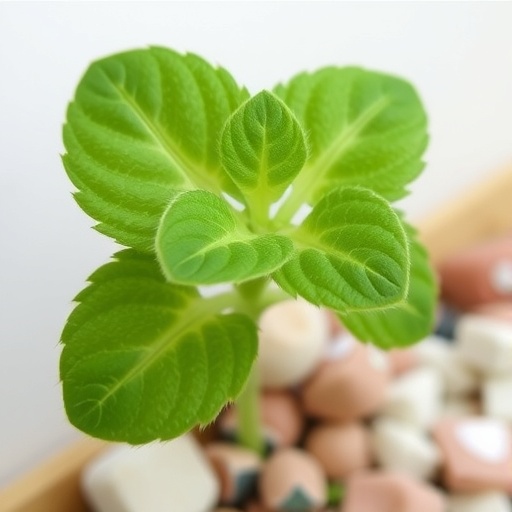
Soil salinization is quietly strangling global agriculture, rendering once-fertile fields barren as sodium accumulates in the ground faster than crops can cope. Now, a team of plant scientists in China has uncovered a molecular mechanism that helps the model plant Arabidopsis thaliana survive salt stress, and their findings could point the way toward crops engineered to thrive on degraded land. The research, published in the journal Plant Molecular Biology, centers on a gene called WAKL4, a member of the wall-associated kinase-like family, and reveals an unexpected double duty: the protein it encodes simultaneously safeguards the structural integrity of the plant cell wall and keeps dangerous reactive oxygen molecules in check.
The study was led by Huapeng Zhou of Sichuan University, together with colleagues at the Chengdu Botanical Garden, the Sichuan Academy of Grassland Sciences, and Nanjing Agricultural University. First authors Xincheng Yang and Xixian Feng and their collaborators began by asking a deceptively simple question: what happens to the large family of WAK and WAKL genes when a plant encounters salt? These genes encode receptor-like kinases anchored in the plasma membrane, where they physically span the boundary between the inside of the cell and the rigid cell wall outside. Because of this strategic position, they have long been suspected of acting as sentinels that monitor wall integrity and relay distress signals to the cell’s interior. When the researchers exposed Arabidopsis plants to salt stress, they found that several WAK/WAKL genes were upregulated, and loss-of-function mutants in these genes showed altered salt tolerance compared with wild-type plants. One gene in particular, WAKL4, stood out, and the team devoted their study to characterizing it in depth.
The experimental logic was straightforward but rigorous. The researchers generated mutant plants in which WAKL4 had been knocked out, as well as lines in which the gene was overexpressed, and then challenged both with high concentrations of salt. The results were striking and bidirectional. Plants lacking WAKL4 became markedly more sensitive to salt, wilting and failing to grow where wild-type plants endured. Conversely, plants engineered to overproduce WAKL4 showed enhanced root growth under salt stress, although interestingly their seed germination was actually reduced. This dissociation between root growth and germination suggests that the gene’s benefits come with trade-offs during early development, a nuance the authors note could matter when considering how to deploy WAKL4 in crop improvement strategies.
One of the team’s early surprises concerned ions. A common assumption in plant salt biology is that tolerance hinges on how well a plant excludes sodium ions or maintains a favorable balance between sodium and potassium inside its tissues. Salt-sensitive mutants often fail on this front. Yet when the researchers measured ionic homeostasis in the wakl4 mutant, they found only minor differences from wild-type plants. Whatever WAKL4 was doing to protect the plant, it was not primarily about controlling the flow of salt into cells. This finding redirected the investigation toward a different, less obvious suspect: the cell wall itself.
The cell wall is far more than passive packaging. It is a dynamic composite of cellulose microfibrils embedded in a matrix of hemicellulose and pectin, and it must remain coherent even as the cell expands and as external conditions shift. Pectin, in particular, is a gel-like polysaccharide rich in negatively charged carboxyl groups that can bind calcium ions, cross-linking adjacent pectin chains and stiffening the wall. When the researchers examined pectin content in the wakl4 mutant under salt stress, they found a clear deficiency. The mutant’s walls were structurally compromised, lacking the normal complement of this critical polymer. In a decisive test of causality, the team supplemented the mutant with exogenous calcium, and the salt-sensitive phenotype was effectively rescued. The calcium, it appears, compensates for the weakened pectin scaffold by restoring cross-linking within the wall, bolstering its integrity even where the underlying pectin biosynthesis falls short.
This discovery places WAKL4 squarely within a growing appreciation of the cell wall as a first line of defense against abiotic stress. Previous work has shown that the FERONIA receptor kinase helps maintain wall integrity during salt stress through calcium signaling, and that pectin modification and cell wall sensing are central to how Arabidopsis roots respond to salinity. Other studies have linked pectin demethylation-mediated sodium retention to salt tolerance in oilseed rape, and shown that an alfalfa myo-inositol oxygenase enhances saline-alkali tolerance by regulating pectin and hemicellulose biosynthesis. The new study extends this picture by identifying a specific wall-associated kinase that actively ensures normal pectin biosynthesis under stress, rather than merely sensing wall damage after it occurs.
But pectin turned out to be only half the story. In parallel experiments, the researchers noticed that the wakl4 mutant accumulated excessive reactive oxygen species, or ROS, compared with wild-type plants under salt stress. ROS are chemically reactive molecules derived from oxygen, including hydrogen peroxide, superoxide, and hydroxyl radicals. At controlled levels they serve as signaling agents that help the plant mount stress responses, but when they accumulate unchecked they oxidize proteins, lipids, and DNA, inflicting damage that can kill the cell. Salt stress is a potent ROS-inducing condition, disrupting photosynthesis and mitochondrial respiration and flooding the cell with these corrosive byproducts. The elevated ROS in the mutant indicated that WAKL4 is essential for maintaining redox homeostasis, the delicate balance between ROS production and scavenging.
Curiously, the team found that expression levels of certain ROS-related genes were actually lower in the wakl4 mutant under salt stress than in wild type. This hinted at a more intricate regulatory relationship than simple gene activation. The mystery deepened when the researchers probed the interaction between WAKL4 and CATALASE2, or CAT2, a central enzyme in the detoxification of hydrogen peroxide. Catalases are among the fastest enzymes known, converting two molecules of hydrogen peroxide into water and molecular oxygen, and CAT2 in particular serves as a peroxisomal redox guardian in plant cells. Through direct protein-protein interaction, WAKL4 enhances the enzymatic activity of CAT2, amplifying the cell’s capacity to destroy hydrogen peroxide precisely when salt stress threatens to overwhelm it.
The functional significance of this interaction was confirmed through genetic analysis. The protective effect of WAKL4 against salt was found to operate partly through the action of CAT2, meaning that the kinase’s contribution to redox homeostasis depends on its partnership with this catalase enzyme. This is consistent with other recent findings: a separate study in 2025 showed that the protein tyrosine phosphatase IBR5 positively affects salt stress responses by modulating CAT2 activity, and earlier work demonstrated that calmodulin-binding receptor-like cytoplasmic kinase 3 regulates salt tolerance through CAT2 as well. CAT2 is emerging as a hub through which multiple salt-stress regulators funnel their effects, and WAKL4 now joins that roster with the distinction of being a membrane-anchored, wall-associated protein rather than a soluble cytoplasmic enzyme.
The dual mechanism uncovered here, pectin homeostasis on the outside and redox homeostasis on the inside, paints a coherent picture of how a single protein coordinates a plant’s structural and biochemical defenses. By ensuring that pectin biosynthesis proceeds normally under salt stress, WAKL4 keeps the wall from weakening, which in turn prevents the internal signaling chaos that wall damage would trigger. By boosting CAT2 activity, it prevents the oxidative damage that salt-induced ROS would otherwise inflict. And crucially, it does all this without major effects on sodium and potassium balance, distinguishing its mode of action from the ion-transport-centric pathways, such as those involving HKT transporters and the SOS signaling cascade, that have dominated the salt-tolerance literature for decades.
The implications for agriculture are significant. Salinization affects hundreds of millions of hectares worldwide and is spreading as irrigation practices deposit salts in farmland and rising sea levels push saline water into coastal aquifers. Conventional breeding for salt tolerance has been slow, because tolerance is a complex trait governed by many genes. The identification of WAKL4 as a positive regulator with a well-defined molecular mechanism offers a possible genetic target. Members of the WAK/WAKL family have already been implicated in salt responses in other species: GhWAKL26 in cotton maintains sodium and potassium homeostasis, PvWAK3 from seashore paspalum increases salt tolerance in transgenic Arabidopsis through ion and ROS homeostasis, and OsWAK112 in rice negatively regulates salt stress responses by inhibiting ethylene production. A deeper understanding of how these kinases operate could enable researchers to tune their activity in staple crops such as wheat, rice, and maize.
There are caveats, of course. The work was performed in Arabidopsis, a weed of no agricultural value whose compact genome and rapid life cycle make it the standard model for plant molecular biology. Translating the findings into crops will require confirming that orthologous genes play similar roles in species with larger, more complex genomes, and managing the trade-off observed in germination. The overexpression data suggest that simply cranking up WAKL4 expression may not be optimal; a more refined approach might involve stress-inducible expression or editing of regulatory elements. Still, the mechanistic clarity of the study, from pectin deficiency to calcium rescue, from ROS accumulation to CAT2 activation, gives breeders and biotechnologists a concrete set of nodes to manipulate.
The research was supported by the National Natural Science Foundation of China and the Sichuan Provincial Basic Scientific Research Operations Project. Corresponding authors Dan Chang and Huapeng Zhou led the project, with the experimental work performed by Yang, Feng, and Haifan Shi. As saline soils continue to expand across the globe, studies like this one, which reveal the hidden structural and biochemical choreography by which plants endure salt, are laying the groundwork for a second green revolution, one that may be fought as much in the gel of the cell wall and the chemistry of hydrogen peroxide as in the field.
Cite Scienmag News
Drew Townsend. (September 8, 2026). Wall-associated kinase-like4 sustains salt tolerance via pectin and redox balance in Arabidopsis. Scienmag. https://scienmag.com/wall-associated-kinase-like4-sustains-salt-tolerance-via-pectin-and-redox-balance-in-arabidopsis/
Drew Townsend. "Wall-associated kinase-like4 sustains salt tolerance via pectin and redox balance in Arabidopsis." Scienmag, 8 September 2026, https://scienmag.com/wall-associated-kinase-like4-sustains-salt-tolerance-via-pectin-and-redox-balance-in-arabidopsis/. Accessed 8 September 2026.
Drew Townsend. "Wall-associated kinase-like4 sustains salt tolerance via pectin and redox balance in Arabidopsis." Scienmag. September 8, 2026. https://scienmag.com/wall-associated-kinase-like4-sustains-salt-tolerance-via-pectin-and-redox-balance-in-arabidopsis/


