


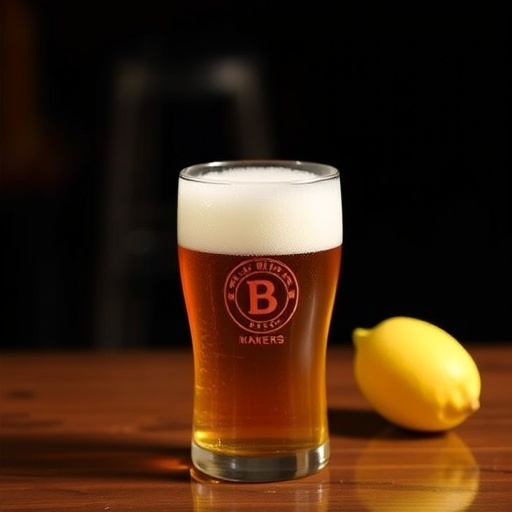
In the world of beverages, beer holds a venerable place as one of the most ancient and widely consumed drinks globally. Traditionally linked with social occasions and celebrations, beer’s cultural significance is undisputed. Yet, beyond its convivial attributes, scientists have recently turned their attention to an intriguing aspect of beer that remains less explored: its vitamin content, specifically the presence and variations of vitamin B6 across different beer types. This insight not only deepens our biochemical understanding of beer but also opens potential nutritional considerations for consumers.
Beer is an amalgamation of water, malted barley or other grains, hops, and yeast, undergoing fermentation to produce ethanol and a complex spectrum of flavors. These flavors differ widely, dependent on brewing techniques and ingredient variations, resulting in diverse beer styles such as lagers, ales, porters, and pilsners. As alternative drinking trends evolve, nonalcoholic (NA) beers have entered the limelight, catering to those seeking the taste of beer without alcohol’s psychoactive effects. The question arises: do these NA beers retain the nutritional components, particularly vitamin B6, found in traditional alcohol-containing beers?
Vitamin B6, scientifically known as pyridoxine, is a water-soluble vitamin integral to numerous physiological functions including amino acid metabolism, neurotransmitter synthesis, and regulation of homocysteine levels. Barley, wheat, and brewer’s yeast—the staple raw materials in beer production—are recognized natural sources of this essential micronutrient. Hence, it is plausible to hypothesize that the brewing process imparts vitamin B6 into the final beverage. However, the effect of ethanol removal in NA beers on B6 concentration remained speculative prior to recent investigations.
A comprehensive study spearheaded by Michael Rychlik and colleagues set out to elucidate this nutritional enigma by analyzing 65 distinct beer samples sourced from German supermarkets. These samples spanned a spectrum of traditional and nonalcoholic brews, inclusive of lagers, bocks, wheat beers, and rice beers. The methodology leveraged advanced chromatographic and spectrometric techniques to quantify vitamin B6 content with high precision, ensuring robust analytical outcomes.
Among the key findings, bock beer emerged with the highest levels of vitamin B6. Given that bocks are malt-forward beers rich in barley, this result aligns logically with the grain’s contribution to vitamin content. Following bocks, lagers and dark lagers exhibited moderate vitamin B6 levels, while wheat beers fell slightly lower on the spectrum. Intriguingly, rice beers—often considered lighter and less complex—harbored the lowest B6 concentrations, underscoring the influence of base grains on micronutrient profiles.
The comparative analysis between alcohol-containing lagers and their nonalcoholic counterparts revealed no statistically significant difference in vitamin B6 content. This breakthrough discovery challenges the assumption that ethanol presence modulates vitamin retention in beer. It was demonstrated that NA beers produced through de-alcoholization after complete fermentation preserved B6 levels comparably or even superiorly to conventional brews.
Further granularity emerged when examining the production methods for NA beers. Those formulated by fully fermenting yeast followed by ethanol removal maintained higher vitamin B6 concentrations than beers employing specialized yeast strains that inherently produce less ethanol. This distinction underscores the impact of fermentation completeness and post-fermentation processing on micronutrient preservation within beer matrices.
From a nutritional perspective, these findings have intriguing implications. An average serving of lager contributed approximately 20% of the United States’ recommended dietary allowance (RDA) for vitamin B6. Remarkably, some NA lagers provided nearly 59% of the RDA, making them surprisingly potent sources of this critical vitamin. This revelation calls for reconsideration of NA beer as not merely an alcohol-free alternative but as a beverage providing substantive nutritional benefits.
The biochemical stability of vitamin B6 during beer processing and storage warrants further exploration. Given that vitamin B6 exists in multiple forms with potential degradation pathways influenced by pH, light exposure, and oxygen, understanding its resilience in alcoholic versus nonalcoholic beers could inform optimized brewing practices to maximize health benefits.
Critically, these findings also may influence consumer choices, especially for individuals with dietary restrictions or health conditions that necessitate minimized alcohol intake but not at the expense of nutritional intake. NA beers could support nutrient enrichment strategies in food science while aligning with responsible drinking campaigns.
While the study focused specifically on German beers, it opens avenues for broader investigations across global brewing traditions. Variability in malt types, yeast strains, water chemistry, and brewing parameters across regions may yield diverse vitamin B6 profiles worthy of systematic evaluation. Moreover, the interplay between other micronutrients and phytochemicals in beer offers a rich terrain for future research.
The researchers acknowledge support from the Scientific Association for Brewing in Munich, emphasizing the institutional commitment to advancing brewing science. Published in the Journal of Agricultural and Food Chemistry, this work bridges the gap between food chemistry and nutrition, illustrating how traditional beverages contribute to human micronutrient intake.
In summary, this pioneering study dispels myths about nutritional loss in nonalcoholic beers and highlights their potential as viable, health-conscious alternatives without sacrificing essential vitamins like B6. As consumers increasingly seek products that combine enjoyment with wellness, these insights propel nonalcoholic beer onto the forefront of functional beverages.
News Publication Date: 22-Apr-2026
Web References: http://pubs.acs.org/doi/abs/10.1021/acs.jafc.5c14229
Cite Scienmag News
Daisy Hatcher. (April 22, 2026). Vitamin B6 Levels Found Comparable in Nonalcoholic and Conventional Beers. Scienmag. https://scienmag.com/vitamin-b6-levels-found-comparable-in-nonalcoholic-and-conventional-beers/
Daisy Hatcher. "Vitamin B6 Levels Found Comparable in Nonalcoholic and Conventional Beers." Scienmag, 22 April 2026, https://scienmag.com/vitamin-b6-levels-found-comparable-in-nonalcoholic-and-conventional-beers/. Accessed 3 September 2026.
Daisy Hatcher. "Vitamin B6 Levels Found Comparable in Nonalcoholic and Conventional Beers." Scienmag. April 22, 2026. https://scienmag.com/vitamin-b6-levels-found-comparable-in-nonalcoholic-and-conventional-beers/


