


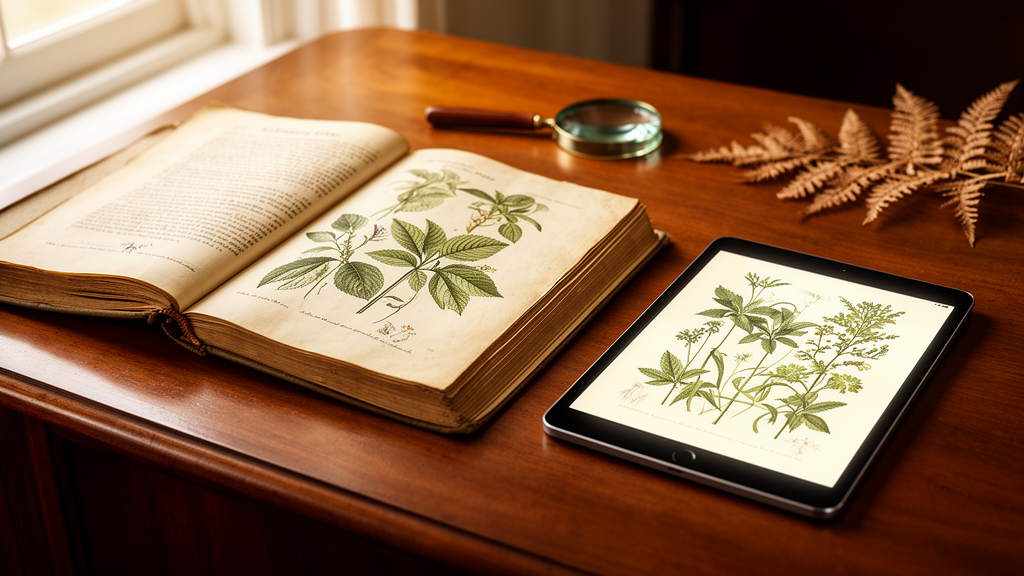
One of Europe’s oldest scientific periodicals is stepping firmly into the twenty-first century. The Annals of the Natural History Museum Vienna, whose lineage stretches back to 1836, has been relaunched under a new English title, reuniting its long-separated series and embracing a fully modern, diamond open access publishing model in collaboration with Pensoft Publishers. The story of this transformation, documented in the journal itself, is a tale of more than 180 years of scientific publishing that connects the imperial collections of the Habsburg era with the semantic web technologies of today.
The journal was established in 1836 as the Annalen des Wiener Museums der Naturgeschichte, at a time when the Natural History Museum Vienna was still known by its imperial predecessor institution, the Hof-Naturalien-Cabinet. The driving conviction behind its creation was that the purpose of the imperial collections went far beyond accumulating natural history objects; instead, the Cabinet was meant to promote scientific research in general. The journal was therefore created to allow researchers, including employees of the Hof-Naturalien-Cabinet, foreign and native scholars, and young Austrian naturalists, to present the results of their studies. Carl Franz Anton von Schreibers, the Austrian naturalist who then directed the Viennese natural history collections, edited the first two volumes, published in 1836 and 1840.
After those early volumes, publication was interrupted for many years due to financial difficulties. The journal resumed in 1886 under the title Annalen des k. k. naturhistorischen Hofmuseums, running to volume 31 by 1917. In 1918 it became the Annalen des Naturhistorischen Hofmuseums, and from volume 33 it took the title Annalen des Naturhistorischen Museums in Wien, the name under which it was known until recently. The different covers and titles of the journal between 1886 and 1921 trace the political and institutional upheavals that the museum itself weathered, from the imperial Hofmuseum to the republican museum of the new era.
From that point onward, the journal was published and printed almost annually, with interruptions mainly during the Second World War. In 1980, with volume 84, the publication was divided into three separate series. Serie A covered earth sciences, anthropology, prehistory, and the history of the museum; Serie B covered zoology and botany; and Serie C carried the annual reports, which was discontinued after volume 92 in 1988. This division reflected the growing breadth of the museum’s research, but it also meant that the journal’s identity was split across separate physical volumes for more than four decades.
Beyond its role as a venue for scientific publications, the journal played an important part in the international library exchange that already took place in the nineteenth century. In 1886 the journal had 314 exchange partners, a number that reached a peak of 920 in 1998. This exchange network, built on paper copies shipped to libraries around the world, was a cornerstone of how scientific institutions shared knowledge before the digital age, and it remains a tradition the relaunched journal intends to preserve in a new form.
The decision to relaunch the museum’s scientific journal connects the achievements of the past with the needs of the scientific community today. Volume 125 was the last published with series A and B separate; the present volume 126 and forthcoming ones will combine the two series under the English title Annals of the Natural History Museum Vienna. The entomological journal Quadrifina, the Bulletin of Research on the Lepidoptera, which ran since 1998, is discontinued, and its authors are now encouraged to submit their research to the Annals. The journal will also change to a continuous publication model, with articles published online as soon as the review process is finalized and acceptance is confirmed.
Under the continuous model, pagination of subsequent articles published within the same year will continue from the previous article within each volume. At the end of the year, all articles will be included in a printed volume available through library exchange, preserving the journal’s contents for future generations in the classic form of a paper copy. This hybrid approach ensures that the journal remains visible and citable in the digital realm while maintaining the long-term archival stability that paper copies have provided for nearly two centuries.
Technologically, the collaboration with Pensoft Publishers marks a significant transition to a modern diamond open access publishing using the ARPHA platform. The journal will enjoy a tremendous upgrade in the way it is presented and published, ensuring better visibility to the scientific community and the general public, along with long-term sustainability. New procedures will streamline the general workflow for authors, editors, and reviewers, shortening the processing time for publication. Most importantly for readers, all articles will receive DOIs, making citation and inclusion in reference managers much easier. Published articles will appear in different formats, including HTML, JATS XML, and high-resolution full colour PDF, and will enjoy semantic enhancements.
The submission, peer review, and production processes are moving to a newly designed website. Contributions presented as standard research articles, short communications, obituaries, method articles, and reviews will be considered for publication, focusing on topics related to the scientific collections of the museum and its current research projects, covering the fields of anthropology, biosciences, earth sciences, genetics, prehistory, and the history of the museum. The contents of published articles will also be converted into Linked Open Data and OpenBiodiv biodiversity knowledge graphs, allowing the museum’s research to feed directly into the emerging infrastructure of machine-readable biodiversity knowledge.
To satisfy the nomenclatural requirements for electronic publications, all published articles will be indexed and archived in international repositories such as Zenodo, CLOCKSS, and Portico, while nomenclatural acts such as new species descriptions will be registered in ZooBank. These measures ensure that taxonomic names introduced in the journal’s pages remain valid and permanently accessible under the international rules of zoological nomenclature. Collaborating with Pensoft and applying state-of-the-art publishing methods will hopefully make the journal more appealing to the scientific community and the public, ensuring its long-term viability as a valuable legacy deeply embedded in the scientific publishing tradition of the Natural History Museum Vienna.
Subject of Research: The relaunch of the Annals of the Natural History Museum Vienna, a scientific journal founded in 1836, combining its series under an English title and adopting modern diamond open access publishing with Pensoft Publishers.
Article Title: The “Annalen des Naturhistorischen Museums in Wien” between tradition and innovation: A tale of more than 180 years of scientific publishing
Article References: Akkari, N., Weinmann, A. E., Krapf, A., & Kroh, A. (2025). The “Annalen des Naturhistorischen Museums in Wien” between tradition and innovation: A tale of more than 180 years of scientific publishing. Annals of the Natural History Museum Vienna, 126, 1-4. https://doi.org/10.3897/anhmw.168572
Image Credits: AI Generated
DOI: 10.3897/anhmw.168572
Keywords: Natural History Museum Vienna, scientific publishing, open access, journal history, Pensoft Publishers, ARPHA platform, continuous publication, library exchange, biodiversity knowledge graphs, ZooBank, nomenclature, digital archives
Cite Scienmag News
Margaret Porter. (October 17, 2026). Vienna’s 180-year-old natural history journal relaunches for the digital age. Scienmag. https://scienmag.com/viennas-180-year-old-natural-history-journal-relaunches-for-the-digital-age/
Margaret Porter. "Vienna’s 180-year-old natural history journal relaunches for the digital age." Scienmag, 17 October 2026, https://scienmag.com/viennas-180-year-old-natural-history-journal-relaunches-for-the-digital-age/. Accessed 17 October 2026.
Margaret Porter. "Vienna’s 180-year-old natural history journal relaunches for the digital age." Scienmag. October 17, 2026. https://scienmag.com/viennas-180-year-old-natural-history-journal-relaunches-for-the-digital-age/


