


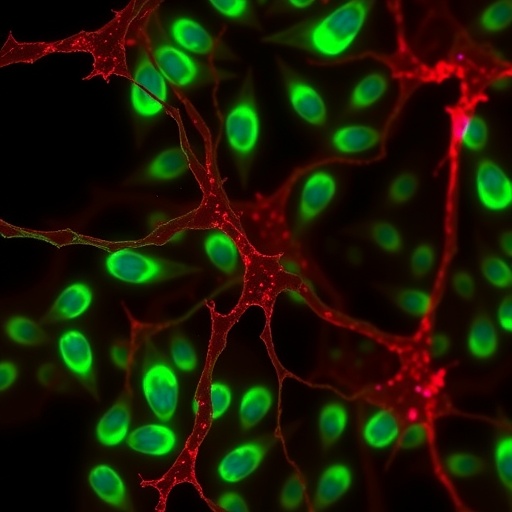
In a groundbreaking study poised to reshape the understanding of airway epithelial biology, researchers have discovered that Verteporfin, a compound traditionally renowned for its role in photodynamic therapy, can serve a novel function as an inhibitor of nuclear YAP. The findings, highlighted in a recent publication in the Journal of Translational Medicine, reveal that this compound significantly enhances the differentiation of multi-ciliated cells within the airway epithelium. This crucial advancement could pave the way for fresh therapeutic strategies aimed at managing mucus clearance and combating respiratory diseases.
The study, led by Dr. Ryo Nakamura in collaboration with a talented team of researchers, delves into the intricate dynamics of cellular differentiation in the airway epithelium. It is widely acknowledged that the airway epithelium performs a vital role in maintaining respiratory health. The presence of ciliated epithelial cells is essential for effective mucus clearance, a critical function that prevents the accumulation of pathogens and debris. However, disruptions in ciliated cell differentiation can lead to significant pulmonary issues, making this research all the more relevant.
One of the focal points of the research is the role of the Yes-associated protein (YAP), a key regulator involved in various cellular processes, including growth, survival, and differentiation. YAP’s influence on cellular dynamics in the airway epithelium has been a subject of much inquiry. Elevated nuclear levels of YAP are often associated with conditions such as asthma and chronic obstructive pulmonary disease (COPD), which are characterized by defective ciliated cell differentiation. Understanding how to modulate YAP activity could therefore be crucial in developing effective therapies.
By employing Verteporfin, the researchers made significant strides in their efforts to address impaired ciliary differentiation. This compound has been shown to inhibit YAP’s activity, thereby facilitating the transition of progenitor cells into fully functional multi-ciliated cells. The implications of this discovery are profound. If YAP’s nuclear activity can be effectively managed through pharmacological means, it could signal a significant shift in how we approach the treatment of respiratory diseases characterized by impaired mucociliary function.
The experimental design included a series of in vitro and in vivo studies that meticulously measured how Verteporfin influences cell differentiation. The results were compelling; cells treated with Verteporfin exhibited marked increases in the expression of genes associated with ciliary differentiation. Furthermore, the researchers observed enhanced structural formation of cilia, which is paramount for effective airway function. Such results underscore the potential for Verteporfin to not only serve as a research tool but also as a viable therapeutic agent.
Furthermore, the study’s findings bring to light potential avenues for future research. While the immediate focus has been on Verteporfin’s effects on ciliated cells, the broader implications of YAP inhibition in other cell types and contexts remain largely unexplored. As researchers begin to dissect the complexities surrounding YAP and its various interactions within the cell, it may reveal new layers of regulation that could be exploited for therapeutic benefits in a variety of diseases beyond respiratory ailments.
The current research lays a strong foundation for more comprehensive studies aimed at assessing the long-term effects of Verteporfin on airway epithelium functionality. Questions surrounding the sustainability of ciliary function post-treatment, potential off-target effects, and optimal dosing regimens are all areas that warrant exploration. As we increase our understanding of the molecular underpinnings of ciliated cell differentiation, the potential for developing novel therapeutics for chronic respiratory diseases becomes increasingly viable.
In light of these findings, healthcare professionals and researchers are invigorated by the prospect of translating this fundamental research into clinical practice. As many patients suffering from respiratory diseases grapple with ineffective mucus clearance and recurring infections, the prospect of a new treatment modality that can ameliorate these issues is indeed promising. The researchers’ findings indicate a beacon of hope that could substantially improve patients’ quality of life.
Moreover, these revelations challenge established paradigms surrounding current therapeutic approaches. Traditional methods often center around symptomatic treatment rather than addressing the root causes of dysfunctional cell behavior. The introduction of a targeted agent like Verteporfin represents a paradigm shift, where the focus could eventually move towards restoring normal cellular function rather than simply alleviating symptoms. Collaborative efforts among researchers, pharmaceutical developers, and clinicians will be essential in bringing these promising findings from the lab bench to the bedside.
The synergy between laboratory research and clinical application is critical. By maintaining an open dialogue, researchers can better understand the complexities of human biology and the intricacies of disease states. The research by Nakamura and his team serves as a clarion call for the scientific community to delve deeper into the mechanistic pathways underlying cellular differentiation and disease progression.
In conclusion, the discovery that Verteporfin can enhance multi-ciliated cell differentiation in the airway epithelium marks a significant advancement in our understanding of respiratory health and disease. As investigations continue and the therapeutic landscape evolves, the potential of this compound may very well represent a transformative moment in the ongoing battle against respiratory diseases.
With rigorous follow-up studies planned, all eyes are on the research community as they work to further unravel the intricacies of YAP signaling and its broader implications in medicine. The translation of fundamental science into robust therapeutics is a journey, and this research is a vital step along that path, promising a brighter future for patients with respiratory conditions.
Cite Scienmag News
Ophelia Keating. (December 23, 2025). Verteporfin Boosts Multi-Ciliated Cell Differentiation in Airways. Scienmag. https://scienmag.com/verteporfin-boosts-multi-ciliated-cell-differentiation-in-airways/
Ophelia Keating. "Verteporfin Boosts Multi-Ciliated Cell Differentiation in Airways." Scienmag, 23 December 2025, https://scienmag.com/verteporfin-boosts-multi-ciliated-cell-differentiation-in-airways/. Accessed 3 September 2026.
Ophelia Keating. "Verteporfin Boosts Multi-Ciliated Cell Differentiation in Airways." Scienmag. December 23, 2025. https://scienmag.com/verteporfin-boosts-multi-ciliated-cell-differentiation-in-airways/


