


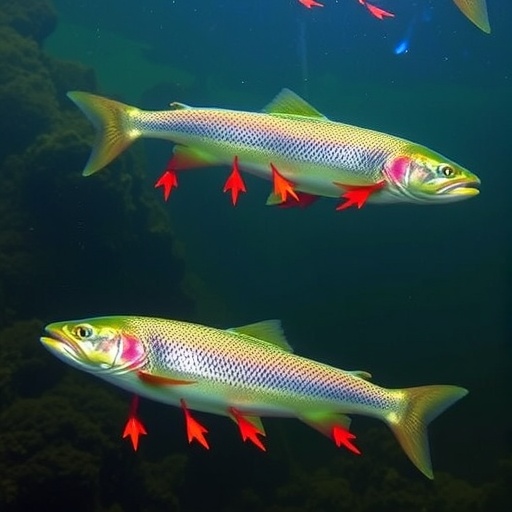
In the evolving landscape of aquaculture, understanding the genetic underpinnings of disease resistance in commercially important species is crucial. A recent study by Pouil et al. sheds light on the intricate genetic architecture that influences resistance to a significant bacterial pathogen in rainbow trout. This research reveals a remarkable heterogeneity in the genetic traits among two distinct populations of commercial rainbow trout, setting the stage for future advancements in fish breeding and disease management.
The significance of this study cannot be understated, as rainbow trout (Oncorhynchus mykiss) is not only a critical component of global aquaculture but also a popular species for recreational fishing. These fish are particularly susceptible to a variety of pathogens, with specific bacterial infections posing severe challenges to maintaining healthy populations. The study’s findings may pave the way for selective breeding programs aimed at enhancing disease resistance, ultimately resulting in more sustainable fisheries.
The research team employed a comprehensive approach, analyzing genetic data from two commercial populations of rainbow trout. Through advanced genomic techniques, they were able to dissect the genetic architecture related to resistance against a key bacterial pathogen, providing insights that could lead to improved management practices in aquaculture. The variations in genetic resistance observed between the populations underscore the complexity of host-pathogen interactions and suggest that different breeding strategies may be required to optimize health in aquaculture settings.
One of the standout features of this study is the methodology utilized. By leveraging high-throughput sequencing and analytical frameworks, the researchers could identify specific genetic markers associated with resistance traits. The use of genome-wide association studies (GWAS) allowed the identification of alleles that conferred resistance, a step that is vital for selecting fish with desirable traits in breeding programs. This molecular genetic approach not only enhances our understanding of the resistance mechanisms but also facilitates the choice of fish that are likely to thrive in pathogen-rich environments.
The results indicated substantial genetic variation within and between the two populations studied. This heterogeneity is critical, as it suggests that a one-size-fits-all approach to resistance may not be effective in aquaculture. Instead, tailored strategies that consider the unique genetic makeups of different populations will likely yield better outcomes in terms of disease management and fish health. Moreover, the presence of beneficial alleles can significantly increase the resilience of fish stocks in the face of evolving pathogens.
The implications of these findings extend beyond immediate applications in aquaculture. They also contribute to our broader understanding of genetics and disease resistance in other species, providing foundational knowledge that could be applied in various contexts. For instance, as climate change continues to alter aquatic environments, the genetic insights gained from this study might help researchers develop adaptive strategies for maintaining fish health and population viability.
In addition to its scientific contributions, the study highlights the importance of collaboration across disciplines. The research team comprised geneticists, aquaculture experts, and computational biologists, showcasing the multifaceted approach needed to tackle complex biological questions. Such interdisciplinary efforts are vital in advancing our understanding of the genetics of disease resistance and implementing practical solutions in aquaculture.
As researchers continue to explore the genetic bases of disease resistance, the study by Pouil et al. serves as a catalyst for future investigations. The identification of specific genetic markers linked to resistance traits offers a roadmap for targeted breeding programs, ultimately enhancing the sustainability and productivity of commercial rainbow trout farming. Additionally, these findings raise important questions about the role of environmental factors and management practices in shaping the genetic diversity of farmed populations.
The research also underscores the necessity of ongoing monitoring and adaptation in aquaculture practices. As pathogens evolve and new challenges arise, the ability to quickly assess and respond to these threats will be paramount. By harnessing the power of genomic technologies, aquaculture stakeholders can stay ahead of potential outbreaks, ensuring the health and survival of fish stocks in critical commercial sectors.
The economic implications of enhancing resistance in rainbow trout cannot be overlooked. Diseases can lead to significant financial losses in aquaculture operations, making effective management strategies essential for long-term sustainability. The genetic insights gained from this research present an opportunity for aquaculture producers to mitigate risks and optimize production efficiency, ultimately benefiting both the industry and consumers.
In conclusion, the work of Pouil et al. marks a significant advancement in our understanding of genetic resistance in rainbow trout. By revealing the complexity and heterogeneity of resistance traits, this study lays the groundwork for future research and practical applications in fish breeding. The collaborative approach taken by the researchers exemplifies the interdisciplinary nature of modern science, and the potential for genomic advancements to transform aquaculture practices is immense. As we move forward, the lessons learned from this research will undoubtedly influence the next generation of aquaculture strategies aimed at fostering healthy, resilient fish populations.
This study not only contributes to aquaculture knowledge but also emphasizes the urgency of integrating genetic research with sustainable practices in food production. The health of aquatic ecosystems is critical for biodiversity and global food security, and as such, continued investment in genetic research and responsible aquaculture practices will be essential for the future.
Ultimately, Pouil et al. provide a compelling case for the importance of genetics in aquaculture, offering hope for more resilient fish populations and sustainable fishing practices. As stakeholders are encouraged to adopt innovative approaches, the outcomes of this research will resonate throughout the aquaculture industry for years to come.
Cite Scienmag News
Juliet Wilcox. (November 30, 2025). Varied Genetic Resistance to Key Bacterial Pathogen in Trout. Scienmag. https://scienmag.com/varied-genetic-resistance-to-key-bacterial-pathogen-in-trout/
Juliet Wilcox. "Varied Genetic Resistance to Key Bacterial Pathogen in Trout." Scienmag, 30 November 2025, https://scienmag.com/varied-genetic-resistance-to-key-bacterial-pathogen-in-trout/. Accessed 4 September 2026.
Juliet Wilcox. "Varied Genetic Resistance to Key Bacterial Pathogen in Trout." Scienmag. November 30, 2025. https://scienmag.com/varied-genetic-resistance-to-key-bacterial-pathogen-in-trout/


