


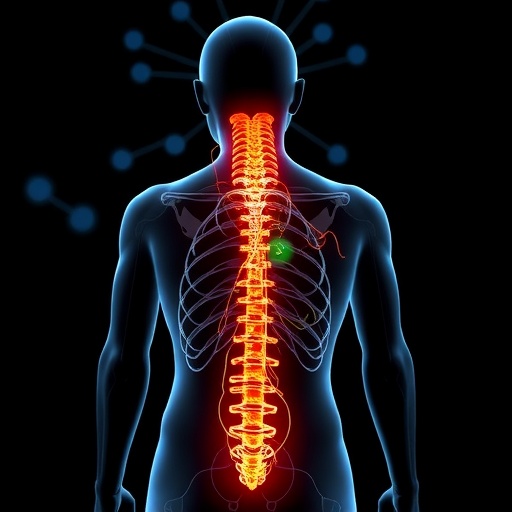
In a groundbreaking advancement for spinal cord injury (SCI) therapy, researchers have developed a novel treatment paradigm that synergistically combines electroacupuncture with human spinal cord-derived neural progenitor cells (hsc-NPCs) seeded on ordered collagen scaffolds. This integrative approach addresses the multifaceted challenges of SCI, aiming to restore neural electrical conduction, mitigate secondary muscle atrophy, and prevent joint dysfunction through precise physical signal modulation and regenerative tissue engineering.
SCI is a devastating condition characterized by the disruption of neural pathways and a hostile microenvironment at the injury site, leading to irreversible sensory and motor impairments. Compounded by complications such as muscle wasting and joint ankylosis, SCI presents formidable obstacles to clinical rehabilitation. Previous research spearheaded by Professor Jianwu Dai’s team at the Institute of Genetics and Developmental Biology revealed that neural stem cells derived directly from spinal cord tissue offer unmatched tissue-specific regenerative capacity, outperforming alternative cell sources in promoting neural repair.
Further investigations uncovered that targeted electroacupuncture stimulation can significantly enhance functional recovery after SCI by modulating neural circuits and the injury milieu. Concurrently, conductive biomaterials have shown promise in restoring the electrical microenvironment necessary for nerve regeneration. Harnessing these insights, the present study integrates electroacupuncture-based physical signaling with cutting-edge tissue engineering strategies to break through current therapeutic limitations.
The research team, including Professor Jianwu Dai, Professor Rui Gu of China-Japan Union Hospital of Jilin University, and Yi Cui from the National Research Institute for Family Planning, devised a dual-pronged therapeutic framework. Electroacupuncture was applied to the Jiaji (EX-B2) and Zusanli (ST36) acupoints, targeting disrupted spinal segments and distal lower limb muscles, respectively. This precise stimulation facilitated local restoration of electrical conduction, suppressed neuroinflammation, and activated neuromuscular signaling pathways critical for muscle integrity.
Simultaneously, hsc-NPCs were cultured on aligned collagen scaffolds to provide a three-dimensional matrix guiding cellular regeneration within the lesion. Implantation of this construct into a rat model with complete T10 spinal cord transection created a supportive niche—combining progenitor “seed” cells with a permissive extracellular “soil”—to optimally foster neural repair.
Over an eight-week treatment course, this combined modality notably enhanced the survival of transplanted hsc-NPCs within the injury core. Moreover, it promoted their differentiation into mature neurons capable of myelin sheath regeneration and synaptic integration, fundamental processes for reestablishing functional neural circuits. Importantly, the intervention attenuated glial scar formation—a key barrier to regeneration—and reduced infiltration of pro-inflammatory CD68-positive macrophages, thereby alleviating secondary tissue damage.
Beyond neural regeneration, the study addressed crucial post-SCI sequelae including lower limb muscle atrophy and joint stiffness. Electroacupuncture at the Zusanli acupoint activated somatosensory-motor pathways, which mitigated muscle mass loss in the gastrocnemius and soleus muscles. This stimulation also diminished intermuscular fibrosis, a pathological contributor to impaired muscle contractility and joint dysfunction. Preservation of neuromuscular junction architecture further supported muscle force generation and prevented progressive joint ankylosis.
The research underscores the critical interplay between physical signal modulation and cellular therapy for effective SCI repair. By restoring the electrical microenvironment and providing structural and cellular support, this integrated approach facilitates both endogenous neurogenesis and exogenous stem cell-mediated regeneration. These synergistic effects culminate in comprehensive functional rehabilitation not achievable through conventional isolated treatments.
Published in the prestigious journal Science China Life Sciences, this study marks a significant leap forward in SCI therapeutics. It pioneers a new therapeutic model that harnesses traditional electroacupuncture techniques within the framework of modern regenerative medicine and bioengineering. The co-corresponding authors, Professors Jianwu Dai and Rui Gu alongside Researcher Yi Cui, highlight the transformative potential of combining physical stimulation with tissue scaffolding to surmount longstanding obstacles in neural repair.
This research not only advances scientific understanding of electroacupuncture’s mechanistic role but also sets the stage for translational applications in human SCI patients. Future investigations will focus on optimizing stimulation parameters, scaffold design, and cell sources to maximize clinical efficacy. Ultimately, this integrative treatment paradigm may revolutionize the therapeutic landscape, offering hope for millions affected by the debilitating consequences of spinal cord injuries.
The collaborative effort also includes co-first authors Drs. Yunlong Zou, Weiwei Xue, and Bo Guo, who contributed extensively to the experimental execution and data analysis underpinning these compelling findings. Their multidisciplinary expertise spans genetics, translational brain science, and clinical medicine, exemplifying the importance of integrated approaches in advancing regenerative neuroscience.
In summary, this innovative study demonstrates that electroacupuncture combined with ordered collagen scaffolds laden with hsc-NPCs significantly enhances neural regeneration, functional synaptic integration, and muscle preservation after SCI. It opens new avenues in regenerative therapies by integrating biophysical cues with cellular engineering, holding promise for improved patient outcomes and quality of life restoration.
Web References: 10.1007/s11427-025-3321-9
Cite Scienmag News
Cassandra Pierce. (May 26, 2026). Electroacupuncture and Spinal Neural Cell Transplantation Synergize to Enhance Nerve Regeneration and Functional Recovery After Spinal Cord Injury. Scienmag. https://scienmag.com/electroacupuncture-and-spinal-neural-cell-transplantation-synergize-to-enhance-nerve-regeneration-and-functional-recovery-after-spinal-cord-injury/
Cassandra Pierce. "Electroacupuncture and Spinal Neural Cell Transplantation Synergize to Enhance Nerve Regeneration and Functional Recovery After Spinal Cord Injury." Scienmag, 26 May 2026, https://scienmag.com/electroacupuncture-and-spinal-neural-cell-transplantation-synergize-to-enhance-nerve-regeneration-and-functional-recovery-after-spinal-cord-injury/. Accessed 4 September 2026.
Cassandra Pierce. "Electroacupuncture and Spinal Neural Cell Transplantation Synergize to Enhance Nerve Regeneration and Functional Recovery After Spinal Cord Injury." Scienmag. May 26, 2026. https://scienmag.com/electroacupuncture-and-spinal-neural-cell-transplantation-synergize-to-enhance-nerve-regeneration-and-functional-recovery-after-spinal-cord-injury/


