


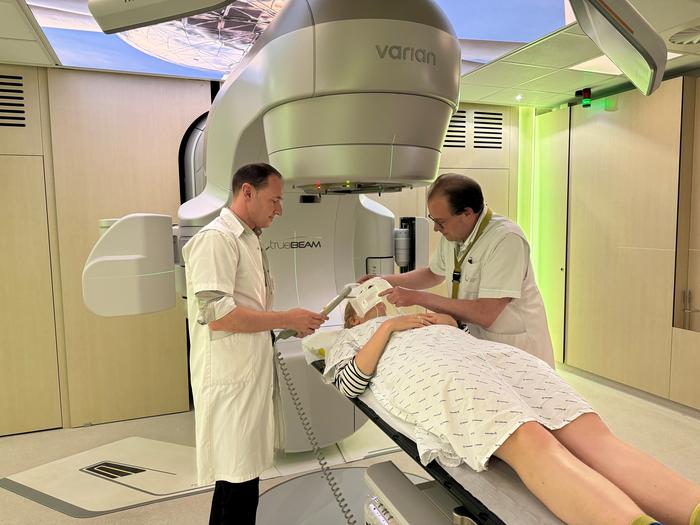
Prof De Ridder, head of Radiotherapy at UZ Brussel: “Traditional radiotherapy generally requires many radiation sessions, also called fractions. Typically, 10 to 30 fractions are required. With the new FLASH technique, which delivers radiation at ultra-high dosage rates, patients will be able to receive their full radiation dose in less than one second. This means they can begin their recovery sooner. The FLASH technique also results in fewer side effects such as skin irritation and intestinal discomfort, and causes less damage to healthy tissues and organs. Currently, FLASH radiotherapy is only applied in specific research contexts. We now want to work on developing the technique so it can be used in practice.”

Credit: Sven Van Laere
Prof De Ridder, head of Radiotherapy at UZ Brussel: “Traditional radiotherapy generally requires many radiation sessions, also called fractions. Typically, 10 to 30 fractions are required. With the new FLASH technique, which delivers radiation at ultra-high dosage rates, patients will be able to receive their full radiation dose in less than one second. This means they can begin their recovery sooner. The FLASH technique also results in fewer side effects such as skin irritation and intestinal discomfort, and causes less damage to healthy tissues and organs. Currently, FLASH radiotherapy is only applied in specific research contexts. We now want to work on developing the technique so it can be used in practice.”
Investigating new radiation options
The project has three main angles. First, the new equipment needs to be calibrated for clinical use. This includes controlling the extremely high dose rates, calculating treatment plans and finding the optimal treatment position – lying down or sitting – according to the location of the tumour. Second, researchers will conduct lab studies to investigate the effects on tumours and surrounding healthy tissues. Finally, the aim is to apply the technique safely and effectively in clinical settings.
The research focuses primarily on treating patients with skin cancer, rectal cancer and sarcomas, rare cancers that develop in the bones and soft tissues, including fat, muscles, blood vessels and nerves.
Next step towards more efficient treatment
In 2021, the UZ Brussel took a step towards more efficient radiotherapy treatment for patients with prostate and rectal cancer with the purchase of the Linac MRI. This device allows live monitoring of a tumour and applies radiation only when the tumour is in a targeted area. This allows tumours located deep in certain organs or subject to movement by other organs to be irradiated more precisely.
Prof Gevaert: “Advances in both radiotherapy and medical imaging allow for more precise radiation than previously, increasing the chances of healing and keeping relapses under control. Thanks to the support of the FWO, not only will UZ Brussel be able to compete in Belgium in this relatively new field of research, it will also enable new lines of study within cancer research internationally.”
Contact
Prof Mark De Ridder
mark.deridder@uzbrussel.be
+32 (0)2 477 6041
Cite Scienmag News
Nathaniel Bowman. (May 23, 2024). UZ Brussels – VUB receive €2.5 million for research into pioneering cancer treatment technique. Scienmag. https://scienmag.com/uz-brussels-vub-receive-e2-5-million-for-research-into-pioneering-cancer-treatment-technique/
Nathaniel Bowman. "UZ Brussels – VUB receive €2.5 million for research into pioneering cancer treatment technique." Scienmag, 23 May 2024, https://scienmag.com/uz-brussels-vub-receive-e2-5-million-for-research-into-pioneering-cancer-treatment-technique/. Accessed 5 September 2026.
Nathaniel Bowman. "UZ Brussels – VUB receive €2.5 million for research into pioneering cancer treatment technique." Scienmag. May 23, 2024. https://scienmag.com/uz-brussels-vub-receive-e2-5-million-for-research-into-pioneering-cancer-treatment-technique/

