


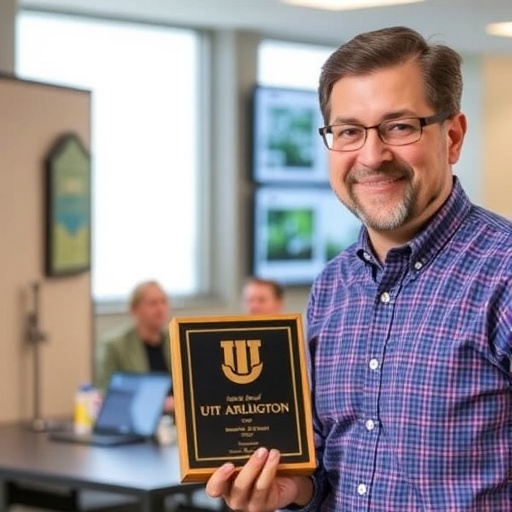
A groundbreaking study is underway at the University of Texas at Arlington, spearheaded by Kamal Awad, an assistant professor of research at the Bone-Muscle Research Center. This innovative research probes the intersection of cardiac and muscular decline associated with aging, a domain referred to as cardio-sarcopenia. It aims to unravel the complex biological interplay between heart health and muscle degeneration, a nexus that has remained largely unexplored until now.
Professor Awad’s work is supported by the prestigious American Heart Association Career Development Award, which provides $231,000 in funding over three years. His project distinguished itself in the highly competitive national landscape, ranking in the fourth percentile for its novel approach and potential impact. This validation highlights the pressing need to elucidate the mechanisms linking cardiovascular dysfunction to skeletal muscle deterioration as individuals age.
Prevailing studies have traditionally examined sarcopenia, heart failure, and cardiovascular disease as separate entities. However, Awad challenges this fragmented perspective by emphasizing the body’s integrated systems. He argues that the human organism functions as an interconnected whole rather than isolated parts. Understanding how cardiac and muscular systems co-evolve during aging could transform diagnostic and therapeutic strategies in geriatric medicine.
The central thesis of Awad’s research underlines a metabolic crosstalk between the heart and skeletal muscles, which may drive parallel declines in function. By identifying molecular and physiological correlates that unify these conditions, his team hopes to pinpoint early biomarkers that signify onset before overt symptoms manifest. Such biomarkers could revolutionize early detection, enabling interventions that forestall or reverse cardio-sarcopenia’s progression.
A distinct feature of Awad’s methodology is its foundation in engineering principles. His background in this field fosters a systems-level appreciation of biological complexity, moving beyond conventional biomedical approaches. One such tool leveraged in initial studies is Raman spectroscopy, a highly sensitive technique that detects molecular signatures within tissues by analyzing vibrational energy shifts of molecular bonds.
Through Raman spectroscopy, Awad’s group identified a unique molecular fingerprint in aging skeletal muscle—one that had eluded detection by standard methods. This fingerprint potentially signals early biochemical changes tied to muscle degradation, providing a promising lead for further investigation. This interdisciplinary viewpoint exemplifies how engineering and medical sciences can converge to yield new insights into age-related pathologies.
Collaboration lies at the heart of this research initiative. Awad is working alongside distinguished UTA colleagues such as Marco Brotto, director of the Bone-Muscle Research Center; Michael Nelson, who oversees the Clinical Imaging Research Center and the Arlington Study of Healthy Aging (ASHA); as well as experts in cellular signaling and neurocardiovascular control. These partnerships ensure a comprehensive examination of cardio-sarcopenia from molecular to systemic levels.
The ASHA study, in particular, offers a rich repository of human data pivotal for validating hypotheses generated through molecular investigations. By integrating clinical imaging and physiological assessments from diverse aging populations, Awad’s team can correlate molecular biomarkers with functional outcomes. This multilayered data synergy enhances the study’s robustness and translational potential.
Ultimately, Awad envisions that unraveling the cause-and-effect relationships underlying cardio-sarcopenia will pave the way for personalized medicine tailored to older adults. Identifying mechanistic pathways linking heart dysfunction and muscle decline could inform targeted therapies, customizing treatment protocols to individual metabolic profiles. This approach contrasts with the current generic paradigms that often neglect systemic interdependencies.
The research program officially commenced on April 1 and is poised to make significant contributions to understanding how aging orchestrates integrated physiological decline. By combining cutting-edge spectroscopy, advanced imaging, and integrative biological analysis, it aspires to shift clinical practice toward earlier diagnosis and more effective intervention strategies for cardiovascular and muscular disorders in elderly populations.
This endeavor embodies a paradigm shift in gerontology and cardiovascular research, underscoring the importance of interdisciplinary approaches to human health. The discovery of novel biomarkers and therapeutic targets linked to cardio-sarcopenia not only enhances scientific knowledge but also offers hope for mitigating some of the most debilitating aspects of aging, potentially extending healthy lifespan and quality of life.
In a broader context, Awad’s research reflects a transformative trend in biomedical engineering and translational medicine where hybrid expertise unlocks previously inaccessible questions. His work encapsulates the essential role that novel technological applications, grounded in engineering principles, play in redefining how complex biological systems are understood and treated in the era of precision health.
News Publication Date: April 1, 2024
Web References: https://mediasvc.eurekalert.org/Api/v1/Multimedia/256a2220-e2ac-4f30-8154-a4db9a28cd1b/Rendition/low-res/Content/Public
Cite Scienmag News
Beatrice Stafford. (April 20, 2026). UT Arlington Scientist Recognized with AHA Award for Groundbreaking Aging Research. Scienmag. https://scienmag.com/ut-arlington-scientist-recognized-with-aha-award-for-groundbreaking-aging-research/
Beatrice Stafford. "UT Arlington Scientist Recognized with AHA Award for Groundbreaking Aging Research." Scienmag, 20 April 2026, https://scienmag.com/ut-arlington-scientist-recognized-with-aha-award-for-groundbreaking-aging-research/. Accessed 5 September 2026.
Beatrice Stafford. "UT Arlington Scientist Recognized with AHA Award for Groundbreaking Aging Research." Scienmag. April 20, 2026. https://scienmag.com/ut-arlington-scientist-recognized-with-aha-award-for-groundbreaking-aging-research/


