


Congenital heart and lung conditions may soon be monitored through one of the simplest biological samples available: urine. A new article in Pediatric Research examines how urinary proteomics could help scientists and clinicians understand two complex congenital disorders, congenital diaphragmatic hernia (CDH) and Tetralogy of Fallot (TOF). The article, “Testing the waters: the potential of urinary proteomics in congenital diaphragmatic hernia and Tetralogy of Fallot,” by E.A. Stiffler, A.D. Alcocer and T.J. Mead, explores the possibility that proteins released into urine could provide a window into disease biology, treatment response and long-term outcomes in newborns and children with these conditions.
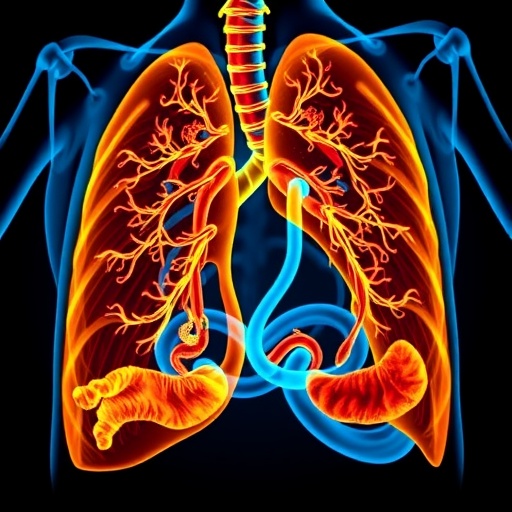
CDH and TOF are distinct disorders, but both can place severe demands on the developing body. In CDH, an abnormal opening in the diaphragm allows abdominal organs to move into the chest, restricting lung development and often producing pulmonary hypoplasia and pulmonary hypertension. TOF is a heart defect involving four anatomical abnormalities, including a ventricular septal defect, obstruction of blood flow from the right ventricle to the lungs, an overriding aorta and thickening of the right ventricular muscle. The clinical severity of both disorders can vary widely, making early risk assessment difficult. Physicians currently rely on imaging, physiological measurements, blood tests and clinical observation, but these approaches do not always reveal the molecular processes unfolding inside the patient.
Proteomics focuses on the complete collection of proteins present in a biological sample. Unlike genes, which provide a relatively stable blueprint, proteins change in response to development, inflammation, oxygen deprivation, tissue injury, infection and medical treatment. Urinary proteomics applies advanced analytical techniques—often liquid chromatography coupled with tandem mass spectrometry—to identify and quantify hundreds or thousands of proteins and protein fragments. Because urine contains molecules filtered from the blood as well as substances released by the kidneys and urinary tract, its protein profile can reflect systemic changes while avoiding the invasiveness of tissue sampling.
For newborns and critically ill children, that advantage could be especially important. Repeated blood draws can contribute to anemia and may be technically challenging, while tissue biopsies are rarely practical for monitoring congenital disease. Urine collection can be performed using diapers, collection bags or other pediatric sampling methods, potentially allowing researchers to track molecular changes over time. A single sample might contain information about inflammation, vascular development, extracellular-matrix remodeling, kidney stress, cardiac workload or the effects of intensive-care treatment. The goal is not simply to find one “disease protein,” but to identify reproducible patterns that distinguish biological states and predict how a child may progress.
In CDH, urinary protein signatures could help clarify why some infants develop severe respiratory failure while others respond more favorably to treatment. The degree of lung underdevelopment is not always easy to estimate before birth or immediately after delivery, and pulmonary hypertension can evolve rapidly. Proteomic patterns associated with abnormal blood-vessel formation, inflammatory signaling or impaired tissue maturation might provide additional clues about disease severity. Such information could eventually complement prenatal imaging, oxygenation measurements and postnatal imaging when clinicians are deciding how aggressively to support breathing, circulation and pulmonary blood flow.
The same strategy could be valuable in TOF, where anatomical differences do not always fully predict a child’s clinical course. Infants may experience altered oxygen delivery, right-ventricular pressure overload and changes in kidney perfusion before or after surgical repair. Urinary proteins linked to myocardial stress, vascular signaling, fibrosis or organ injury could help researchers study how the heart and other organs respond to these pressures. After surgery, serial urine samples might also reveal biological recovery or emerging complications earlier than conventional measurements. However, the article’s focus is on potential: urinary proteomics remains a developing research approach rather than a validated bedside test for routine diagnosis.
Turning promising protein patterns into reliable clinical tools will require rigorous validation. Urine is highly variable, and its composition can be influenced by hydration, feeding, gestational age, medication, infection, kidney function and the timing of collection. In premature or critically ill infants, these factors may change dramatically within hours. Researchers must therefore standardize collection and storage procedures, normalize protein measurements—often by accounting for urine concentration—and include sufficiently large patient groups. Results discovered in one hospital may not perform identically in another if instruments, laboratory protocols or patient populations differ.
Another challenge is separating signals caused by the congenital condition from signals produced by treatment. Mechanical ventilation, antibiotics, diuretics, surgery, transfusions and extracorporeal support can all alter the urinary proteome. A protein pattern observed after an operation might reflect tissue recovery, inflammation from surgery or medication exposure rather than the original heart or lung defect. Longitudinal studies that collect samples before treatment, during critical illness and throughout recovery will be essential. Researchers will also need to compare affected infants with carefully selected control groups, including healthy newborns and children undergoing treatment for unrelated conditions.
The technical power of proteomics is expanding rapidly. Modern mass spectrometers can detect low-abundance proteins with increasing sensitivity, while computational tools can identify networks of interacting molecules rather than examining each protein in isolation. Machine-learning models may eventually combine urinary protein profiles with echocardiography, imaging, genomic data and bedside measurements to produce individualized risk estimates. Yet sophisticated prediction is only useful if it is transparent, reproducible and clinically meaningful. A biomarker must ultimately improve a decision—such as determining monitoring intensity, timing an intervention or identifying complications early—rather than merely generating an impressive molecular signature.
“Testing the waters” highlights why urine is attracting attention as a source of pediatric biomarkers: it is accessible, repeatable and rich in biological information. For CDH and TOF, two disorders in which early development, cardiopulmonary physiology and treatment response are tightly intertwined, this approach could open a new path toward precision medicine. The next step is not to promise an immediate diagnostic revolution, but to build carefully designed studies that test whether urinary proteins consistently reflect disease severity and predict outcomes. If those findings hold up across hospitals and diverse patient populations, a sample that is usually discarded could become a powerful tool for watching vulnerable children heal.
Cite Scienmag News
Kenneth Gardner. (August 25, 2026). Urinary proteomics shows promise for congenital diaphragmatic hernia and Tetralogy of Fallot. Scienmag. https://scienmag.com/urinary-proteomics-shows-promise-for-congenital-diaphragmatic-hernia-and-tetralogy-of-fallot/
Kenneth Gardner. "Urinary proteomics shows promise for congenital diaphragmatic hernia and Tetralogy of Fallot." Scienmag, 25 August 2026, https://scienmag.com/urinary-proteomics-shows-promise-for-congenital-diaphragmatic-hernia-and-tetralogy-of-fallot/. Accessed 4 September 2026.
Kenneth Gardner. "Urinary proteomics shows promise for congenital diaphragmatic hernia and Tetralogy of Fallot." Scienmag. August 25, 2026. https://scienmag.com/urinary-proteomics-shows-promise-for-congenital-diaphragmatic-hernia-and-tetralogy-of-fallot/


