


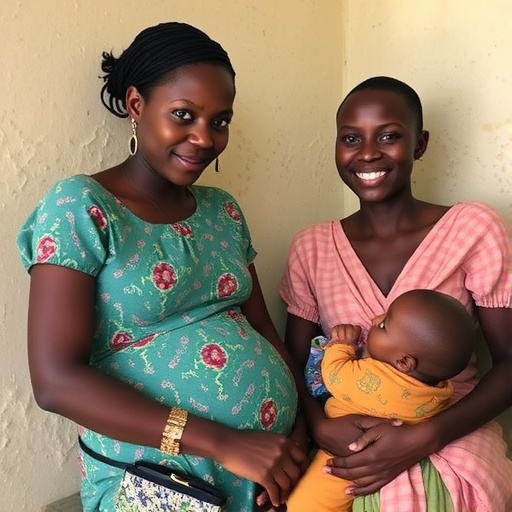
In the evolving landscape of global health, the equitable provision of postpartum care remains a pivotal concern, especially in low-income countries where disparities between urban and rural healthcare systems are pronounced. A groundbreaking study, recently published in the International Journal for Equity in Health, rigorously examines the readiness of primary healthcare systems across Burkina Faso to deliver essential postpartum care services to mothers and newborns. Utilizing a novel application of the Gini index decomposition analysis, the research uncovers critical dimensions of inequality that challenge the country’s healthcare infrastructure and policy frameworks.
Postpartum care is universally acknowledged as a cornerstone in reducing maternal and neonatal mortality and morbidity, particularly within the crucial first weeks after childbirth. However, in many developing nations, systemic barriers perpetuate significant disparities between urban centers and rural localities. Burkina Faso, characterized by a predominantly rural population and limited healthcare resources, serves as an emblematic case for this inquiry. The study meticulously evaluates service readiness, inclusivity, and resource allocation, shedding light on how these factors vary spatially.
Unlike conventional assessments that often rely solely on aggregate indicators of healthcare quality, this research innovatively employs the Gini index—a statistical measure traditionally used to gauge income inequality—to quantify disparities in healthcare readiness. By decomposing the Gini index, the analysis distinguishes between inter-regional and intra-regional inequalities, enabling a granular understanding of where interventions might yield the most substantial improvements in postpartum care coverage. This methodological advancement represents a significant contribution to health services research.
Data for this investigation were meticulously gathered from a nationally representative sample of primary healthcare facilities across Burkina Faso, encompassing both urban and rural domains. The researchers evaluated multiple indicators of service readiness, including availability of essential medicines, trained healthcare personnel, infrastructure adequacy, and the presence of standardized clinical protocols relevant to postpartum care. These metrics were synthesized into an aggregate readiness index, which then formed the basis for the inequality analysis.
Findings expose a stark contrast between urban and rural healthcare facilities. Urban centers, buoyed by better funding, infrastructure, and skilled health workers, generally showed higher readiness scores. Conversely, rural health posts frequently suffered from shortages in basic medicines, equipment deficits, and insufficiently trained staff, thereby severely limiting their capacity to provide comprehensive postpartum care. Such disparities contribute to the perpetuation of health inequities, disproportionately affecting vulnerable rural populations and reinforcing cycles of poor maternal and neonatal outcomes.
The decomposition of the Gini index further elucidated that within-region disparities, particularly in rural areas, were substantial. This suggests that even among rural healthcare providers, the quality and readiness to handle postpartum cases vary significantly, probably influenced by geographic accessibility, local governance, and resource distribution. This nuanced insight emphasizes the necessity of targeted interventions that recognize intra-regional heterogeneity rather than applying broad-brush policy solutions.
Moreover, the study draws attention to systemic challenges hampering improvements in postpartum care readiness. These include fragmented supply chains leading to intermittent stock-outs of essential medicines, inadequate professional training focused on maternal and neonatal health, and infrastructural deficiencies such as lack of reliable electricity and water supply. Addressing these challenges demands a multifaceted approach involving policy reform, capacity building, and investment in rural healthcare infrastructure.
Importantly, the research highlights the role of governance and health system decentralization as double-edged swords. While decentralization can empower local health authorities and tailor interventions to community needs, insufficient oversight and resource constraints at district levels may exacerbate disparities. Thus, strengthening governance frameworks and ensuring equitable resource allocation emerge as critical priorities for policymakers.
From a methodological standpoint, the application of the Gini index decomposition in this healthcare context is pioneering. This approach offers a replicable model for other low- and middle-income countries grappling with similar urban-rural health inequities. By providing a quantitative basis for understanding where and why disparities exist, this method equips stakeholders with evidence to prioritize interventions efficiently and monitor progress over time.
The implications of these findings are far-reaching. Reducing urban-rural disparities in postpartum care readiness is not only a matter of health equity but is instrumental in advancing overall population health and achieving Sustainable Development Goals related to maternal and child health. Investments aimed at bolstering rural healthcare capacity can substantially reduce preventable deaths and improve quality of life for mothers and newborns.
The study concludes by advocating for a coordinated strategy that integrates health system strengthening, community engagement, and enhanced data systems. In particular, expanding the training of frontline health workers, ensuring consistent availability of essential supplies, upgrading health facility infrastructure, and fostering robust health information systems are pivotal steps toward equitable postpartum care delivery.
In the broader context, this research contributes to an imperative global health discourse—one that prioritizes equity and tangible improvements in health systems over mere expansion of services. Burkina Faso’s experience underscores the complexity of healthcare delivery in fractured systems and highlights the need for innovative analytical frameworks like Gini index decomposition to guide evidence-based policy.
As nations worldwide strive to improve maternal and neonatal health outcomes, the insights garnered from this study offer a valuable template for tackling entrenched disparities. Moreover, the creation of an evidence-based, equity-focused health agenda informed by rigorous quantitative analyses can facilitate more nuanced and impactful health reforms, especially in resource-constrained settings.
Ultimately, the study by Cisse and colleagues sets a new standard for evaluating healthcare readiness beyond simplistic measures. Its nuanced, data-driven approach captures the multifaceted nature of inequality and fosters deeper understanding among health policymakers, practitioners, and researchers engaged in maternal and child health endeavors globally.
The study serves as a clarion call to prioritize equitable postpartum care delivery by harnessing innovative methodologies and concerted policy action. Its findings remain particularly salient in the face of evolving demographic pressures, climate-induced health challenges, and the ongoing imperative to leave no mother or newborn behind in health system strengthening efforts.
Cite Scienmag News
Harold Sullivan. (October 14, 2025). Urban-Rural Gaps in Burkina Faso Postpartum Care. Scienmag. https://scienmag.com/urban-rural-gaps-in-burkina-faso-postpartum-care/
Harold Sullivan. "Urban-Rural Gaps in Burkina Faso Postpartum Care." Scienmag, 14 October 2025, https://scienmag.com/urban-rural-gaps-in-burkina-faso-postpartum-care/. Accessed 5 September 2026.
Harold Sullivan. "Urban-Rural Gaps in Burkina Faso Postpartum Care." Scienmag. October 14, 2025. https://scienmag.com/urban-rural-gaps-in-burkina-faso-postpartum-care/


