


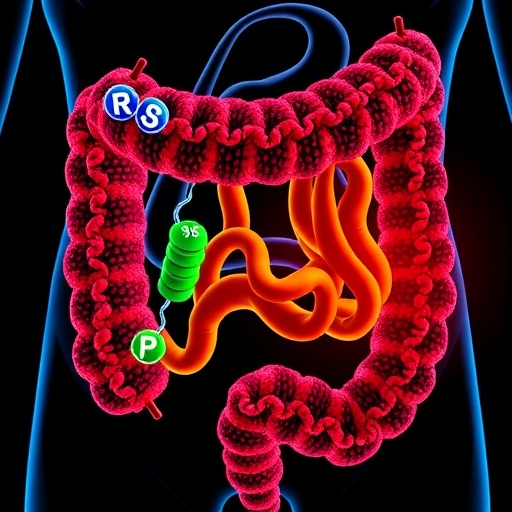
Colorectal cancer (CRC) remains one of the most formidable health challenges worldwide, ranking as the third most common malignancy with escalating incidence and mortality projections expected by the year 2040. A growing body of evidence has highlighted the critical role that genetic mutations play in the disease’s progression, with RAS gene mutations standing out due to their association with poor clinical outcomes. Despite the prevalence of RAS mutations in CRC, their precise influence on tumor metabolism, especially in early-stage disease, has eluded clear definition. This gap in knowledge has propelled recent investigations leveraging metabolomics to decipher the biochemical alterations driven by RAS status in colorectal tumors.
In a pioneering study published in the journal BMC Cancer, researchers Li and Dong have provided an in-depth metabolomic comparison of colorectal cancer tissues harboring RAS mutations against those with wild-type RAS. Utilizing cutting-edge liquid chromatography-mass spectrometry (LC-MS), the research team conducted a meticulous profiling of metabolites within 49 clinical tissue samples. These samples were strategically categorized into 28 with confirmed RAS mutations and 21 of wild-type origin, enabling a comprehensive evaluation of metabolic signatures distinguishing these molecular subtypes.
Metabolomics, the large-scale study of small molecules within cells, tissues, or organisms, offers unprecedented insights into cancer biology by revealing the downstream effects of genetic and epigenetic alterations on cellular metabolism. Through this technology, the study uncovered a complex landscape of metabolic disruptions associated with RAS mutations in CRC. The multivariate statistical analyses used in this work revealed notable biochemical divergence between RAS-mutant tumors and their wild-type counterparts, despite inherent heterogeneity within each group.
Among the most striking findings was the identification of 204 metabolites with differential expression patterns in RAS-mutant CRC tissues. Specifically, 70 metabolites demonstrated significant upregulation, including omega-hydroxy myristic acid and 4S-hydroxylauric acid, both fatty acid derivatives potentially implicated in altered lipid metabolism pathways. Conversely, 134 metabolites, such as SCHEMBL1056153 and Immepip, were downregulated, suggesting the suppression of distinct metabolic nodes possibly linked to tumor suppression or immune modulation.
Further correlation analyses revealed intricate interactions between these metabolites, shedding light on metabolic networks potentially rewired by oncogenic RAS activity. This complex metabolic crosstalk emphasizes how mutant RAS not only drives uncontrolled cell proliferation but also orchestrates a broader rewiring of cellular energy and biosynthetic pathways that may support malignant phenotypes.
Delving deeper into the biological implications of these metabolic shifts, pathway enrichment analyses mapped the differentially abundant metabolites onto well-characterized biochemical pathways. Notably, aberrations were significantly enriched in choline metabolism pathways, which are known to influence membrane synthesis and signaling in cancer cells. In addition, drug metabolism via cytochrome P450 enzymes—critical for processing endogenous and exogenous compounds—was notably altered, hinting at the influence of RAS mutations on therapeutic responses.
Beta-alanine metabolism, another pathway enriched among the altered metabolites, is recognized for its role in modulating cellular redox balance and neurotransmitter functions, potentially impacting tumor microenvironment and growth. Reactome pathway analyses corroborated these findings, highlighting the specificity of metabolic perturbations associated with RAS status in the context of colorectal tumor biology.
This research contributes substantially to the growing paradigm that cancer metabolism is not merely a byproduct of uncontrolled growth but a finely tuned constellation of metabolic adaptations driven by genetic lesions. By illuminating the metabolic fingerprint of RAS-mutant colorectal cancer, this study paves the way for identifying novel biomarkers that could improve early diagnosis and patient stratification.
Moreover, the identification of unique metabolic dependencies opens promising avenues for therapeutic intervention. Targeting metabolic pathways selectively exploited by RAS-mutant tumors could enhance treatment efficacy and overcome resistance mechanisms commonly observed with current targeted therapies. However, the authors prudently recognize the limitations inherent in their study, such as the relatively moderate cohort size, which calls for validation in larger and more diverse populations.
Further investigations integrating metabolomics with transcriptomic and proteomic data could yield integrative insights into how RAS mutations influence cellular programs across multiple regulatory layers. Such multidimensional approaches may uncover synergistic vulnerabilities exploitable for more precise and effective clinical management of CRC.
Ultimately, Li and Dong’s work underscores an essential shift in cancer research—recognizing the interdependence of genetics and metabolism in oncogenesis. Their findings set a foundation for future translational studies aimed at converting metabolic signatures into actionable clinical tools, thus heralding a new era of metabolically informed precision oncology.
As colorectal cancer continues to exact a heavy toll globally, advances such as this metabolomic characterization of RAS-mutant tumors remind us that unraveling cancer’s metabolic enigmas remains a crucial frontier. With new diagnostic and therapeutic targets emerging from such molecular investigations, the potential to transform CRC patient outcomes grows ever more tangible.
In conclusion, the metabolomic dissection of RAS-mutant colorectal cancer provided by this study lends vital insight into the biochemistry of tumor progression and offers a hopeful blueprint for exploiting metabolic pathways in future clinical interventions. This landmark research stands to inspire a broader exploration of metabolic underpinnings across oncogenic mutations and cancer types, reinforcing the imperative to marry molecular genetics with biochemistry in the fight against cancer.
Cite Scienmag News
Nathaniel Bowman. (October 14, 2025). RAS Mutations Reshape Colorectal Cancer Metabolism. Scienmag. https://scienmag.com/ras-mutations-reshape-colorectal-cancer-metabolism/
Nathaniel Bowman. "RAS Mutations Reshape Colorectal Cancer Metabolism." Scienmag, 14 October 2025, https://scienmag.com/ras-mutations-reshape-colorectal-cancer-metabolism/. Accessed 5 September 2026.
Nathaniel Bowman. "RAS Mutations Reshape Colorectal Cancer Metabolism." Scienmag. October 14, 2025. https://scienmag.com/ras-mutations-reshape-colorectal-cancer-metabolism/


