


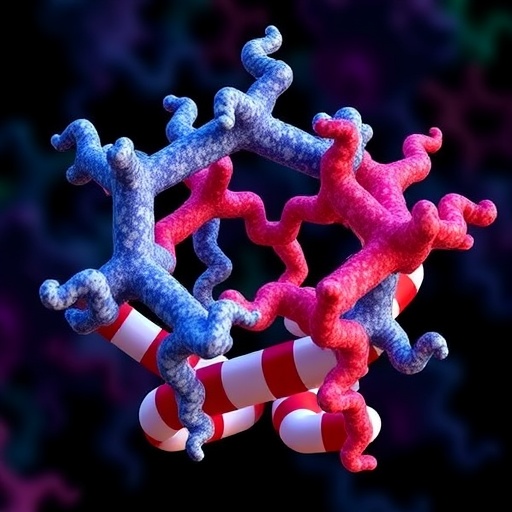
In a groundbreaking advance for the field of receptor pharmacology, researchers have elucidated the intricate structural basis by which allosteric and bitopic ligands engage human sphingosine-1-phosphate (S1P) receptors, particularly subtypes 2 and 3. These insights, unveiled through a combination of high-resolution crystal structures and cryo-electron microscopy, illuminate previously obscure facets of receptor activation and inhibition, providing a robust framework for the design of highly selective therapeutic agents targeting a key family of G protein-coupled receptors (GPCRs) involved in a spectrum of diseases ranging from cancer to cardiovascular disorders.
Sphingosine-1-phosphate receptors, encompassing five subtypes (S1P1 through S1P5), are master regulators of critical cellular functions such as survival, migration, and inflammatory responses. Their wide expression and involvement in pathological states have rendered them promising targets for drug development. Among them, S1P3 has been identified as a critical suppressor of tumor angiogenesis and bone degradation, whereas S1P1 promotes metastasis and disrupts blood-tumor barriers. However, designing selective ligands for these receptors has been notoriously challenging due to their high structural homology and the paucity of detailed knowledge regarding the nuanced binding landscapes.
The innovative study deploys state-of-the-art structural biology methodologies, including X-ray crystallography and single-particle cryo-EM, to crystallize human S1P3 receptors bound with a unique bitopic ligand named SPM-242, as well as allosteric antagonists Cpd-32 and CYM52581. These structural snapshots expose how the bitopic ligand straddles both the canonical orthosteric pocket—where the endogenous ligand, sphingosine-1-phosphate, naturally docks—and a novel allosteric site exterior to the traditional helical bundle. The zwitterionic head of SPM-242 intriguingly mimics the phosphate and amine groups of S1P, thus stably anchoring within the orthosteric cleft while simultaneously engaging allosteric elements.
More strikingly, the identified allosteric pocket of S1P3 lies nestled within a lipid-facing cleft formed by transmembrane helices II through IV, a region seldom implicated in class A GPCR modulation. This site accommodates the structurally diverse allosteric antagonists, which form critical hydrogen bonding interactions with residue S117. This interaction locks the receptor in an inactive conformation, creating a potent inhibition mechanism. Crucially, the ability of these ligands to co-occupy binding sites on S1P3 was demonstrated to yield synergistic effects, drastically enhancing receptor stability and inhibition potency beyond what orthosteric or allosteric ligands could achieve alone.
Parallel cryo-EM analyses of S1P2 and S1P3 in complex with heterotrimeric Gi proteins further dissect the dynamic conformational shifts during receptor activation and inhibition. The Gi protein-bound structures reveal distinct conformations that underpin subtype-specific signaling and inhibition mechanics. Advanced functional assays and targeted site-directed mutagenesis corroborate the structural findings, rigorously validating the relevance of the identified residues and pockets in governing ligand specificity and receptor activation states.
One of the most compelling revelations from this body of work is the pronounced sequence variability within the allosteric pocket across different S1P receptor subtypes. This molecular divergence underpins the observed subtype selectivity of allosteric ligands and opens a strategic avenue for structure-based drug design. Unlike conventional orthosteric ligands that struggle with cross-reactivity due to conserved binding sites, these allosteric sites offer a chemically distinct landscape where tailored ligands can preferentially modulate individual receptor subtypes.
The implications for therapeutic development are profound. By exploiting the dual engagement mechanism of bitopic ligands and the subtype-specific allosteric pockets, medicinal chemists now have a blueprint to engineer precision molecules that can selectively inhibit or modulate S1P receptors implicated in malignancies, fibrosis, and cardiovascular dysfunction with reduced off-target effects. This structural approach promises to circumvent longstanding hurdles of selectivity and efficacy that have impeded the clinical translation of S1P receptor modulators.
Moreover, the identification of the lipid-facing allosteric site challenges prevailing paradigms in GPCR pharmacology, which have traditionally focused on orthosteric and intracellular binding domains. This alternative ligand-binding region not only broadens the pharmacological toolkit but also suggests that the lipid membrane environment itself may play an integral role in receptor regulation and drug accessibility.
The study’s integration of structural biology with functional validation exemplifies the power of multidisciplinary strategies in unraveling complex receptor-ligand interactions. It also highlights how advancements in structural methodologies, particularly cryo-EM, are catalyzing leaps in our molecular understanding, enabling visualization of transient conformational states and protein complexes previously inaccessible.
Ultimately, this body of work stands to revolutionize the therapeutic targeting of S1P receptors. By providing a detailed map of allosteric and bitopic ligand engagement, it underpins the rational design of next-generation drugs with improved selectivity profiles, reduced side effects, and tailored signaling biases. Such advancements hold great promise for treating diseases where modulation of S1P signaling is critical, including cancer metastasis, chronic inflammation, and vascular pathologies.
As the pharmaceutical industry increasingly seeks to harness GPCR allosterism to develop safer and more efficacious medicines, these findings not only advance fundamental receptor biology but also accelerate translational efforts. Future exploration into the interplay between allosteric ligands, receptor conformational dynamics, and membrane microenvironments may further refine therapeutic strategies, potentially unveiling novel avenues for intervention across the GPCR superfamily.
In conclusion, the revelation of distinct allosteric and bitopic ligand binding sites on S1P2 and S1P3 receptors represents a paradigm shift in our understanding of these vital molecular switches. It paves the way for a new era of structure-guided drug discovery, where precise molecular targeting of receptor subtypes becomes attainable, transforming therapeutic outcomes for patients afflicted by a variety of debilitating diseases.
Cite Scienmag News
Drew Townsend. (April 23, 2026). Unveiling the Structure of S1P Receptor Ligand Binding: A Breakthrough for Targeted Drug Design. Scienmag. https://scienmag.com/unveiling-the-structure-of-s1p-receptor-ligand-binding-a-breakthrough-for-targeted-drug-design/
Drew Townsend. "Unveiling the Structure of S1P Receptor Ligand Binding: A Breakthrough for Targeted Drug Design." Scienmag, 23 April 2026, https://scienmag.com/unveiling-the-structure-of-s1p-receptor-ligand-binding-a-breakthrough-for-targeted-drug-design/. Accessed 3 September 2026.
Drew Townsend. "Unveiling the Structure of S1P Receptor Ligand Binding: A Breakthrough for Targeted Drug Design." Scienmag. April 23, 2026. https://scienmag.com/unveiling-the-structure-of-s1p-receptor-ligand-binding-a-breakthrough-for-targeted-drug-design/


