


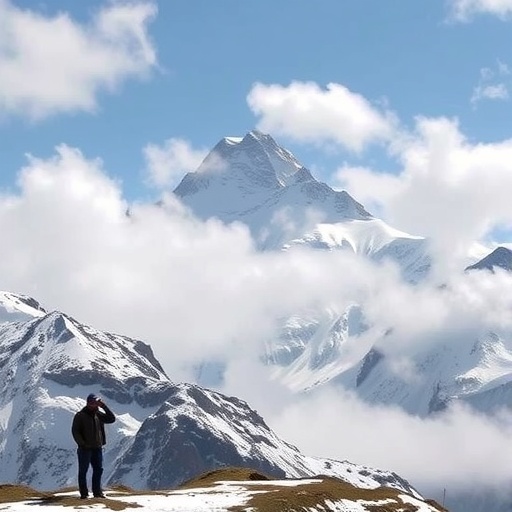
In a groundbreaking study that takes a closer look at air quality in one of the world’s most pristine regions, researchers from India have unveiled significant insights into the composition and sources of particulate matter in the Central Himalayas. The investigation focused on the physio-chemical characterization and source apportionment of particulate matter, revealing the intricate interplay between natural and anthropogenic influences on air quality within this ecologically sensitive area.
The Central Himalayas, with their majestic peaks and rich biodiversity, face increasing challenges from air pollution, which is influenced by both local and distant sources. The study examined air samples collected from key locations during a campaign period, providing a unique opportunity to analyze changes in particulate composition due to varying meteorological conditions and anthropogenic activities. The findings are vital for understanding how pollution affects not only local ecosystems but also global climate patterns.
Researchers employed advanced analytical techniques to characterize the particulate matter, focusing on components like black carbon, sulfates, and nitrates. These components were meticulously measured to determine their sources, revealing a complex mix of terrestrial and industrial contributions. By studying the elemental and chemical composition, the team was able to establish stronger links between specific activities—such as biomass burning, vehicular emissions, and industrial operations—and the observed pollution levels.
Through their investigation, the researchers identified different sizes of particulate matter, including PM2.5 and PM10. PM2.5, which poses significant health risks due to its ability to penetrate deep into the lungs and even enter the bloodstream, was found to have higher concentrations than previously reported in the region. The implications for public health are substantial, emphasizing the need for local governance to address air quality standards and implement mitigation strategies.
To elaborate, the study illustrated how atmospheric conditions such as wind patterns and temperature inversions play a crucial role in influencing particulate matter behavior. Days with lower wind speed and high humidity tended to exhibit more severe pollution events, trapping particulate matter close to the ground and exacerbating air quality issues. Conversely, windy days helped disperse the pollutants, illustrating the natural variability in air quality that communities in the Himalayas experience.
One of the noteworthy aspects of the study was its focus on seasonal variations. Researchers documented how different seasons bring varied sources of pollution. For instance, winter months coincided with increased wood burning for heating, which elevated black carbon levels significantly. In contrast, summer months showed elevated levels of dust from arid regions, illustrating the multifaceted nature of pollution in the Himalayas.
The study also yielded fascinating insights into the interplay between development and environmental conservation. As tourism and urbanization continue to grow, the demand for energy and resources has surged. This research provides critical data to policymakers who are tasked with striking a balance between economic development and environmental sustainability in the face of rising air pollution.
In addition to the immediate implications for public health and air quality management, the research raises broader questions about the potential long-term climatic effects driven by regional and global air pollution sources. The study suggests that particulate matter from industrial activities—located in lower altitudes or neighboring countries—could have far-reaching consequences, as they travel high into the Himalayas, affecting both the environment and local communities.
As awareness of environmental issues rises among the public and stakeholders, initiatives aimed at reducing particulate emissions and improving air quality are increasingly relevant. The researchers emphasized the importance of community engagement and education to drive change at the grassroots level. Sustainable practices, such as shifts towards cleaner energy sources, could help mitigate some of the adverse effects highlighted in their findings.
In closing, the study illuminates how interdisciplinary approaches can uncover critical data, further enhancing our understanding of regional environmental challenges. The researchers hope that their work will serve as a foundation for future studies that will delve deeper into the implications of air pollution for not only the Central Himalayas but also similar regions grappling with the dual pressures of climate change and human activity.
By conceptualizing air pollution not as an isolated phenomenon but as interconnected with broader ecological and socio-economic contexts, this research contributes significantly to the ongoing dialogue regarding sustainable development and environmental stewardship in sensitive areas. This work transcends mere observation; it demands action at all levels of society.
In summary, this campaign-based study serves as both a wake-up call and a means for future research directions. As the Central Himalayas stand at the crossroads of development and conservation, the findings underscore a critical need for policies that prioritize air quality and reflect the scientific understanding of the region’s complex environmental dynamics.
Cite Scienmag News
Russell Cooper. (November 22, 2025). Unveiling Particulate Matter Sources in Central Himalayas. Scienmag. https://scienmag.com/unveiling-particulate-matter-sources-in-central-himalayas/
Russell Cooper. "Unveiling Particulate Matter Sources in Central Himalayas." Scienmag, 22 November 2025, https://scienmag.com/unveiling-particulate-matter-sources-in-central-himalayas/. Accessed 4 September 2026.
Russell Cooper. "Unveiling Particulate Matter Sources in Central Himalayas." Scienmag. November 22, 2025. https://scienmag.com/unveiling-particulate-matter-sources-in-central-himalayas/


