


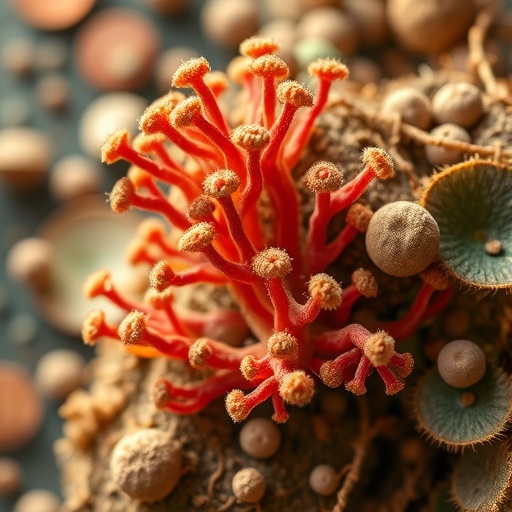
In an era where environmental sustainability is paramount, understanding the intricacies of microbial degradation of natural organic compounds has taken center stage. The latest research led by Ke, Z.W., Hsieh, C.L., and Liu, Y.Y., published in Environmental Science and Pollution Research, delves into the fascinating world of microbial communities thriving in activated sludge. The study employs advanced methodologies like 16S rRNA sequencing and mass spectrometry to characterize these communities, unveiling their pivotal roles in the bioremediation of environmental pollutants.
Activated sludge systems are central to wastewater treatment processes, where microorganisms play a significant role in breaking down organic matter. However, the complexities of microbial communities in these systems have long posed a challenge for researchers. The study sheds light on the composition and function of these microbial consortia, emphasizing their ability to degrade natural organic compounds efficiently. The research adds a significant layer of understanding to how these microorganisms interact, their metabolic pathways, and how they contribute to ecological balance.
Using 16S rRNA sequencing, the researchers were able to identify the various bacterial taxa present within the activated sludge. This molecular technique is revolutionary as it allows researchers to bypass the limitations of traditional culturing methods, revealing a plethora of microbial diversity that is often overlooked. The study illustrates how distinct microbial populations contribute uniquely to the degradation processes, potentially influencing the overall efficacy of wastewater treatment systems.
Mass spectrometry complemented the genetic work, providing a comprehensive analysis of the degradation products resulting from microbial metabolism. This powerful analytical tool allowed for the identification of specific compounds that are broken down into simpler molecules. Understanding these metabolic by-products is crucial, as they can impact downstream treatment processes and the quality of the effluent released into the environment. The combination of both methodologies offers a holistic view of microbial function within activated sludge, enabling a deeper exploration of these ecosystems.
One of the remarkable findings of this study is the identification of keystone species that play a crucial role in the degradation process. These microbial strains may dominate in specific environmental conditions, suggesting their potential for optimization in bioremediation strategies. By targeting these keystone organisms, future wastewater treatment efforts may become more efficient, leading to reduced operational costs and enhanced pollutant removal rates.
In addition to the technical findings, the study also touches on the implications for broader ecological systems. The degradation of natural organic compounds by these microbial communities can significantly influence nutrient cycling within aquatic ecosystems. Improved understanding of these interactions can assist in the development of more sustainable wastewater treatment solutions, contributing to the preservation of water quality in natural bodies of water.
The research comes at a crucial time when global attention is shifting toward environmental remediation. The escalating pollution levels pose serious threats to biodiversity and public health, making effective wastewater management imperative. By unlocking the molecular secrets of activated sludge microbial communities, this study not only informs current practices but also lays the groundwork for innovative solutions in environmental biotechnology.
The methodology used in this research underscores the importance of integrating molecular biology with analytical chemistry to unravel the complexities of environmental microbiology. As the fields of genomics and proteomics continue to evolve, the implications of such integrative approaches are vast. Future studies can build upon this foundation, potentially leading to the discovery of new microbial strains with enhanced degradation capacities or novel metabolic pathways that can be harnessed for biotechnological applications.
Continued research in this domain is vital. By studying the behavior of microbial communities under varying environmental conditions, researchers may find ways to enhance the resilience and efficacy of these natural systems. This could lead to the development of bioaugmentation strategies, where specific microbial populations are introduced to boost the degradation processes in activated sludge systems.
Moreover, this research opens the door to addressing the challenges posed by increasingly complex wastewater streams. As industrial processes evolve, so do the types of contaminants present in wastewater. The insights gained from characterizing microbial communities can aid in devising adaptive treatment strategies tailored to specific pollution profiles. This responsiveness is key to achieving environmental sustainability in industrial practices.
As we gaze into the future, it is clear that interdisciplinary collaboration will be essential in tackling the pressing environmental challenges of our time. By bridging the gap between microbiology, ecology, and engineering, researchers and practitioners can forge innovative pathways for sustainable wastewater management. The study highlights the necessity of such synergy, advocating for a holistic approach that acknowledges the interconnectedness of ecological systems.
The ongoing exploration of microbial communities in activated sludge has far-reaching implications. This research not only advances scientific understanding but also provides a practical roadmap for improving wastewater treatment practices globally. As awareness of environmental issues grows, so too does the urgency for innovative solutions, making this research a timely and significant contribution to the field.
In conclusion, the characterization of microbial communities degrading natural organic compounds through advanced sequencing and mass spectrometry techniques offers valuable insights into the functioning of activated sludge systems. As we continue to unravel the complexities of these microbial worlds, the potential for enhanced bioremediation strategies and sustainable wastewater management becomes increasingly attainable, echoing the urgent call for environmental stewardship in today’s world.
Ke, ZW., Hsieh, CL. & Liu, YY. Characterization of microbial communities degrading natural organic compounds in activated sludge through 16S rRNA sequencing and mass spectrometry.
Environ Sci Pollut Res (2025). https://doi.org/10.1007/s11356-025-37206-5
Cite Scienmag News
Morgan Morrow. (November 17, 2025). Unveiling Microbial Communities: Decomposing Organic Compounds. Scienmag. https://scienmag.com/unveiling-microbial-communities-decomposing-organic-compounds/
Morgan Morrow. "Unveiling Microbial Communities: Decomposing Organic Compounds." Scienmag, 17 November 2025, https://scienmag.com/unveiling-microbial-communities-decomposing-organic-compounds/. Accessed 4 September 2026.
Morgan Morrow. "Unveiling Microbial Communities: Decomposing Organic Compounds." Scienmag. November 17, 2025. https://scienmag.com/unveiling-microbial-communities-decomposing-organic-compounds/


