


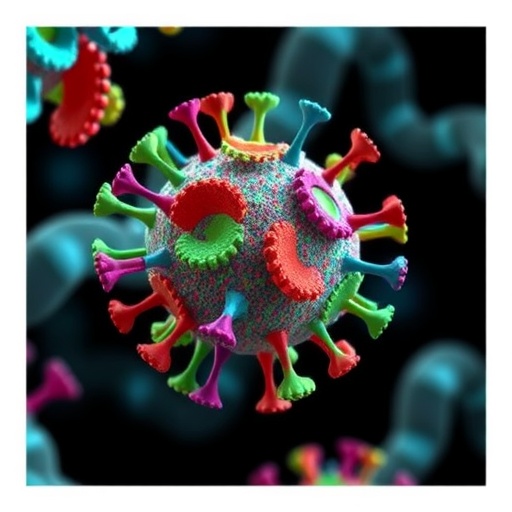
A groundbreaking study led by Gurunathan, R.S., Rajaram, A., and Chandrabose, S. presents compelling insights into the pH-dependent structural dynamics of the chikungunya virus (CHIKV) nsP2 protease, showcasing the potential for computational antiviral targeting strategies. This research offers a deeper understanding of the interplay between the viral protease and its environment, essential for developing targeted therapeutic approaches to combat CHIKV, a pathogen responsible for significant morbidity worldwide.
The chikungunya virus, a member of the Alphavirus genus, has resurfaced as a major global health threat due to its rapid transmission and debilitating symptoms. As such, understanding its molecular mechanisms is crucial for effective intervention strategies. The nsP2 protease plays a pivotal role in viral polyprotein processing, ultimately affecting viral replication. This specific protease has emerged as a key target for antiviral drug development, emphasizing the need for an intricate understanding of its structure and dynamics under varying pH conditions.
Recent advancements in computational biology and molecular dynamics simulations have paved the way for researchers to unravel the complexities of viral proteins. In this study, the team utilized these techniques to simulate the nsP2 protease’s behavior in different pH environments, providing valuable data on its structural integrity and catalytic efficacy. Their findings suggest that even slight changes in environmental pH can induce significant conformational changes in the protease, which may have profound implications for its function.
At varying pH levels, the nsP2 protease exhibited distinct structural configurations. The computational models illustrated that acidic conditions led to modifications in critical residues that are essential for protease activity. These conformational shifts can potentially impact the enzyme’s interactions with substrates and inhibitors, thus influencing viral replication rates. Such insights could inform the design of pH-sensitive inhibitors that remain effective across different physiological conditions, maximizing their therapeutic efficacy.
The research further highlights the potential for developing antiviral agents by targeting the nsP2 protease’s unique structural features. By leveraging the knowledge of how pH affects the protease’s function, scientists can devise molecules that exploit these vulnerabilities. This approach underscores the significance of structural biology in rational drug design, particularly against dynamic and adaptable viral targets like CHIKV.
In addition to providing a robust framework for antiviral drug discovery, the study opens avenues for future research. Understanding the pH-dependent behavior of viral proteases could lead researchers to explore other similar viral systems, fostering a broader impact in the field of virology and infectious diseases. Investigating how other viral proteins respond to environmental shifts could reveal generalized principles applicable to various viral pathogens, enhancing our overall capabilities in combating viral threats.
The implications of these findings extend beyond just the chikungunya virus. As researchers focus on the broader landscape of emerging infectious diseases, the methodologies and insights from this study may serve as a template for investigating other viruses with similar protease functions, including dengue and Zika viruses. This interconnectedness highlights the need for comprehensive approaches in antiviral research, fostering collaborations across disciplines to address global health challenges effectively.
Moreover, the study emphasizes the importance of interdisciplinary research in advancing our understanding of viral mechanisms. By combining computational simulations with experimental validation, researchers can cross-verify findings and enhance the reliability of their predictions. Such collaboration not only enriches the scientific inquiry but also drives innovation within drug development pipelines, highlighting the urgency of addressing unmet medical needs in infectious disease management.
Ultimately, the research by Gurunathan et al. represents a significant step forward in the quest to uncover the molecular underpinnings of CHIKV and delineate effective antiviral strategies. The findings underscore the nuance involved in viral biology and the critical role of environment in determining the behavior of viral components. With more studies like this, the scientific community may be well-equipped to tackle the challenges posed by evolving viral pathogens.
The work inspires hope for the development of better antiviral therapies and the establishment of a proactive stance against the chikungunya virus spikes in infection rates. In a world where viral threats loom large, the lessons learned from this research will undoubtedly shape the future landscape of virology and antiviral drug discovery. As we continue to grapple with emerging infectious diseases, understanding the precise molecular interactions and structural dynamics of viral proteins remains paramount.
Scientific endeavors like this provide the groundwork for next-generation therapeutics that can respond to the complexities of viral behavior and adaptation. By equipping ourselves with knowledge, we make strides in our battle against infectious diseases, emphasizing the importance of ongoing research and collaboration in the face of novel viral challenges.
In conclusion, the advancements in our understanding of the CHIKV nsP2 protease through computational modeling signify a promising horizon in antiviral research. The detailed structural insights and implications for drug targeting strategies herald a new era of informed, strategic approaches to combating viruses that threaten public health. As research continues to evolve, so too will our capacity to innovate and respond to the relentless threat of infectious diseases.
Gurunathan, R.S., Rajaram, A., Chandrabose, S. et al. Decoding pH-dependent structural dynamics of CHIKV nsP2 protease: insights from computational antiviral targeting. Mol Divers (2025). https://doi.org/10.1007/s11030-025-11343-y
Cite Scienmag News
Kristina Jarvis. (September 16, 2025). Unraveling pH’s Role in CHIKV nsP2 Protease Dynamics. Scienmag. https://scienmag.com/unraveling-phs-role-in-chikv-nsp2-protease-dynamics/
Kristina Jarvis. "Unraveling pH’s Role in CHIKV nsP2 Protease Dynamics." Scienmag, 16 September 2025, https://scienmag.com/unraveling-phs-role-in-chikv-nsp2-protease-dynamics/. Accessed 3 September 2026.
Kristina Jarvis. "Unraveling pH’s Role in CHIKV nsP2 Protease Dynamics." Scienmag. September 16, 2025. https://scienmag.com/unraveling-phs-role-in-chikv-nsp2-protease-dynamics/


