


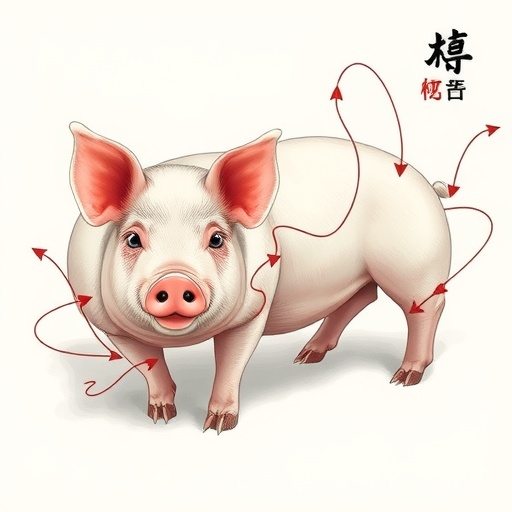
In a groundbreaking study, researchers have focused their attention on the Yangxin pig, a local breed renowned for its unique genetic traits. This research unveils a comprehensive exploration of genome-wide adaptive selection and the functional annotation of regulatory variations within this porcine population. The Yangxin pig thrives in the challenging environment of its native region, which has spurred the scientific curiosity that drives this investigation. By examining the genetic underpinnings of the Yangxin pig, the researchers aim to understand how these animals adapt to their ecological niche.
The Yangxin pig’s genetic diversity presents a rich tapestry for genomic studies, making it a prime candidate for investigating adaptive traits. The team of researchers, led by Liu, Chen, and Zhou, utilized advanced genomic techniques to map selective sweeps across the Yangxin pig genome. Selective sweeps indicate regions of the genome that have been positively selected in response to environmental pressures. Identifying these regions could unlock vital insights into the resilience of local breeds in the face of changing climate and agricultural practices.
In their analysis, the team employed whole-genome sequencing to capture the genetic architecture of the Yangxin pig population. This approach allows researchers to examine not only the genes responsible for phenotypic traits but also the regulatory elements that modulate gene expression. The identification of these regulatory variations lends invaluable information regarding the adaptive capabilities of the Yangxin pig under diverse environmental conditions.
The findings reveal several candidate genes linked to traits essential for survival and productivity. These genes were pinpointed through a combination of statistical models and bioinformatics tools, underscoring the importance of multidisciplinary approaches in modern genetic research. For instance, variations in genes associated with metabolism and stress response were found to be enriched in the Yangxin pig, indicating a potential evolutionary advantage over other breeds in similarly challenging environments.
Another significant facet of this research is the focus on functional annotation of regulatory variants. Regulatory regions of the genome do not code for proteins per se but play critical roles in controlling when, where, and how genes are expressed. By elucidating the functional roles of these regulatory variations, the researchers aim to create a comprehensive framework that links genetic variations to specific adaptive traits in the Yangxin pig.
The implications of this research extend beyond academic curiosity. Understanding adaptive traits in livestock species not only informs breeding strategies but also enhances efforts towards sustainable agriculture. As global food security becomes increasingly threatened by climate change, insights gained from this study could facilitate the development of resilient livestock breeds capable of thriving under new environmental stresses. For example, knowledge about the metabolic traits enhanced by specific genomic variations could empower breeding programs to select for pigs that show improved efficiency in resource utilization.
Moreover, the regulatory variations identified in this research highlight the intricate web of interactions between genes and the environment. As climate conditions shift, the ability of livestock to adapt may significantly affect food production systems globally. This research presents a compelling argument for integrating genetic studies into agricultural practices, providing a pathway to harness genetic diversity for the future resilience of livestock.
The scientists also emphasize the significance of maintaining genetic diversity in livestock populations. The Yangxin pig, with its rich genomic make-up, serves as a focal point for conservation efforts targeting local breeds. Preserving genetic diversity not only safeguards against the loss of unique traits but also offers valuable genetic resources for future breeding endeavors. Such initiatives align with broader goals of biodiversity conservation and sustainability in food production.
As the research progresses, the team plans to delve deeper into the functional genomics of the Yangxin pig, exploring the gene-environment interactions that contribute to its adaptive features. Future studies may employ sophisticated genomic editing techniques, such as CRISPR, to further investigate the role of identified regulatory elements in shaping phenotypic outcomes. The excitement around these prospects continues to grow, as scientists envision innovative strategies to bolster the resilience of livestock through precise genomic interventions.
The study also holds promise for cross-species comparisons, as the knowledge gained from the Yangxin pig’s genome can be applied to other livestock breeds facing similar environmental challenges. By mapping adaptive traits across different species, researchers can uncover universal mechanisms of resilience that transcend individual breeds, ideally paving the way for a holistic understanding of livestock adaptation.
In conclusion, the ongoing research into the genome-wide adaptive selection within the Yangxin pig showcases the potential of modern genomics to unravel the complexities of adaptation in livestock. By focusing on both genetic variation and regulatory mechanisms, this study not only elevates the understanding of the Yangxin pig’s resilience but also sets a precedent for further research aimed at sustaining and enhancing livestock production in an era of climate uncertainty. The knowledge and methodologies established in this research could significantly reshape livestock breeding, informing strategies that prioritize both productivity and adaptability while contributing to the broader objectives of environmental sustainability and agricultural resilience.
As this research gains traction in gene-editing discussions and livestock management strategies, it underscores the critical link between genetic investigation and practical agricultural applications. The Yangxin pig serves as a case study, demonstrating how local breeds can embody the wealth of genetic potential needed in our fight for food security and sustainability.
Liu, S., Chen, Q., Zhou, H. et al. Genome-wide adaptive selection and functional annotation of regulatory variation in the Yangxin pig.
BMC Genomics (2025). https://doi.org/10.1186/s12864-025-12364-5
Cite Scienmag News
Juliet Wilcox. (November 26, 2025). Unraveling Gene Regulation in Yangxin Pigs. Scienmag. https://scienmag.com/unraveling-gene-regulation-in-yangxin-pigs/
Juliet Wilcox. "Unraveling Gene Regulation in Yangxin Pigs." Scienmag, 26 November 2025, https://scienmag.com/unraveling-gene-regulation-in-yangxin-pigs/. Accessed 4 September 2026.
Juliet Wilcox. "Unraveling Gene Regulation in Yangxin Pigs." Scienmag. November 26, 2025. https://scienmag.com/unraveling-gene-regulation-in-yangxin-pigs/


