


Bipolar disorder (BD) has long been recognized as a complex and debilitating mental health condition characterized by cycling episodes of depression and mania, profoundly affecting millions worldwide. Despite decades of research, the biological underpinnings of BD remain enigmatic, with its neuropathology largely unexplored in detail. Recent groundbreaking research from a Japanese team led by Professor Tadafumi Kato at Juntendo University Graduate School of Medicine offers compelling new insights into the potential neurodegenerative mechanisms underlying BD, thereby challenging traditional paradigms that primarily view BD as a purely psychiatric disorder.
In a comprehensive postmortem study, the research group focused their efforts on two critical brain regions: the paraventricular thalamus and the medial temporal lobe, including the hippocampus. These regions are heavily implicated in mood regulation and cognitive processes, both of which are profoundly disrupted in BD. Utilizing advanced immunohistochemical techniques, the team meticulously analyzed human brain tissue samples for a spectrum of neurodegenerative protein markers that have been extensively studied in neurodegenerative diseases such as Alzheimer’s and Parkinson’s.
Among the proteins examined were phosphorylated tau, amyloid β, α-synuclein, and TDP-43, all of which have been historically linked to the pathogenesis of various neurodegenerative disorders. The researchers also probed markers associated with granulovacuolar degeneration (GVD), a cellular pathology involving the formation of intraneuronal vacuoles that has been hypothesized to reflect underlying cellular stress and dysfunction. Notably, the proteins CHMP2B and casein kinase 1 delta (CK-1δ), linked with GVD, were evaluated in depth to assess their presence and distribution within these brain regions.
The findings from this investigation unveiled a remarkably higher burden of neurofibrillary tangles (NFTs), a hallmark of tauopathy commonly observed in Alzheimer’s disease, in the brains of individuals with BD compared to controls. This elevated NFT stage correlated with increased argyrophilic grain pathology, another tau-associated lesion, implying that tau protein abnormalities extend beyond classical neurodegenerative disease contexts into psychiatric disorders. These tau-related pathologies appeared to be associated with the age of onset of BD, suggesting a convergence of neurodegenerative mechanisms with clinical manifestations.
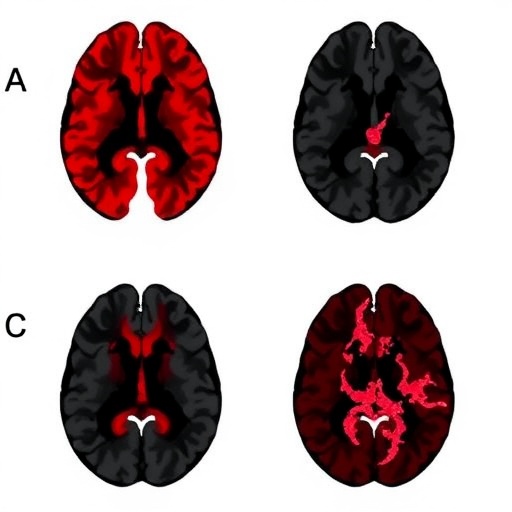
Perhaps most striking was the unprecedented observation of abundant CHMP2B-positive GVD within the paraventricular thalamus in approximately half of the BD cases studied. This finding represents a novel neuropathological signature for BD, as GVD has not been previously reported to be as prominent in this brain region within the context of bipolar pathology. The paraventricular thalamic nucleus has emerged in preclinical models as a critical hub in mood regulation circuits, and its dysfunction could feasibly contribute to the mood instability characteristic of BD.
These results collectively underscore a paradigm shift in our understanding of BD, highlighting the involvement of neurodegenerative protein accumulation and cellular pathological processes in brain regions integral to mood and cognition. By elucidating these specific proteinopathies, the study bridges the gap between clinical psychiatric symptomatology and underlying neuropathology, reinforcing the notion that BD is fundamentally a brain-based disorder with tangible biological substrates.
The implications of these discoveries extend far beyond academic interest. Identifying molecular and cellular markers specific to BD pathophysiology holds tremendous promise for the development of diagnostic biomarkers that could facilitate earlier and more accurate disease detection. Furthermore, targeted therapeutic strategies aimed at mitigating tau pathology or modulating GVD processes may offer novel avenues to arrest or reverse the progression of BD, moving treatment paradigms from symptomatic management toward addressing root causes.
Professor Kato emphasizes the importance of these findings, noting that the presence of CHMP2B-positive GVD and higher NFT stages introduces potential targets for both diagnostics and therapeutics. The study’s revelations advocate for intensified research efforts focused on the neuropathological aspects of BD, embracing neurodegenerative frameworks to augment current psychiatric understanding.
This study also highlights the critical role of advanced neuroimaging and molecular pathology techniques in uncovering subtle yet significant alterations within the brain’s microenvironment in psychiatric illness. By integrating postmortem histological analyses with emerging in vivo imaging biomarkers, future investigations could establish correlations between neuropathological burden and clinical presentation, enabling personalized treatment approaches.
Moreover, these insights contribute to a growing recognition that mitochondrial dysfunction, previously hypothesized by Prof. Kato as central to BD pathophysiology, may intersect with pathways leading to protein aggregation and neuronal degradation. The interplay among mitochondrial health, protein clearance mechanisms, and neuronal integrity warrants further exploration to unravel the complex pathogenic cascades in BD.
As the field advances, early detection strategies leveraging these molecular markers could transform clinical practice, allowing interventions at prodromal stages of BD before extensive neuronal damage accrues. Such breakthroughs align with precision medicine goals, tailoring treatments based on individual neuropathological profiles rather than broad symptom categories.
In conclusion, this pioneering work by the Japanese research team represents a significant leap forward in BV research by establishing a clear linkage between neurodegenerative protein accumulation and the neuropathology of bipolar disorder. Through meticulous examination of human brain tissue, they have uncovered novel biomarkers such as CHMP2B-positive granulovacuolar degeneration in the paraventricular thalamus and affirmed the presence of tau-related pathology, thus reshaping the narrative around BD’s biological foundations. These advances promise to catalyze innovative diagnostic and therapeutic strategies that address the disorder’s core biological abnormalities, heralding a new era in the fight against bipolar disorder.
News Publication Date: 2-Sep-2025
Web References: https://dx.doi.org/10.1111/pcn.13891
References:
Nagakura, A., Kawakami, I., Kimura, A., Ikeda, K., Oshima, K., Kubota-Sakashita, M., & Kato, T. (2025). Increased Granulovacuolar Degeneration in Thalamus and Higher Neurofibrillary Tangle Braak Stages in Bipolar Disorder. Psychiatry and Clinical Neurosciences. https://doi.org/10.1111/pcn.13891
Cite Scienmag News
Diana Fleming. (September 3, 2025). Unraveling Bipolar Disorder: Neurodegeneration in the Paraventricular Thalamus Links Symptoms to Biology. Scienmag. https://scienmag.com/unraveling-bipolar-disorder-neurodegeneration-in-the-paraventricular-thalamus-links-symptoms-to-biology/
Diana Fleming. "Unraveling Bipolar Disorder: Neurodegeneration in the Paraventricular Thalamus Links Symptoms to Biology." Scienmag, 3 September 2025, https://scienmag.com/unraveling-bipolar-disorder-neurodegeneration-in-the-paraventricular-thalamus-links-symptoms-to-biology/. Accessed 3 September 2026.
Diana Fleming. "Unraveling Bipolar Disorder: Neurodegeneration in the Paraventricular Thalamus Links Symptoms to Biology." Scienmag. September 3, 2025. https://scienmag.com/unraveling-bipolar-disorder-neurodegeneration-in-the-paraventricular-thalamus-links-symptoms-to-biology/


