


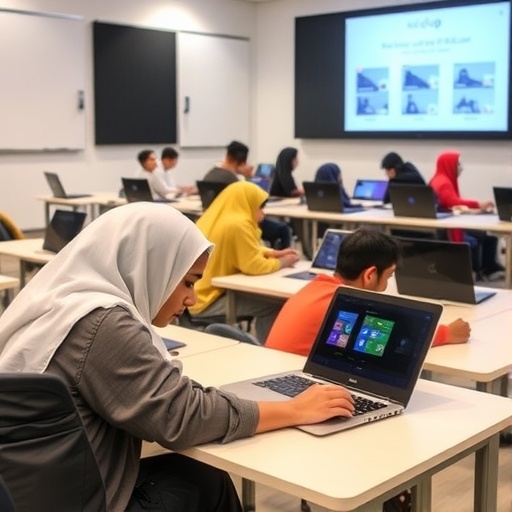
In a rapidly evolving educational landscape, the integration of technology in classrooms presents both opportunities and challenges. A recent study conducted by Alshehhi and Eryilmaz provides a nuanced understanding of the pedagogical and relational dimensions associated with laptop use in schools across Abu Dhabi. This innovative research, set to be published in 2026, highlights the significance of personal relationships and teaching methodologies in the effective use of laptops as educational tools, a topic that resonates with educators globally.
Over the past decade, laptops have become ubiquitous in educational settings, particularly in regions aiming to modernize their school systems. As these devices become more integrated into the pedagogical framework, the need to understand their impact on learning and interpersonal relationships in classrooms cannot be overstated. The study by Alshehhi and Eryilmaz dives deep into these dimensions, offering fresh insights into how technological devices can both facilitate and hinder educational experiences.
One key aspect explored in the research is the pedagogical effectiveness of laptops in enhancing student engagement and learning outcomes. The authors argue that the mere presence of technology does not guarantee improved educational results. Instead, they emphasize the importance of strategic implementation and clear pedagogical goals. Teachers play a crucial role in this process, as their ability to integrate technology in a meaningful way is directly linked to students’ success. This finding aligns with existing literature, which stresses the necessity of professional development for educators to adapt to new technological tools.
In addition to pedagogical aspects, the relational dynamics in classrooms where laptops are used heavily are a focal point of the study. Depending on how technology is integrated, teachers may find that laptops can either foster a collaborative environment or create barriers to interaction. The findings suggest that when teachers utilize laptops to promote collaboration—such as through group projects or interactive learning experiences—students report higher satisfaction and deeper learning. Conversely, the study notes that excessive focus on individual tasks may diminish the opportunities for social interaction, crucial for developing interpersonal skills.
Furthermore, the researchers highlight the contextual factors that influence the adoption and use of laptops in Abu Dhabi schools. The educational policies in the region, alongside cultural attitudes towards technology, play a significant role in shaping the experiences of both educators and students. The study reveals that in schools where there is strong administrative support for technology integration, teachers feel more empowered to explore innovative teaching practices. This indicates that successful implementation of laptops in education cannot merely be a top-down mandate; it requires a collaborative culture that values individual teacher input and student feedback.
The study also examines the impact of gender and socioeconomic status on the effectiveness of laptop use in learning environments. It surfaces critical questions about equity in educational technology. For example, do male and female students interact differently with technology in the learning process? Are there disparities in access to technology that affect educational outcomes? By addressing these issues, the research encourages a broader dialogue on inclusivity in educational technology, urging stakeholders to consider how tools like laptops can be utilized to bridge gaps rather than exacerbate them.
Another vital inclusion in the research is the impact of students’ personal relationships on their learning experiences with laptops. The findings suggest that when students learn collaboratively, leveraging each other’s strengths and weaknesses, they are more likely to embrace the learning opportunities presented by technology. Creating spaces where students can connect socially through the medium of technology can enhance the overall educational experience, making learning more fun and engaging. However, the study warns of the isolation that can occur when students become too engrossed in their screens, detaching them from the social fabric of the classroom.
As the authors dissect these dimensions of laptop use, they further investigate the professional development needs of educators. Continuous training is essential for teachers to not only understand the technical aspects of laptops but also to grasp how these devices can be effectively used in teaching. The research highlights several successful professional development programs that have empowered educators to incorporate technology seamlessly into their lesson plans, resulting in more dynamic teaching and enhanced student engagement. In doing so, it underscores the importance of adaptive learning technologies that evolve alongside educator professional development.
The qualitative nature of the study includes firsthand accounts from both students and educators, adding depth to the analysis. Interviews conducted reveal a spectrum of attitudes towards laptop use in the classroom—while many students appreciate the accessibility of information and interactive features, others express concern about distractions and the importance of face-to-face communication. Educators echoed these sentiments, with some praising the potential for innovation that laptops offer, while others warned against the pitfalls of over-reliance on technology as a sole instructional tool.
Moreover, Alshehhi and Eryilmaz call for a reexamination of assessment methods in light of laptop integration. They argue that traditional assessment techniques may not adequately capture the diverse learning experiences made possible through technology. New forms of assessment are necessary—ones that recognize collaborative projects and digital literacy as vital skills. This perspective aligns with global education reform trends advocating for skills that prepare students for a digital world.
In light of these findings, the study concludes with a set of recommendations for policymakers, educators, and administrators. It urges a holistic approach to technology integration, one that prioritizes pedagogical alignment, relational dynamics, and equitable access. The authors advocate for ongoing dialogue among stakeholders to address challenges and leverage opportunities presented by educational technology, ensuring that the incorporation of laptops serves the diverse needs of all students.
The implications of this research extend far beyond the confines of Abu Dhabi schools. Globally, educators are grappling with similar questions regarding the role of technology in their classrooms. As schools increasingly rely on devices to facilitate learning, understanding the relational and pedagogical dimensions of this integration will be pivotal for enhancing teacher effectiveness and student outcomes. Just as technology evolves, so too must educational practices, ensuring that innovation serves as a tool for enriched learning rather than a barrier to meaningful interaction.
Ultimately, the work of Alshehhi and Eryilmaz offers essential insights into the future of education in a technology-driven world. Education is not solely about imparting knowledge; it is about cultivating lifelong learners capable of thriving in an interconnected, digital society. With thoughtful consideration of the findings presented in this study, educators and policymakers will be better equipped to harness the power of technology to foster enriched learning experiences for all students, contributing to a more equitable and effective education system.
Alshehhi, H., Eryilmaz, N. Understanding pedagogical and relational dimensions of laptop use in Abu Dhabi schools.
Discov Educ (2026). https://doi.org/10.1007/s44217-026-01100-0
Cite Scienmag News
Courtney Benton. (January 24, 2026). Unpacking Laptop Use in Abu Dhabi Classrooms. Scienmag. https://scienmag.com/unpacking-laptop-use-in-abu-dhabi-classrooms/
Courtney Benton. "Unpacking Laptop Use in Abu Dhabi Classrooms." Scienmag, 24 January 2026, https://scienmag.com/unpacking-laptop-use-in-abu-dhabi-classrooms/. Accessed 4 September 2026.
Courtney Benton. "Unpacking Laptop Use in Abu Dhabi Classrooms." Scienmag. January 24, 2026. https://scienmag.com/unpacking-laptop-use-in-abu-dhabi-classrooms/


