


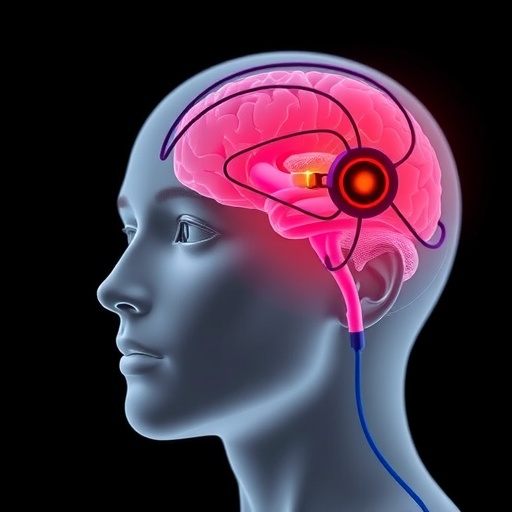
In a landmark achievement for the field of neurotechnology, neurosurgeons at the University of Michigan Health have successfully completed the first human implantation of the Paradromics Connexus wireless brain-computer interface (BCI). This groundbreaking procedure, executed as part of a national early feasibility clinical trial, marks a significant advancement toward restoring communication for individuals afflicted with motor neuron diseases that impair speech. The Connexus BCI system, designed to facilitate direct brain-to-computer interaction, offers new hope to patients who have lost the ability to speak due to debilitating neurological conditions.
The implantation was skillfully performed by Dr. Matthew Willsey, a neurosurgeon and biomedical engineer, alongside Dr. Aditya S. Pandey, Chair of the Department of Neurosurgery at the University of Michigan. The recipient of the device, a Michigan woman suffering from motor neuron disease, now participates in the Connect-One Early Feasibility Study (EFS). This clinical trial aims primarily to evaluate the long-term safety of the Connexus BCI, with secondary objectives focused on its efficacy in restoring functional communication through synthesized speech and text, as well as enabling computer control via neural signals.
Central to the Connexus system’s design is its fully wireless and implantable architecture, distinguishing it from many other BCIs currently under investigation. The device houses an array of 421 microelectrodes that interface directly with individual neurons in the cerebral cortex, capturing high-resolution electrophysiological data. Signals detected by these electrodes are transmitted wirelessly to a chest-implanted transceiver, which then relays the encoded information to an external receiver. This wireless configuration eliminates the need for cumbersome wired connections, significantly enhancing user comfort, mobility, and device longevity.
This breakthrough builds on prior research efforts, including a temporary implantation performed in June 2025 by Dr. Willsey and Dr. Oren Sagher at the University of Michigan, focusing on epilepsy patients. The earlier study confirmed the device’s ability to be safely positioned within the brain and effectively record neuronal activity. Encouraged by these results, the U.S. Food and Drug Administration granted Paradromics an Investigational Device Exemption in November 2025, authorizing the commencement of the Connect-One clinical trial across three enrollment sites nationwide, including Michigan Medicine.
The Connexus BCI represents a synthesis of decades of intracortical brain-computer interface research. By integrating advanced microelectrode arrays with a novel wireless communication system, it seeks to overcome traditional limitations related to patient comfort and device durability. The system’s neural decoding algorithms are designed to interpret complex brain signals with high fidelity, enabling users to convert thoughts into synthesized speech or computer commands—thus re-establishing their ability to communicate effectively and regain autonomy despite severe motor impairments.
Paradromics CEO and founder Dr. Matt Angle emphasizes the transformative potential of the Connexus system: “Our goal is to restore natural communication for those who have lost the ability to speak, allowing them to maintain meaningful connections with their loved ones. Partnering with University of Michigan Health for this first-in-human trial lays the foundation for the next generation of clinically viable BCIs, poised to redefine therapeutic options for paralysis and other neurological conditions.”
Patients enrolled in the study will undergo comprehensive monitoring for up to six years post-implantation, encompassing routine assessments of device functionality, neurological status, and quality of life metrics. The participant will also continue receiving specialized care at the Stanford Morris ALS Clinic at University of Michigan Health, ensuring integrated clinical support that addresses both the underlying motor neuron disease and emerging neurotechnological interventions.
Motor neuron diseases, including amyotrophic lateral sclerosis (ALS) and primary lateral sclerosis (PLS), progressively disrupt the neural circuits controlling voluntary muscle movement, often culminating in complete loss of speech and motor function. Preserving communication is paramount to maintaining social connection and quality of life for affected individuals. Wireless BCIs such as Connexus underscore a critical research frontier, aiming to provide non-invasive, durable, and user-friendly solutions for communication restoration.
Dr. Stephen Goutman, Director of the Stanford Morris ALS Clinic, highlights the clinical importance of this development: “Maintaining communication capabilities is essential for patients diagnosed with motor neuron diseases. The partnership with Dr. Willsey and the neurosurgical team is instrumental in translating these cutting-edge devices from laboratory concepts into transformative clinical tools, enhancing patient independence and well-being.”
Beyond clinical application, the University of Michigan has inaugurated a dedicated Brain-Computer Interface Clinic under Dr. Willsey’s leadership in 2025, highlighting the institution’s commitment to advancing neurotechnology research and patient care. Dr. Willsey’s lab continues to innovate next-generation BCI platforms, sponsoring additional clinical trials investigating novel devices aimed at restoring both movement and communication in patients with severe neurological impairments.
Dr. Oren Sagher, Director of Functional Neurosurgery at U-M Health, underscores the paradigm shift underway: “Rapid advancements in brain-computer interfaces and neuromodulation are revolutionizing neurological treatment possibilities. Our mission as clinician-scientists is to ensure patients receive the most innovative, effective therapies, reinforcing Michigan Medicine’s position as a global leader defining the future of neuroscience and neurosurgical care.”
Michigan Medicine, as part of the University of Michigan’s extensive medical enterprise, integrates cutting-edge research and clinical excellence across multiple hospitals and specialty centers. The institution leads numerous biomedical research initiatives, receiving over $800 million in annual funding, and is uniquely positioned to translate pioneering technologies like the Connexus BCI from experimental concepts into meaningful patient therapies.
This first-in-human trial not only exemplifies the convergence of engineering, neuroscience, and clinical medicine but also represents a beacon of hope for millions affected by neurodegenerative diseases. As wireless brain-computer interfaces progress from experimental tools to clinical realities, the prospect of restoring voice and agency to individuals silenced by disease is rapidly moving within reach.
News Publication Date: Not specified
Web References:
– Paradromics Product: https://www.paradromics.com/product
– Connect-One Clinical Trial: https://clinicaltrials.gov/study/NCT07357428
– University of Michigan News Release on Temporary Implantation: https://www.michiganmedicine.org/news-release/university-michigan-team-leads-first-human-recording-new-wireless-brain-computer-interface
– University of Michigan Brain-Computer Interface Clinic: https://www.uofmhealth.org/our-care/specialties-services/brain-computer-interface-bci-clinic
– Willsey Lab: https://www.willseylab.org/
Cite Scienmag News
Cassandra Pierce. (June 17, 2026). University of Michigan Achieves First-in-Human Implantation of Paradromics Wireless Brain-Computer Interface to Restore Communication. Scienmag. https://scienmag.com/university-of-michigan-achieves-first-in-human-implantation-of-paradromics-wireless-brain-computer-interface-to-restore-communication/
Cassandra Pierce. "University of Michigan Achieves First-in-Human Implantation of Paradromics Wireless Brain-Computer Interface to Restore Communication." Scienmag, 17 June 2026, https://scienmag.com/university-of-michigan-achieves-first-in-human-implantation-of-paradromics-wireless-brain-computer-interface-to-restore-communication/. Accessed 3 September 2026.
Cassandra Pierce. "University of Michigan Achieves First-in-Human Implantation of Paradromics Wireless Brain-Computer Interface to Restore Communication." Scienmag. June 17, 2026. https://scienmag.com/university-of-michigan-achieves-first-in-human-implantation-of-paradromics-wireless-brain-computer-interface-to-restore-communication/


