


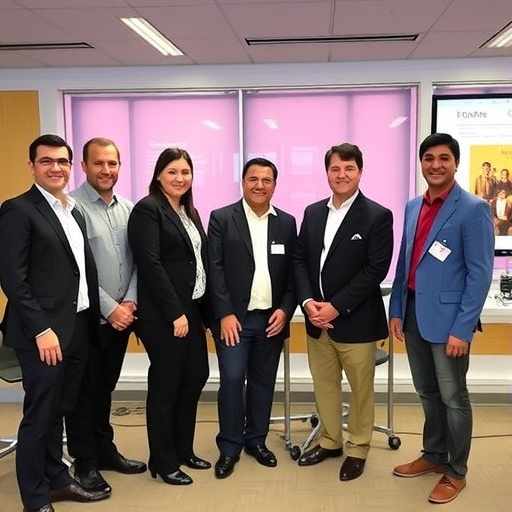
University Hospitals and Case Western Reserve University School of Medicine have awarded six research teams $50,000 each through the 2026 Collaborative Science Pilot Awards, an initiative designed to accelerate early-stage discoveries while pairing emerging investigators with established scientific leaders. The program, launched in 2023, has now supported 14 research teams through a total investment of $700,000. This year’s projects span nerve regeneration, treatment-resistant breast cancer, prostate cancer toxicity, preterm birth, Alzheimer’s disease and advanced lung imaging—fields linked by a common goal: turning interdisciplinary laboratory insights into technologies and treatments that could eventually change patient care.
The awards are intended to provide researchers with the preliminary evidence needed to compete for larger grants, while creating mentoring relationships that can shape long-term scientific careers. Daniel I. Simon, MD, President of Academic and External Affairs and Chief Scientific Officer at University Hospitals, described the program as an investment in both innovative science and the partnerships required to make breakthroughs possible. Stanton L. Gerson, MD, Dean and Senior Vice President for Medical Affairs at the Case Western Reserve University School of Medicine, emphasized that transformative advances often emerge when investigators combine different forms of expertise, perspectives and experience. The selected teams reflect that model, bringing together clinicians, biomedical engineers, molecular scientists, imaging specialists and computational researchers.
One project will investigate whether electrical stimulation can improve the integration of stem cell-derived spinal motor neurons into damaged peripheral nerves. Nerve injuries are difficult to repair because spinal motor neuron axons regenerate slowly, while muscles deprived of nerve input can undergo progressive and irreversible degeneration. A surgical procedure known as nerve transfer can redirect a nearby healthy nerve to the damaged muscle, but it sacrifices a donor nerve and is not suitable for every patient. Neurosurgeon Stanley Bazarek, MD, PhD, and biomedical engineer Andrew Shoffstall, PhD, will test an alternative approach involving the transplantation of stem cell-derived motor neurons directly within a nerve near the target muscle. Electrical stimulation will be evaluated as a way to encourage axonal growth and strengthen neuromuscular junction formation. If successful, the strategy could lead to a percutaneous cell-based therapy for functional recovery after peripheral nerve or spinal cord injury.
A second team is targeting a biological survival mechanism in endocrine therapy-resistant breast cancer. Estrogen receptor-positive, HER2-negative tumors are frequently treated with endocrine drugs and CDK4/6 inhibitors, yet residual cancer cells can survive treatment and later seed recurrence. These therapy-exposed cells often enter a senescent-like state, in which they stop dividing but remain metabolically active and capable of influencing their surroundings. Akihiro Yoshida, PhD, and Bill Schieman, PhD, will examine whether the enzyme glutaminase 1, or GLS1, becomes essential for the survival of these cells. GLS1 helps convert glutamine into metabolites that support energy production and biosynthesis. The researchers will test a clinically relevant GLS1 inhibitor in models of localized and disseminated residual disease, seeking evidence that selective “senolysis”—the removal of senescent-like cells—could prevent breast cancer recurrence after endocrine therapy.
Another award addresses why some men develop severe urinary problems after radiotherapy for localized prostate cancer while others experience little lasting toxicity. Radiation can damage the urinary tract, but the biological factors that determine individual susceptibility remain poorly understood. Radiation oncologists Soumyajit Roy, MD, and Daniel Spratt, MD, together with Doug Brubaker, PhD, will conduct a prospective pilot study tracking patients before and after curative-intent prostate radiotherapy. The investigators will analyze changes in the urinary microbiome, microbial and host-derived metabolites, inflammatory cytokines and proteins carried in urinary extracellular vesicles. These vesicles act as molecular packages released by cells and may provide early indicators of tissue stress or injury. By integrating microbiome science, metabolomics, systems immunology and computational biology, the team hopes to identify molecular signatures that predict genitourinary toxicity. Such markers could eventually guide personalized radiation planning and supportive care.
A fourth project focuses on the molecular mechanisms that keep the uterus relaxed during pregnancy and may offer new clues about preventing preterm birth. Progesterone suppresses uterine contractions and is essential for maintaining pregnancy, but researchers do not fully understand how its signals preserve uterine quiescence or why that protection sometimes fails. Patrick Ose-Owusu, PhD, Emily Hamburg-Shields, MD, PhD, and Sam Mesiano, PhD, will investigate the role of RGS2, a regulatory protein that controls signaling through G-protein-coupled receptors. These receptors transmit hormonal and neurological signals into cells, and RGS2 can act as a molecular brake by shortening the duration of those signals. The researchers will determine whether progesterone uses RGS2 to reduce contractile responses in uterine smooth muscle. The work could identify a new therapeutic pathway for delaying labor, particularly because current interventions, including progesterone treatment and cervical cerclage, have limited effectiveness and cannot reliably predict who will deliver prematurely.
The fifth study explores whether Alzheimer’s disease may begin, in part, in the peripheral tissues responsible for smell. Loss of olfactory function often appears years before measurable cognitive decline, but the biological significance of that early symptom remains uncertain. Jennifer Villwock, MD, Ron Yu, PhD, and Ruben Stepanyan, PhD, will examine the olfactory epithelium and olfactory sensory neurons in established mouse models of Alzheimer’s disease. Their central hypothesis is that mitochondrial dysfunction and inflammation may arise in these tissues before pathological changes become prominent in the olfactory bulb and other brain regions. Mitochondria generate cellular energy, and their failure can increase oxidative stress, disrupt neuronal signaling and activate inflammatory pathways. Using focused ion beam scanning electron microscopy and deep-learning-based image analysis, the team will compare cellular structures and molecular markers across the olfactory system. The findings could support new disease-modifying strategies, including intranasal therapies designed to act through the olfactory epithelium.
The final project will test magnetic resonance fingerprinting as a noninvasive method for distinguishing benign from malignant lung nodules. More than 1.57 million pulmonary nodules are detected in the United States each year, often during CT scans performed for unrelated reasons. Current care may require repeated imaging over months or invasive biopsies, exposing patients to radiation, procedural risks, cost and prolonged uncertainty. Magnetic resonance fingerprinting, pioneered through work at University Hospitals and Case Western Reserve University, records the changing response of tissue during a deliberately varied MRI sequence. Instead of producing only conventional images, the technique generates quantitative maps of multiple tissue properties, such as relaxation times and water behavior. Atallah Baydon, MD, PhD, Daniel Herzka, PhD, Yong Chen, PhD, Sree Tirumani, MD, and Pranshu Mohindra, MD, will adapt the method for lung imaging and compare its quantitative biomarkers with CT findings and diagnostic pathology. The goal is a more precise, noninvasive approach to nodule classification.
Together, the six studies illustrate how small, strategically targeted awards can connect clinical problems with experimental technologies. Their approaches range from cell transplantation and neuromodulation to metabolic drug targeting, molecular biomarker discovery, advanced microscopy and quantitative MRI. None of the projects is presented as an immediate clinical treatment; each is designed to generate the proof-of-concept data required for larger investigations. That progression is crucial in biomedical research, where promising mechanisms must be tested across carefully controlled models and patient cohorts before they can influence standard care. The program also gives early-career investigators direct experience in collaborative study design, mentoring and grant development, strengthening the research ecosystem at both institutions. University Hospitals and Case Western Reserve University say the resulting partnerships are intended to move discoveries more rapidly toward meaningful patient impact while building the next generation of independent research leaders.
Web References: University Hospitals: https://www.uhhospitals.org/ ; Case Western Reserve University School of Medicine: https://case.edu/medicine/
Cite Scienmag News
Ophelia Keating. (August 18, 2026). University Hospitals, Case Western Fund Six Teams Through 2026 Collaborative Science Awards. Scienmag. https://scienmag.com/university-hospitals-case-western-fund-six-teams-through-2026-collaborative-science-awards/
Ophelia Keating. "University Hospitals, Case Western Fund Six Teams Through 2026 Collaborative Science Awards." Scienmag, 18 August 2026, https://scienmag.com/university-hospitals-case-western-fund-six-teams-through-2026-collaborative-science-awards/. Accessed 5 September 2026.
Ophelia Keating. "University Hospitals, Case Western Fund Six Teams Through 2026 Collaborative Science Awards." Scienmag. August 18, 2026. https://scienmag.com/university-hospitals-case-western-fund-six-teams-through-2026-collaborative-science-awards/


