Universities are often thought of as engines of knowledge, but they are also small cities in their own right. Tens of thousands of students and staff commute daily, lecture halls burn electricity around the clock, laboratories consume energy-intensive equipment, and canteens, dormitories and data servers add their own layers of demand. A new open-access study published in Discover Sustainability has now quantified, in unusual detail, exactly where a large university’s environmental burden lies and, crucially, what can realistically be done about it. The research, led by Iker Etxano of the University of the Basque Country (EHU) together with a broad interdisciplinary team, combines two powerful analytical tools that rarely meet in institutional sustainability planning: Life Cycle Assessment and Multiple Criteria Decision Analysis. The result is a replicable roadmap that other higher education institutions around the world could follow to cut their environmental footprint without relying on guesswork.
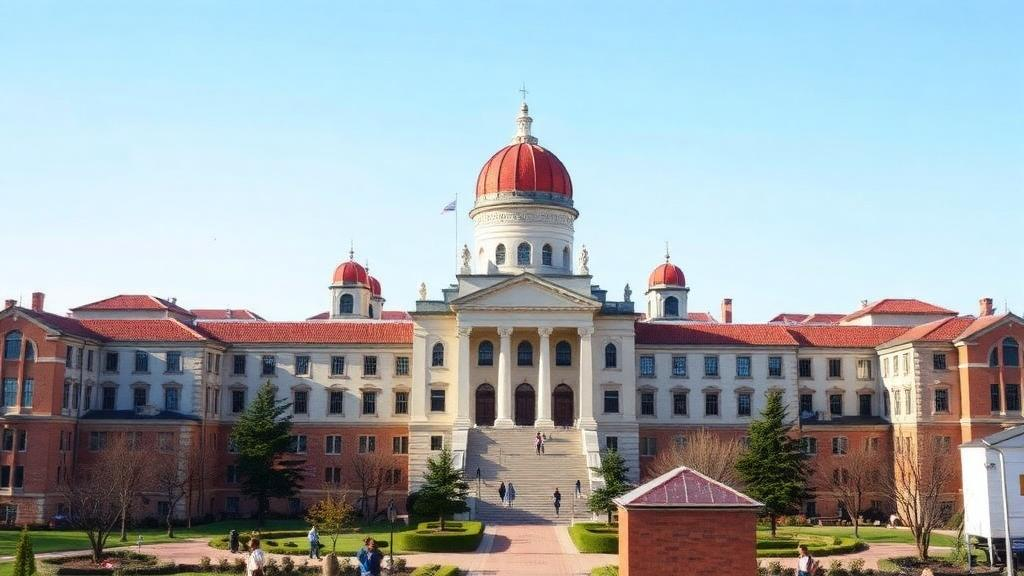
The case study institution, the University of the Basque Country, is one of Spain’s largest public universities, with campuses spread across Bilbao, San Sebastian and Vitoria-Gasteiz. That geographic dispersion matters enormously for environmental accounting, because it multiplies commuting, building operations and logistics. Rather than treating the university as an abstract carbon total, the researchers applied Organisational Life Cycle Assessment, known as O-LCA, a method standardised under ISO guidelines that extends product-level life cycle thinking to entire organisations. O-LCA traces environmental impacts across the full chain of activities associated with the institution, from purchased goods and energy use to waste treatment and transport, converting them into recognised impact categories such as climate change, resource depletion and pollution. This produces a comprehensive environmental footprint rather than a single headline number, allowing decision-makers to see precisely which activities dominate which categories of harm.
Quantification alone, however, does not produce change. The study’s second pillar, Multiple Criteria Decision Analysis, addresses a stubborn problem in sustainability governance: environmental benefits rarely align neatly with social, economic and institutional realities. A measure that slashes emissions on paper may be politically impossible, financially prohibitive or socially unpopular. The researchers used a specific MCDA framework called SOCRATES, short for SOcial multi-CRiteria AssessmenT of European policieS, which was originally developed to evaluate European policy options. SOCRATES structures the evaluation of alternative scenarios by weighing multiple criteria simultaneously and, importantly, by making the assessment participatory. Stakeholders, including university staff, researchers and administrators, were directly involved in designing and judging the options, which the authors argue is essential for producing decisions that survive contact with institutional reality.
From this participatory process, six low-environmental-footprint scenarios were co-designed with stakeholders. The actions were deliberately concrete rather than aspirational. They included extending the useful life of computer equipment, thereby reducing the considerable embodied impacts of manufacturing and disposing of electronics; improving waste collection systems; promoting public transport among the university community; shifting heating systems toward renewable energy sources; and increasing online academic activity such as remote teaching and digital meetings. Each scenario was then modelled through the O-LCA framework to estimate its environmental consequences across multiple impact categories, and each was simultaneously evaluated through SOCRATES for its feasibility, barriers and broader social implications. This dual evaluation is what distinguishes the study from many campus sustainability audits, which typically measure impacts without systematically assessing whether proposed remedies can actually be implemented.
The headline findings are striking. Scenarios targeting mobility, specifically those that reduce private car commuting and boost public transport use, delivered the highest environmental benefits of any intervention tested, while at the same time facing the most significant implementation barriers. This tension between impact and feasibility emerged as the central lesson of the research. Meanwhile, the scenario labelled A7, Blended Learning, was found to reduce environmental impacts by approximately 15 to 30 percent depending on the impact category examined. The transport-focused scenario A4 achieved reductions of 6 to 25 percent, again varying by category. The ranges reflect the fact that different environmental impacts respond differently to the same intervention: cutting car journeys reduces greenhouse gas emissions sharply but may have more modest effects on categories such as water use or mineral resource depletion, which are driven by other parts of the university’s activity.
The prominence of mobility in the results will resonate far beyond the Basque Country. Commuting is consistently identified as one of the largest contributors to the carbon footprint of higher education institutions, often exceeding on-campus energy use, yet it is also the hardest lever to pull because it depends on individual behaviour, urban infrastructure and regional transport policy rather than on decisions the university can make unilaterally. The study’s authors underscore that the pivotal role of mobility in footprint reduction must be matched by honest attention to institutional capacities. A university cannot simply decree that its members stop driving; it can, however, invest in shuttle services, negotiate public transport passes, redesign timetables to reduce travel frequency and support blended learning formats that remove some journeys altogether. The participatory design of the scenarios was intended precisely to identify which of these levers are realistic in a given institutional context.
Equally notable is the study’s treatment of barriers. Rather than treating implementation obstacles as an afterthought, the researchers built their analysis around them, using the SOCRATES framework to evaluate each scenario’s barriers alongside its benefits. The scenarios with the greatest environmental promise, the mobility-focused ones, were also those confronting the deepest resistance, whether from entrenched habits, infrastructural constraints or competing institutional priorities. By surfacing these tensions explicitly, the study offers administrators a more honest decision landscape than conventional footprint reports, which often present idealised reductions that never materialise. The authors argue that aligning proposed actions with institutional capacities is not a compromise of ambition but a precondition for achieving any reduction at all.
Perhaps the most transferable contribution is the six-step framework the team distilled from their experience. The framework integrates the participatory process that generates and refines scenarios, the environmental impact modelling that quantifies their consequences through Organisational LCA, the analysis of implementation barriers that tests their feasibility, and an overall decision assessment that synthesises all of this into actionable recommendations. Because each step is documented and methodologically explicit, the framework can be replicated by other higher education institutions with different sizes, geographies and resource bases. The authors position it as a tool for advancing sustainability across the higher education sector, where thousands of institutions collectively represent a substantial share of public-sector environmental impact and where campuses also serve as living laboratories in which students can witness sustainability science applied to their own daily routines.
The research was carried out under the EHU-AztarnaII project, funded by the Sustainability and Social Commitment Directorate of the University of the Basque Country through its Campus Bizia Lab programme across the 2020/21, 2021/22 and 2022/23 calls, with additional support from the Ekopol research group recognised by the Basque Government. This institutional embedding is itself part of the story: the study did not examine the university from the outside but emerged from within its own sustainability governance structures, with informed consent obtained from all participants. For a sector under growing pressure from students, governments and funders to demonstrate genuine environmental progress, the message of the study is ultimately one of disciplined optimism. Significant reductions, on the order of 15 to 30 percent in several impact categories, are achievable with measures already within reach of most universities, provided that institutions measure honestly, involve their communities in choosing among options, and plan for the barriers as carefully as they plan for the benefits.
Subject of Research: Reducing the environmental footprint of higher education institutions using Life Cycle Assessment and Multiple Criteria Decision Analysis
Article Title: Reduction of Environmental Footprint at universities using Life Cycle Assessment and Multiple Criteria Decision Analysis
Article References: Etxano, I., Barinaga-Rementeria, I., Bueno, G., de Blas, M., Pérez-Iribarren, E., Zuazo, I., Torre-Pascual, E., Erauskin-Tolosa, A., Tamayo, U., Akizu-Gardoki, O., Zulueta, G., Barrio, I., Toral, M., & Alustiza, O. (2026). Reduction of Environmental Footprint at universities using Life Cycle Assessment and Multiple Criteria Decision Analysis. Discover Sustainability. https://doi.org/10.1007/s43621-026-04800-7
Image Credits: AI Generated
DOI: 10.1007/s43621-026-04800-7
Keywords: Life Cycle Assessment, Multiple Criteria Decision Analysis, environmental footprint, higher education institutions, University of the Basque Country, sustainability, O-LCA, SOCRATES, mobility, blended learning, implementation barriers, participatory decision-making
Cite Scienmag News
Violet Maxwell. (October 8, 2026). Universities Can Shrink Their Carbon Footprint, New Study Shows How. Scienmag. https://scienmag.com/universities-can-shrink-their-carbon-footprint-new-study-shows-how/
Violet Maxwell. "Universities Can Shrink Their Carbon Footprint, New Study Shows How." Scienmag, 8 October 2026, https://scienmag.com/universities-can-shrink-their-carbon-footprint-new-study-shows-how/. Accessed 8 October 2026.
Violet Maxwell. "Universities Can Shrink Their Carbon Footprint, New Study Shows How." Scienmag. October 8, 2026. https://scienmag.com/universities-can-shrink-their-carbon-footprint-new-study-shows-how/