


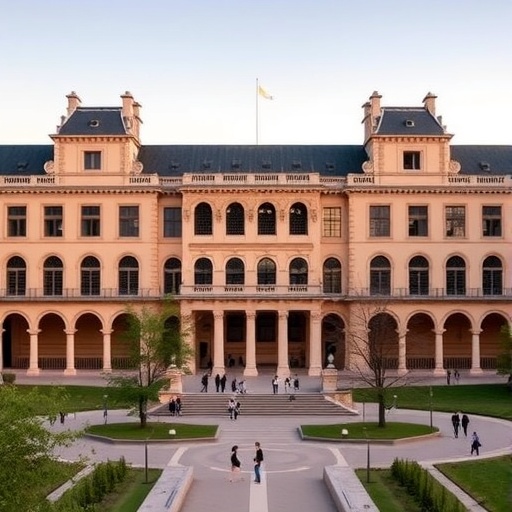
The Universitat Jaume I of Castelló has emerged as a formidable force in the competitive arena of scientific research funding, securing nearly one million euros for five pioneering projects through the 2025 call of the Human Resources programme within the Spanish 2024–2027 State Plan for Scientific, Technical and Innovation Research. This remarkable achievement places the UJI fourth at the national level and tops the list within the Valencian Community, surpassing even more prominent universities in terms of the financial resources procured. Behind UJI, only the Spanish National Research Council (CSIC), the University of Barcelona, and the Universitat Politècnica de Catalunya secured higher amounts, underscoring the university’s growing influence in the Spanish research landscape.
The 2025 grant distribution granted 130 awards worth almost 25 million euros, designed explicitly to consolidate the professional trajectories of both national and international researchers across Spain. This program emphasizes the establishment of permanent research positions, while fostering the initiation or expansion of research lines through dedicated funding. These grants not only fuel R&D&I projects but also contribute significantly to the enhancement of laboratories, scientific equipment, and the broader infrastructure essentials to cutting-edge research pursuits.
Jesús Lancis, the Rector-elect and current Vice-Rector for Research at Universitat Jaume I, hailed these results as a testament to the success of the institution’s strategic approach for attracting and nurturing research talent. This success highlights the effective execution of the university’s strategic plans aimed at creating a fertile environment for scientific inquiry and innovation. Underpinning this strategy is UJI’s Research and Knowledge Transfer Promotion Plan, a comprehensive framework that includes a robust support system for recruitment, predoctoral programs, internal research initiation funding for undergraduate and master’s students, as well as co-funding opportunities for researchers securing external contracts.
Among the array of ambitious projects funded, “Guided reduction of overparameterised MLPs for efficient inference in Transformers” (GROVER), spearheaded by Manuel F. Dolz, stands out in the domain of computer science and information technology. This research seeks to enhance the efficiency of Transformer-based neural networks, a transformative technology powering much of today’s artificial intelligence. The project targets a substantial reduction in computational and energy costs, aiming to decrease inference times and energy consumption by 20% while also cutting memory requirements by 25%. Achieving these reductions could revolutionize AI applications, making deep learning models more accessible and sustainable.
The intersection of psychology and neuroscience is explored with Raphael Kaplan’s project, “The processing of time during the mental exploration of memories” (TIEMPO). This investigation delves into the brain’s remarkable ability to flexibly scale the perception and manipulation of event durations within episodic memory. By understanding the mechanisms through which temporal information is stored and retrieved, TIEMPO aims to shed light on how temporal processing may deteriorate during neurological illnesses—potentially opening new pathways to diagnose or intervene early in cognitive disorders where timeline distortions are prominent.
Environmental sciences find crucial representation in Lubertus Bijlsma’s project, “Urban and environmental water surveillance to reveal antimicrobial resistance dynamics and improve interventions” (AquaSurv). This project harnesses wastewater-based epidemiology (WBE) to provide near real-time, population-scale insights into health indicators, such as antimicrobial use and resistance markers. Despite its vast potential, WBE remains underutilized in this domain. By systematically analyzing wastewater, AquaSurv aims to unveil the dynamics of antimicrobial resistance—an escalating global health threat—providing data critical for deploying effective public health strategies.
Nishant Singh’s “Supramolecular ligation through hierarchical three-dimensional self-assembly” (SUPRALITHS) explores uncharted territory in material science by designing novel three-dimensional colloidal crystals formed from amorphous organic nanoparticles. This innovative approach to constructing hierarchical superstructures could herald the advent of materials with advanced functionalities suitable for a diverse spectrum of applications, ranging from catalysis and gas capture to energy harvesting, drug delivery, and water purification. The ability to precisely engineer these materials at a nanoscale level stands to significantly elevate the performance and adaptability of future smart materials.
In the biomedical sciences, Juana Mari Delgado leads the project “Assessment of the impact of air pollution exposure on neurocognitive health during the climacteric period” (NAMASTE). Groundbreaking in its focus, this study investigates the correlation between prolonged exposure to air pollutants and cognitive function impairments alongside neurobiological biomarkers in adults undergoing the climacteric period—a phase marked by dropping estrogen levels that can exacerbate vulnerability, especially in women. By identifying early neurocognitive alterations and biological markers influenced by environmental factors, NAMASTE aspires to inform preventive public health measures targeting neurodegenerative risks linked to pollution.
The overarching objective of the 2025 grant initiative extends beyond project funding; it is a strategic effort to solidify Spain’s standing in the global scientific community by empowering researchers with resources, permanence, and infrastructure needed for innovation breakthroughs. Through these grants, the Spanish System for Science, Technology and Innovation (SECTI) fosters environments where investigative rigor and creativity can thrive, ultimately translating into technological advances with societal impact.
At Universitat Jaume I, this funding success underscores a robust ecosystem where emerging and established researchers are encouraged and supported to pursue fearless inquiry. From computer science innovations enhancing AI efficiency to environmental methodologies addressing global health issues, and from material science breakthroughs to neurobiological studies intimately tied with public health, the wide-ranging projects reflect the university’s multidisciplinary strengths and forward-thinking vision.
The tangible outcomes anticipated from these projects are poised to intersect various sectors of society and industry. Innovations like efficient neural network architectures could reshape AI-driven technologies and their sustainability footprint. Simultaneously, elucidating time perception dysfunctions may revolutionize cognitive health diagnostics, while wastewater epidemiology offers essential tools for antimicrobial resistance management—a cornerstone issue in modern medicine.
Furthermore, advancements in supramolecular materials can transform industrial applications, enabling greener and more efficient processes, while deepened understanding of air pollution’s cognitive impacts paves the way for enhanced urban health policies. Collectively, these endeavors exemplify how strategic investment in diverse scientific fields fuels comprehensive progress impacting technological, health, and environmental realms globally.
In conclusion, Universitat Jaume I’s success in the 2025 State Plan grants marks a pivotal milestone, reflecting effective institutional strategy, scientific excellence, and a commitment to multidisciplinary innovation. As the research unfolds, the knowledge generated promises to advance foundational science, influence policy, optimize technologies, and improve human health—solidifying UJI’s position among Spain’s leading research universities.
News Publication Date: Information not explicitly provided.
Web References: https://mediasvc.eurekalert.org/Api/v1/Multimedia/45fb8da6-ebdb-4d1f-a92f-cd7577f22b4c/Rendition/low-res/Content/Public
Cite Scienmag News
Reid Dalton. (May 20, 2026). Universitat Jaume I Secures Nearly One Million Euros to Boost Five Research Projects. Scienmag. https://scienmag.com/universitat-jaume-i-secures-nearly-one-million-euros-to-boost-five-research-projects/
Reid Dalton. "Universitat Jaume I Secures Nearly One Million Euros to Boost Five Research Projects." Scienmag, 20 May 2026, https://scienmag.com/universitat-jaume-i-secures-nearly-one-million-euros-to-boost-five-research-projects/. Accessed 4 September 2026.
Reid Dalton. "Universitat Jaume I Secures Nearly One Million Euros to Boost Five Research Projects." Scienmag. May 20, 2026. https://scienmag.com/universitat-jaume-i-secures-nearly-one-million-euros-to-boost-five-research-projects/


